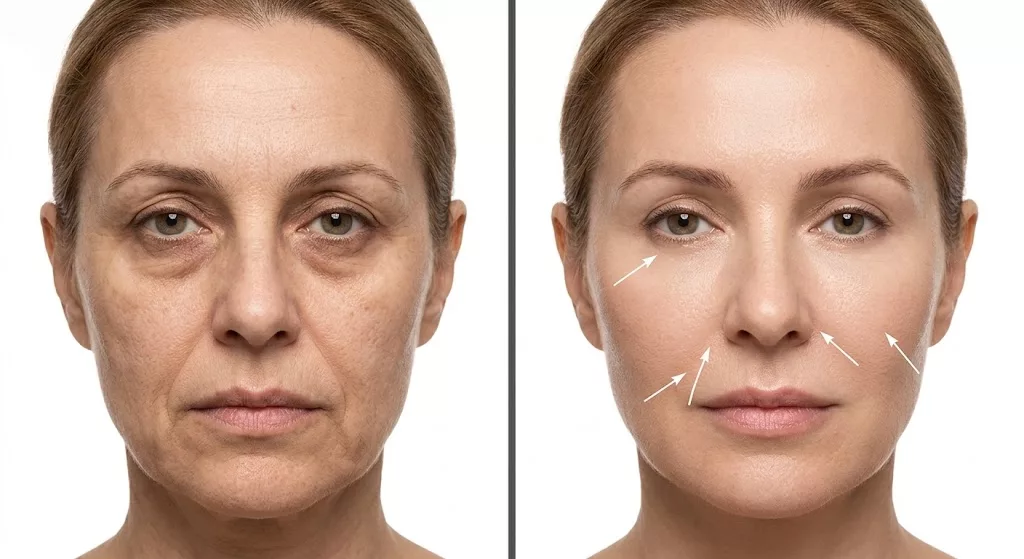
Fat grafting — also known as lipofilling, fat transfer, or autologous fat injection — is a surgical procedure that uses the patient’s own fat cells to add volume, restore contour, or correct irregularities in specific areas of the face or body. Because no synthetic materials are used, the technique eliminates the risks associated with foreign implants while simultaneously contouring the donor site through liposuction.
In Dubai, fat grafting is one of the most in-demand procedures in plastic surgery, applied across facial rejuvenation, breast augmentation, gluteal enhancement (Brazilian Butt Lift), and body contouring following weight loss or aging. This guide explains how the procedure works, where it can be used, who makes a suitable candidate, and what realistic results look like.
Quick answer: Fat grafting (lipofilling) uses the patient’s own fat — harvested by liposuction, then purified — and injects it into the face, breasts, or body to restore volume and improve contour. Because the material is autologous tissue, there is no rejection risk. Fat cells that successfully integrate are long-lasting; typically 50–70% survive permanently after the initial resorption period.
What Is Fat Grafting?
Fat grafting is a three-stage surgical procedure:
Stage 1 — Harvesting: Fat is removed from donor areas — typically the abdomen, flanks, inner thighs, lower back, or arms — using a gentle liposuction technique. This simultaneously improves the contour of the donor area.
Stage 2 — Processing: The harvested fat is processed (centrifuged or filtered) to remove blood, fluids, damaged cells, and non-viable material. Only purified, viable fat cells — known as adipocytes — are prepared for reinjection.
Stage 3 — Injection: The purified fat is injected in small, precise aliquots into the target area in multiple anatomical layers. This multi-layer, micro-injection approach maximizes the contact between the injected fat and surrounding tissue, which is essential for graft survival and integration.
Because the material is the patient’s own biological tissue, it is fully biocompatible — there is no risk of allergic reaction or rejection.
Fat Grafting Applications in Dubai
Fat grafting is a versatile technique applied to multiple anatomical areas depending on the patient’s goals.
| Application | Treated area | Volume range | Typical donor site | Key benefit |
|---|---|---|---|---|
| Facial lipofilling | Cheeks, temples, tear trough, lips | Small (30–100 ml) | Abdomen, thighs | Natural volume; no synthetic filler |
| Breast lipofilling | Breast volume + shape | Modest (150–350 ml per breast) | Abdomen, flanks | Augmentation without implants |
| BBL (gluteal transfer) | Buttock projection + shape | Large (500–1,500+ ml) | Abdomen, flanks, thighs, back | Shape + donor-area reduction |
| Hand rejuvenation | Dorsum of hands | Minimal (15–30 ml per hand) | Abdomen | Reduces visible tendons/veins |
| Scar correction | Scar tissue and surrounding area | Variable | Local or abdomen | Releases adhesions, restores contour |
Facial Fat Grafting (Facial Lipofilling)
Facial fat grafting restores volume that is lost with aging, corrects sunken areas, and improves facial proportions without synthetic fillers. Common facial treatment areas include:
- Cheeks and midface: Restores the youthful fullness and prominence of the cheekbones
- Under-eyes (tear trough): Addresses hollowness and dark circles caused by volume loss beneath the orbital rim
- Nasolabial folds: Softens the grooves running from the nose to the corners of the mouth
- Temples: Corrects temporal hollowing associated with aging
- Lips: Adds subtle, natural volume and definition
- Jawline and chin: Improves lower face definition and contour
- Forehead: Softens depressions or contour irregularities
Facial fat grafting produces results that are softer, more natural, and longer-lasting than temporary injectable fillers. Because the injected fat integrates with surrounding tissue, results improve gradually over several months.
Breast Fat Grafting (Breast Lipofilling)
Breast lipofilling uses the patient’s own fat to subtly enhance breast volume, improve breast contour, and correct shape asymmetries without synthetic implants. It is particularly suited to patients seeking modest augmentation (typically 1–1.5 cup size increase), correction of breast asymmetry, or improvement of shape irregularities.
Breast lipofilling is also used in reconstructive settings to correct contour defects following breast surgery, or to soften the appearance of implants. It can be combined with breast implants in selected patients where additional contouring is desired alongside volume enhancement.
Gluteal Fat Grafting — Brazilian Butt Lift (BBL)
The Brazilian Butt Lift (BBL) is the most well-known application of fat grafting, transferring fat harvested from the abdomen, flanks, thighs, or lower back to the gluteal region to enhance shape, projection, and volume. Because no silicone implants are used, the result integrates naturally with the body and moves authentically.
All gluteal fat injections are performed above the gluteal muscle in accordance with international safety protocols.
Hand Rejuvenation
Fat grafting to the hands restores lost volume in the dorsum (back of the hand), reducing the prominence of tendons and veins associated with aging. Results are long-lasting compared to temporary fillers.
Body Contouring and Scar Correction
Fat grafting is used to correct contour irregularities following previous liposuction, weight loss surgery, or trauma. It is also applied to improve the appearance of scars by injecting fat beneath the scar tissue to release adhesions and restore volume.
How Fat Grafting Differs from Dermal Fillers
| Factor | Fat Grafting | Dermal Fillers |
|---|---|---|
| Material | Patient’s own fat (biological) | Hyaluronic acid or synthetic material |
| Duration | Long-lasting (years) after integration | Temporary (6–18 months) |
| Natural feel | Natural — integrates with tissue | Variable; may feel different |
| Volume capacity | Suitable for larger volumes | Better for small, targeted areas |
| Donor site benefit | Yes — liposuction contours donor area | No |
| Maintenance | Not required after integration | Repeat treatments required |
| Reversibility | Not easily reversible | Reversible with enzyme injection (HA fillers) |
Fat grafting is the preferred approach when treating larger volumes, when results need to be long-lasting, or when a natural tissue feel is particularly important.
Who Is a Suitable Candidate for Fat Grafting?
Candidacy is assessed individually during a clinical consultation. Patients who may be considered include those:
- With adequate donor fat available for harvesting (typically the abdomen, thighs, or flanks)
- Seeking long-lasting volume restoration or enhancement in the face, breasts, or body
- Preferring to avoid synthetic implants or fillers
- In good general health with no contraindicated medical conditions
- At a stable body weight — significant weight changes after surgery affect fat cell behavior
- Non-smokers (or willing to stop smoking for the required pre-operative period)
- With realistic expectations about results and the percentage of fat that integrates
Patients with very limited body fat may have insufficient donor material for certain applications. This is assessed individually during consultation.
The Fat Grafting Procedure — Step by Step
Pre-Operative Consultation
The surgeon conducts a comprehensive anatomical assessment. The donor sites, injection areas, expected volumes, and the limitations of the technique are discussed in full. All associated risks are explained and informed consent is obtained.
Anaesthesia
Fat grafting is performed under general anaesthesia or sedation, depending on the scope of the procedure. The anaesthetic plan is determined based on the combination of procedures planned and the patient’s clinical profile.
Fat Harvesting
Small incisions (3–4 mm) are made in discreet locations at the donor sites. A thin cannula is used to remove fat via low-pressure liposuction to protect cell viability. Multiple donor sites may be used depending on the volume required.
Fat Processing
The harvested fat is processed using centrifugation or filtration. This separates viable fat cells from blood, oil, and debris. Only purified, intact adipocytes are selected for reinjection.
Fat Injection
The purified fat is loaded into small syringes and injected in precise, controlled passes using micro-injection cannulas. Multiple layers are injected across the target area. Volume and distribution are planned individually based on each patient’s anatomy and clinical goals.
Post-Operative Monitoring
The patient is monitored in the clinical facility following the procedure. Discharge timing is determined by the clinical team based on individual condition.
Fat Grafting Recovery — General Guidance
Recovery varies per individual and depends on the areas treated and the volume transferred. General guidance includes:
- Swelling and bruising — Expected at both the donor and recipient sites; most pronounced in the first 1–2 weeks, gradually resolving over 4–8 weeks. Facial fat grafting produces noticeable initial facial swelling.
- Compression garments — Worn at the donor liposuction sites as directed to manage swelling and support contour healing.
- Activity restrictions — Strenuous activity is restricted for 2–4 weeks. Walking is encouraged early for circulation.
- Gluteal fat grafting (BBL) — Direct pressure on the gluteal region is avoided for several weeks. Specific positioning guidance is provided.
- Return to work — Patients in desk-based roles typically return within 1–2 weeks. Physically demanding roles require 3–4 weeks or more.
- Follow-up — Regular post-operative appointments monitor healing and assess fat integration.
Fat Grafting Results — What to Expect
Graft Survival
Not all transferred fat cells survive the integration process. On average, approximately 50–70% of the transferred fat integrates permanently; the remainder is naturally reabsorbed by the body over 3–6 months. For this reason, surgeons typically overcorrect slightly at the time of injection to account for expected resorption.
Final results are assessed after 6 months, when the fat that has integrated is considered stable. Some patients elect to undergo a second session to refine results after initial resorption.
Longevity
Fat cells that successfully integrate behave like normal fat tissue — they respond to changes in body weight and are subject to the natural aging process. Maintaining a stable body weight after surgery supports consistent long-term results. Significant weight loss can reduce volume in treated areas; weight gain may increase it.
There is no maintenance schedule required for integrated fat — unlike temporary fillers.
Before and After Documentation
Before the procedure, the surgeon documents the patient’s baseline anatomy through standardized clinical photography. After the procedure, follow-up photography is conducted at scheduled intervals as healing progresses.
“There is no guarantee that the result will be the same, as it might vary from one individual to another.” — DHA required disclaimer
Fat Grafting Safety
Fat grafting is a well-established surgical technique with a strong safety profile when performed by a qualified, experienced plastic surgeon in an accredited facility. Important safety considerations include:
Gluteal fat grafting: The most important safety principle for BBL procedures is that fat must be injected above the gluteal muscle, never into the gluteal muscle or deeper. Intra-muscular injection carries a risk of fat embolism. All gluteal injections are performed following established international safety protocols.
General surgical risks: All surgical procedures carry inherent risks including infection, haematoma (blood pooling), seroma (fluid accumulation), contour irregularities, calcification of fat deposits, and asymmetry. These are discussed during consultation.
Choosing the right surgeon significantly impacts outcomes and safety. Verify surgeon qualifications, DHA licensing, EBOPRAS or equivalent certification, and facility accreditation before proceeding.
Nano Fat Grafting in Dubai
Nano fat refers to a highly refined form of processed fat — filtered to a very fine emulsion — which contains adipose-derived stem cells (ADSCs) and regenerative growth factors. Nano fat is injected using ultra-fine needles into delicate areas where standard fat grafting cannulas cannot reach:
- Very fine periorbital lines and under-eye hollows
- Thin lip lines and perioral area
- Scar tissue improvement
Because nano fat contains a high concentration of regenerative cells, it also has skin-quality improvement properties. The nano fat technique is typically combined with conventional fat grafting in the same session to address both volume and skin quality simultaneously.
For the full technical explanation of nano fat, micro fat vs nano fat differences, and clinical applications, see the Nano Fat Grafting Dubai guide.
Fat Grafting Combined with Other Procedures
Fat grafting is frequently performed as part of a larger surgical plan:
- Facelift + fat grafting: Surgical lifting of facial tissues combined with fat grafting to restore volume simultaneously
- Breast implants + lipofilling: Implant-based augmentation with fat grafting to refine the décolletage, cleavage, or upper pole transitions
- Tummy tuck + fat grafting: Following abdominoplasty, fat may be used to smooth contour irregularities or enhance the flanks
- Mommy Makeover Dubai: Lipofilling can be incorporated as part of a comprehensive post-pregnancy body restoration plan
- BBL (liposuction + fat transfer): The quintessential combined fat grafting procedure
Surgeon Credentials for Fat Grafting in Dubai
Fat grafting outcomes depend directly on the precision of the harvesting, processing, and injection technique. When selecting a surgeon in Dubai for fat grafting, the following credentials are the relevant standards to verify:
- EBOPRAS certification — European Board of Plastic, Reconstructive and Aesthetic Surgery
- MD and/or PhD — research background supports evidence-based technique selection
- DHA licensing — mandatory for all surgeons practising in Dubai
- ASPS / ISAPS membership — adherence to international safety standards and protocols
- Documented experience in the specific application (facial, breast, BBL — these differ significantly in technique)
An initial consultation with a DHA-licensed Consultant is the correct starting point for any fat grafting procedure in Dubai.
Frequently Asked Questions — Fat Grafting Dubai
How long will a fat graft last?
Fat grafts are long-lasting and often considered permanent. Once the fat cells successfully integrate with the local blood supply (usually within 3–6 months), they become a living part of your body. While some resorption occurs early on, the surviving fat (typically 50–70%) remains for years, though it will naturally age with you.
What country is best for fat grafting?
Dubai is widely regarded as one of the best global destinations for fat grafting. It offers a combination of world-class accredited facilities and elite surgeons who are EBOPRAS-certified. The DHA enforces strict medical safety standards, making it a preferred choice for patients from Europe, Asia, and the Middle East seeking high-quality autologous fat transfer.
How much does fat grafting cost in Dubai?
The cost of fat grafting in Dubai depends on the scope of the procedure. Prices are influenced by the area being treated (such as facial lipofilling vs. a full BBL), the volume of fat transferred, and the complexity of the harvesting process. A personalized quote is provided only after an in-depth clinical evaluation.
What is the price of fat grafting?
The price of fat grafting is not a single figure; it is determined by your unique anatomical needs, the surgical facility used, and the specific technique (e.g., standard fat transfer vs. regenerative nano fat). An individual consultation is required to determine the precise price for your treatment plan.
Is fat grafting better than fillers?
Fat grafting offers a more natural, permanent solution for larger volume loss compared to temporary fillers. Because it uses your own tissue, there is no risk of allergic reaction. Fillers are excellent for minor, non-surgical touch-ups, but fat transfer is the ‘gold standard’ for comprehensive rejuvenation.
About the Surgeon
Our surgeon is an EBOPRAS-certified Consultant plastic surgeon with over 20 years of international clinical experience in facial rejuvenation, body contouring, and reconstructive surgery, practising in Jumeirah, Dubai.
Individual outcomes vary. A pre-operative consultation is mandatory.
Book a Consultation · See Before & After Results
Related procedures:
- Lipofilling & BBL Dubai — Full procedure page for Brazilian Butt Lift and body fat transfer
- Facial Lipofilling Dubai — Fat grafting for facial rejuvenation
- Liposuction Dubai — Fat harvesting source for grafting procedures
- Mommy Makeover Dubai — Combined post-pregnancy restoration including lipofilling
- See Fat Transfer Results — Before & after documentation
Further reading:
- Nano Fat Grafting Dubai — Ultra-fine fat emulsion for delicate facial areas: micro-fat vs nano-fat explained
- Brazilian Butt Lift Dubai — Full Guide — Fat transfer to the gluteal region: technique, safety, recovery, and realistic results
- Breast Lift Dubai — When breast lift is needed, and how it can be combined with fat grafting for volume restoration
- Chignon Mastopexy Dubai — Published breast lift technique using internal glandular flaps, no implants
- Tummy Tuck Dubai — Abdominoplasty uses the same liposuction harvest; fat removed can be transferred rather than discarded
- Cosmetic Surgery in Dubai — Complete Guide — How to evaluate procedures, surgeons, and costs in Dubai
The information in this article is provided for patient education purposes only and does not constitute medical advice. Suitability for any surgical procedure must be determined through an individual clinical evaluation with a licensed Consultant.
Frequently Asked Questions
How long will a fat graft last?
Fat grafts are considered long-lasting. Once the transferred fat cells successfully integrate with the surrounding tissue (a process that takes about 3–6 months), they behave like normal fat cells and remain permanently. Typically, 50–70% of the transferred fat survives this initial period. However, results can still be affected by significant weight fluctuations and the natural aging process.
What country is best for fat grafting?
The 'best' country for fat grafting is one that combines high regulatory standards, world-class medical facilities, and surgeons with elite international certifications. Dubai is a global leader in this field, offering a high density of EBOPRAS-certified Consultant plastic surgeons and state-of-the-art hospitals accredited by the DHA. Patients choose Dubai for its commitment to international safety protocols and superior aesthetic outcomes.
How much does fat grafting cost in Dubai?
The cost of fat grafting in Dubai depends on several factors, including the area being treated (face, breast, or body), the volume of fat required, and the technique used (such as nano fat vs. standard lipofilling). An accurate price can only be provided following an individual clinical evaluation and consultation.
What is the price of fat grafting?
The price of fat grafting is not fixed and depends on the complexity of the liposuction needed to harvest the fat, the purification process, and the specific goals of the patient. Because every case is unique, an individual assessment is mandatory to provide a detailed cost breakdown.
Is fat grafting permanent in Dubai?
Yes, the portion of fat that successfully 'takes' or integrates after the first 6 months is permanent. This usually accounts for 50–70% of the total fat injected. Unlike dermal fillers, which are temporary, integrated fat becomes a living part of your body's tissue.
What is the difference between fat grafting and dermal fillers?
Fat grafting uses your own purified fat (autologous tissue), while dermal fillers are synthetic gels (usually hyaluronic acid). Fat grafting is a surgical procedure with long-lasting results, whereas fillers are non-surgical and temporary (6–18 months). Fat is often preferred for larger volume restoration or for patients wanting a more natural, 'no-synthetic' approach.
Can fat grafting replace breast implants?
Fat grafting can provide a natural-looking augmentation and improve breast shape, but it is generally limited to a 1 to 1.5 cup size increase per session. It cannot provide the same dramatic volume or projection as breast implants for patients seeking a significant size increase. It is, however, excellent for correcting asymmetry or softening the appearance of existing implants.
How long is fat grafting recovery?
Recovery depends on the volume transferred. Facial fat grafting typically involves 1–2 weeks of swelling and bruising. For larger areas like the breasts or BBL, you may need 2–4 weeks of restricted activity and must wear compression garments at the donor sites for 4–6 weeks. Most patients return to normal activities within a month.
Related Clinical Articles
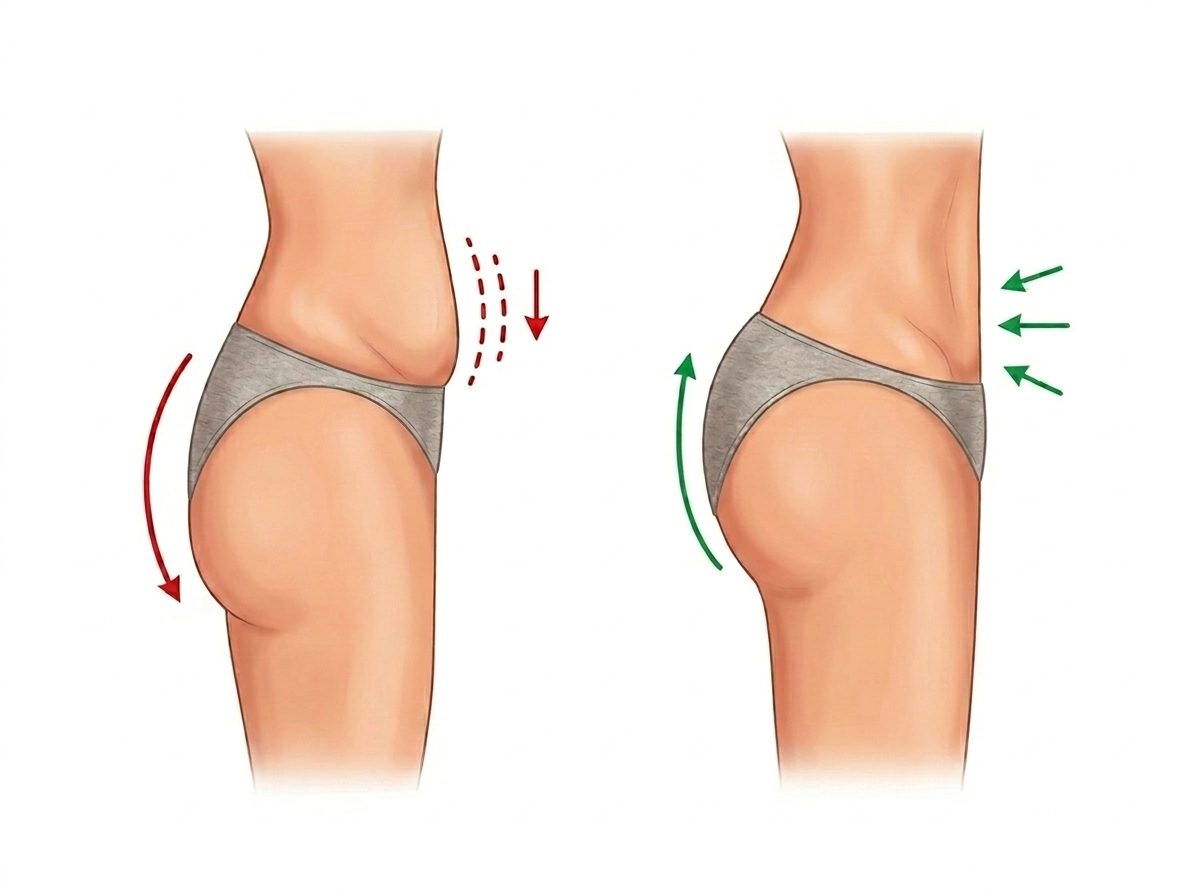
Brazilian Butt Lift (BBL): Complete Guide
A clinical guide to the Brazilian Butt Lift: fat transfer technique, candidacy, safety protocols, and week-by-week recovery timeline.
May 7, 2026
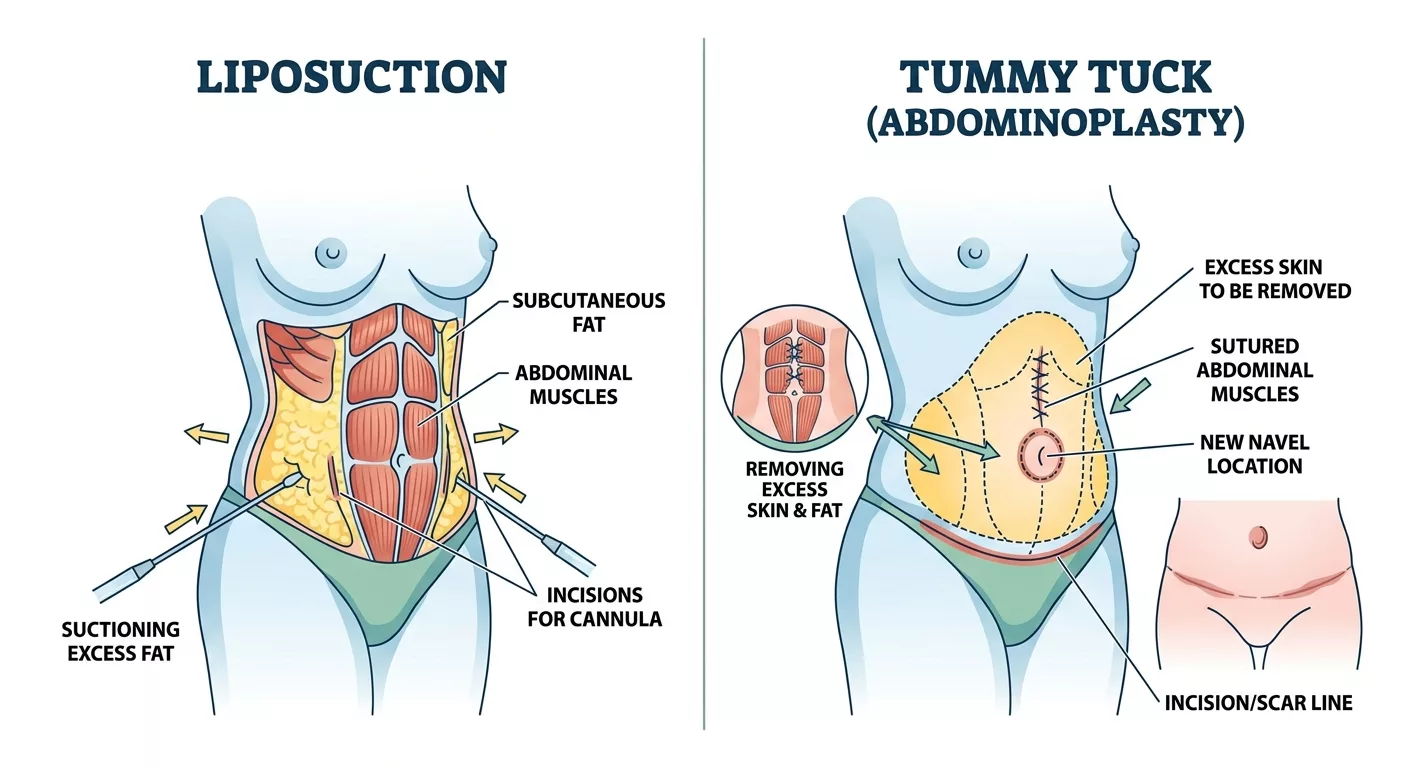
Liposuction vs Tummy Tuck - Key Differences Explained
Compare liposuction vs tummy tuck: targets, results, recovery, and ideal candidates. Expert insights on body contouring to choose the best option.
Jun 7, 2026