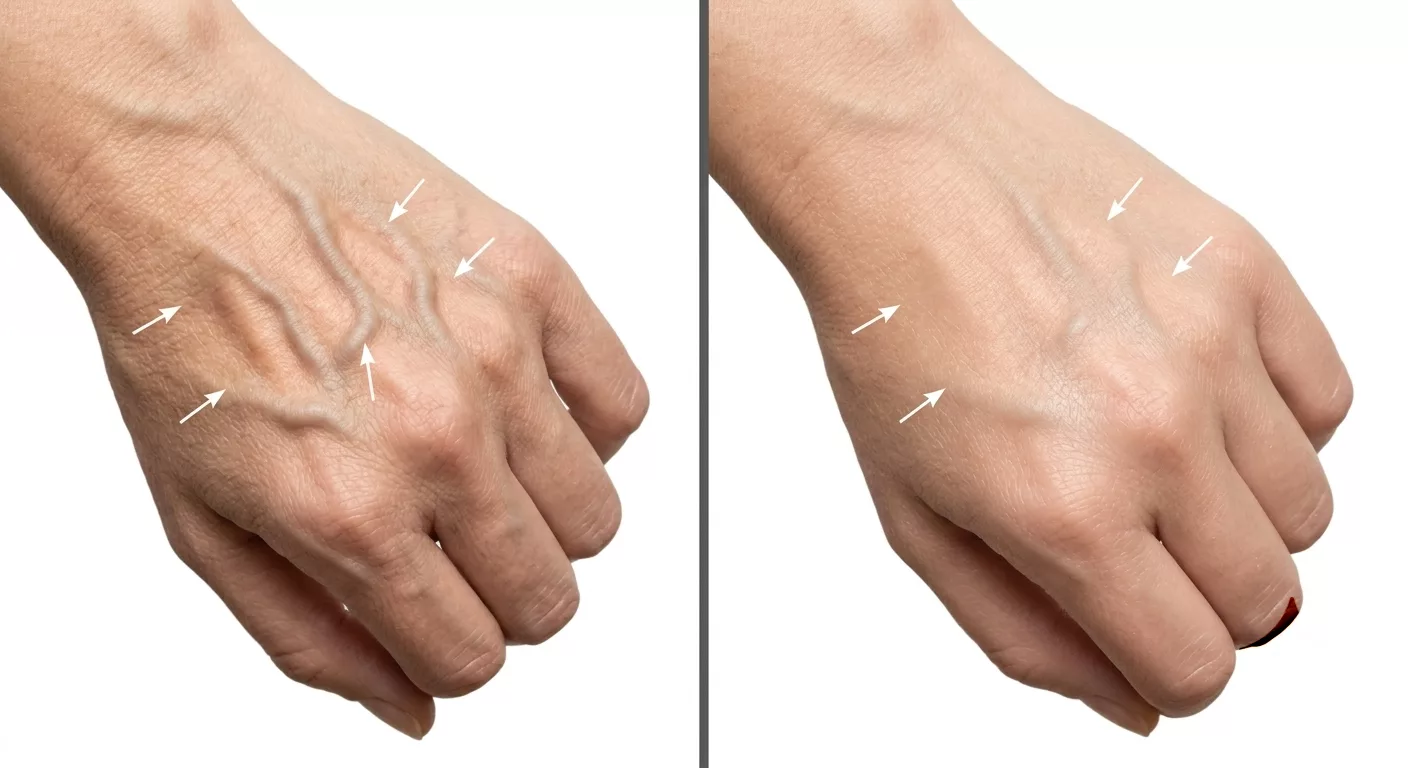
Nano fat grafting is a refinement of standard fat grafting technique in which harvested fat is mechanically processed into an ultra-fine biological emulsion — small enough to be injected through very thin needles into delicate facial areas where standard fat transfer is not suitable.
This guide explains what differentiates nano fat from standard and micro fat grafting, where it is used, and how to evaluate whether it may be appropriate for your goals.
Quick answer: Nano fat is mechanically emulsified harvested fat — the intact fat cells are largely disrupted, leaving a suspension rich in regenerative cells (SVF: stromal vascular fraction). Unlike standard fat grafting, it does not restore volume; it improves skin quality, hydration, and texture in fine or delicate areas (under-eyes, fine lines, lips). Micro fat and nano fat are frequently combined in the same session.
What Is Nano Fat Grafting?
Standard fat grafting transfers whole, intact fat cells (adipocytes) to add volume to the face, breast, or body. The fat parcels are typically processed to 2.4–4mm size and injected through appropriately sized cannulas.
Nano fat takes this further: harvested fat is passed repeatedly through syringes and fine filters to mechanically break it down into a homogeneous emulsion. The resulting suspension:
- Contains minimal intact adipocytes
- Is rich in stromal vascular fraction (SVF) — pericytes, endothelial progenitor cells, growth factors, and extracellular matrix components
- Can pass through 27–30G needles (hair-thin), allowing injection into the superficial dermis
This makes nano fat suited to areas and applications where volume addition is not the goal — and where precision at the cellular level matters.
Micro Fat vs. Nano Fat — Key Differences
| Standard / Micro Fat | Nano Fat | |
|---|---|---|
| Processing | Centrifugation or filtering; intact parcels | Mechanical emulsification; cells disrupted |
| Needle size | 18–22G cannulas | 27–30G needles |
| Primary effect | Volume restoration | Skin quality, texture, regeneration |
| Depth of injection | Deep fat compartments, subcutaneous | Superficial dermis, intradermal |
| Best applications | Cheeks, temples, lips (volume), tear trough (volume) | Fine lines, under-eye skin, lip borders, skin texture |
| Survival mechanism | Adipocyte integration with surrounding tissue | SVF biological activity, growth factor release |
| Visible result timeline | 3–6 months (resorption then stable) | 3–6 months (gradual biological improvement) |
In practice, the two techniques are frequently combined in a single session: micro fat deposits volume in the deep fat compartments, and nano fat is layered superficially for skin quality improvement.
Clinical Applications of Nano Fat Grafting
Under-Eye (Tear Trough) Rejuvenation
The tear trough is one of the most technically demanding areas to treat. The skin is thin, the underlying anatomy is complex, and both hyaluronic acid fillers and standard fat grafting carry risks in this location if not placed precisely.
Nano fat, injected superficially with a fine needle, can improve the quality and hydration of the under-eye skin and provide subtle softening of the hollowness — without the lump risk of larger fat parcels or the vascular risks associated with filler. Results are subtle and develop over months.
Fine Lines and Skin Texture
Nano fat injected into the superficial dermis delivers growth factors directly into the skin layer, stimulating collagen remodelling and improving texture over time. Application areas include:
- Periorbital lines (crow’s feet)
- Upper lip lines (perioral area)
- Forehead lines
- Neck and décolletage
Lip Border Definition
The vermilion border (lip outline) can be refined with nano fat to add soft definition without the stiffness that can occur with some fillers in this area.
Combined with Standard Fat Grafting
Nano fat is most commonly used as a complement to standard lipofilling in a single procedure session — volume is restored in the deep layers with micro fat, and the superficial skin quality is addressed with nano fat.
The Nano Fat Procedure — What to Expect
Nano fat grafting uses the same donor-site process as standard fat grafting — fat is harvested via gentle liposuction from a donor area (typically abdomen, inner thigh, or flanks). The volume harvested is smaller than for body fat grafting, as only a small quantity is needed for facial nano fat application.
After harvesting, the fat undergoes a mechanical emulsification process — filtered and emulsified until it becomes a homogeneous, injectable suspension. It is then injected into the target areas using fine needles under local anaesthesia or sedation, depending on the scope of the procedure.
Downtime: Minimal at the injection sites (pin-point bruising), with potential donor-site bruising from the harvest. Most patients return to social activities within a few days to a week, depending on the scope of the overall procedure.
Nano Fat vs. PRP (Platelet-Rich Plasma)
Both nano fat and PRP are regenerative approaches used for skin quality improvement. Key distinctions:
| Nano Fat | PRP | |
|---|---|---|
| Source | Patient’s own fat (SVF) | Patient’s own blood (platelets) |
| Growth factor content | Broad spectrum — SVF contains multiple cell types | Platelet-derived growth factors (PDGF, VEGF, TGF-β) |
| Volume needed | Small fat harvest required (liposuction) | Blood draw only — no liposuction |
| Combined use | Can be combined with micro fat in same session | Often combined with needling or injections |
| Result | Gradual skin quality improvement + subtle volume | Gradual skin quality and tone improvement |
The appropriate approach depends on individual goals and anatomy, assessed during consultation.
Who Is a Suitable Candidate?
Nano fat grafting may be appropriate for patients who:
- Are seeking improvement in skin quality, texture, or tone — not significant volume restoration
- Have concerns in delicate areas (under-eyes, fine lines) where standard fat grafting is not ideal
- Prefer autologous (own tissue) options over synthetic injectables
- Have adequate donor fat for harvesting (even a small amount is typically sufficient for facial application)
- Are in good general health with realistic expectations
Individual suitability is assessed during a pre-operative consultation that includes anatomical evaluation and discussion of goals.
About the Surgeon
Our surgeon is an EBOPRAS-certified plastic surgeon with over 20 years of experience in fat grafting techniques — including standard lipofilling, micro fat, and nano fat applications.
Individual outcomes vary. A pre-operative consultation is mandatory.
Book a Consultation · See Before & After Results
Related procedures:
- Fat Grafting & Lipofilling — Full procedure details for body and face
- Facial Lipofilling — Dedicated facial fat transfer page
Further reading:
- Fat Grafting — Complete Guide — Full overview of lipofilling: technique, applications, retention rates
- Brazilian Butt Lift — The high-volume fat transfer application for gluteal augmentation
- Cosmetic Surgery Dubai — Overview of all procedures and what to look for in a surgeon
The information in this article is provided for patient education purposes only and does not constitute medical advice. Suitability for any procedure must be determined through an individual clinical evaluation with a licensed Consultant.
Frequently Asked Questions
What is nano fat grafting?
Nano fat grafting is a technique that mechanically emulsifies harvested fat into an ultra-fine suspension — small enough to pass through very fine needles (27–30G). Unlike standard fat grafting, the resulting nano-fat contains minimal intact adipocytes. It is primarily rich in stromal vascular fraction (SVF) — which includes pericytes, endothelial progenitor cells, and growth factors — making it suited for skin quality improvement rather than volume restoration.
What is the difference between micro fat and nano fat?
Micro fat uses small fat parcels (processed through 2.4mm cannulas) that retain viable fat cells — it is used for volume restoration in small areas (lips, tear trough, fine contour work). Nano fat is mechanically emulsified further until intact fat cells are largely destroyed, leaving a biologically active suspension suited for injection into very fine areas (superficial dermis, under eyes, fine lines) using thin needles. The two techniques are often combined: micro fat for volume, nano fat for skin quality.
Can nano fat grafting treat under-eye hollows?
Yes. The tear trough (under-eye hollow) is one of the most common applications of nano fat grafting. The ultra-fine emulsion can be injected superficially in a delicate area where standard fat grafting would risk visible lumps, and where fillers carry vascular risks. The goal is gradual improvement in skin quality and subtle volume — not dramatic augmentation. Realistic expectations and individual suitability are assessed during consultation.
Is nano fat the same as stem cell therapy?
Nano fat is not equivalent to stem cell therapy — but the stromal vascular fraction (SVF) it contains does include mesenchymal stem cell precursors alongside other regenerative cells. The clinical effect is a gradual improvement in skin texture, tone, and hydration over several months as growth factors interact with surrounding tissue. It is not a medical cell therapy product and is distinct from laboratory-processed SVF or PRP.
How long does nano fat grafting last?
Because nano fat contains minimal intact fat cells, results are primarily driven by the SVF-mediated biological response — not by fat volume integration. Skin quality improvements develop gradually over 3–6 months. The regenerative effect is considered long-lasting in terms of tissue quality improvement, though repeat sessions may be considered depending on individual response. Results vary per individual.
Is nano fat grafting safe?
When performed by a qualified surgeon using sterile technique and appropriate needle gauges for the target area, nano fat grafting has a favourable safety profile for facial use. Risks include bruising, swelling, and — in delicate areas like the under-eye — potential for irregularity if placement is not precise. All risks are discussed during the pre-operative consultation.
What is the difference between nano fat grafting and dermal fillers?
Dermal fillers (typically hyaluronic acid) are synthetic injectables that add volume immediately and can be dissolved if needed. Nano fat is the patient's own biological tissue — entirely autologous, with no foreign material introduced. The mechanism is different: fillers add volume directly; nano fat delivers regenerative cells (SVF) that improve skin quality over several months. Nano fat does not add significant volume — it targets skin texture and tone. The appropriate choice depends on goals and individual anatomy, discussed during consultation.
How many nano fat grafting sessions are needed?
Most patients achieve their goals in a single session. Because the biological effect develops gradually over 3–6 months as the SVF interacts with surrounding tissue, results should be assessed at the 6-month mark before considering a repeat session. A second session may be discussed if the individual biological response warrants further treatment. There is no universal protocol — this is determined individually.
Can nano fat grafting be combined with surgical procedures?
Yes. Nano fat is frequently used in combination with other procedures — for example, layered over micro fat in the same session, combined with facelift to improve skin quality alongside structural lifting, or used alongside rhinoplasty or eyelid surgery where superficial skin rejuvenation complements the surgical correction. Combining nano fat with a surgical procedure does not substantially extend recovery time, as the harvest and injection are minimally invasive.
Is nano fat grafting painful?
The procedure is performed under local anaesthesia or sedation depending on the scope of the session. The fat harvest via gentle liposuction involves small cannula incisions at the donor site. The injection into the target areas uses very fine needles. Most patients describe the experience as mild discomfort rather than pain. Post-procedure, pin-point bruising at injection sites and modest swelling at the donor site are expected; these resolve within a few days to a week.
Related Clinical Articles
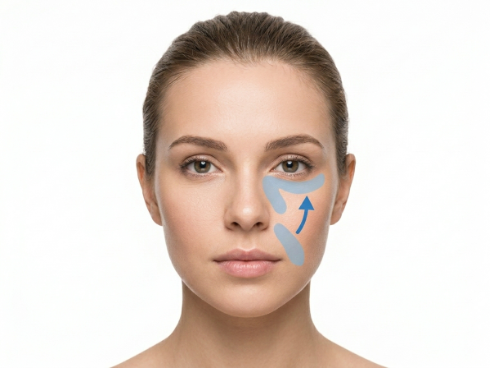
Cosmetic Procedures Dubai | Trends, Costs & Advances
Discover the latest cosmetic procedures trends in Dubai for 2026: popular treatments, advanced techniques, recovery, costs, and what's new in aesthetic enhancements. Expert guide.
Apr 21, 2026
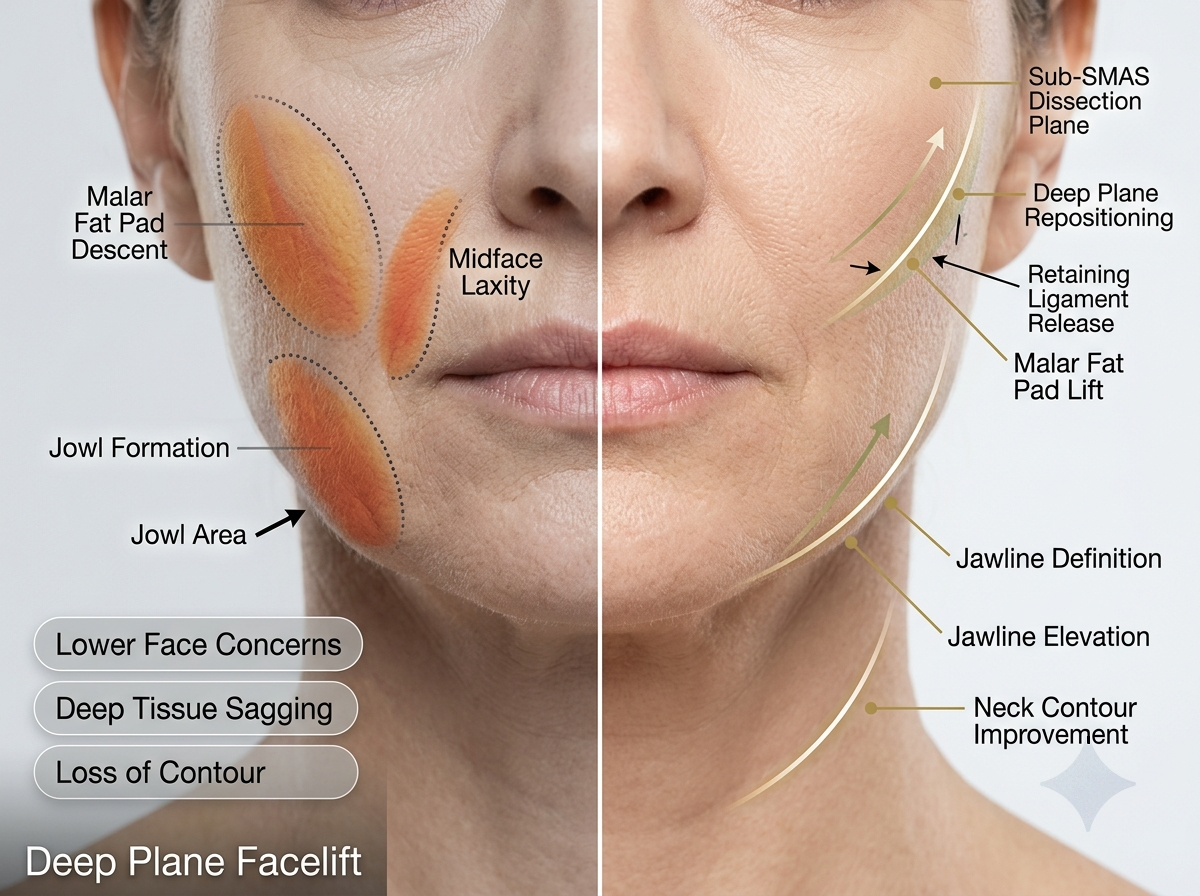
Deep Plane Facelift Technique | Surgical Anatomy Explained
Deep plane facelift technique explained: composite flap anatomy, retaining ligament release, and facial nerve safety in sub-SMAS dissection, for clinically informed readers.
Jul 7, 2026