
Your Fat Is Not Your Enemy – Insights From A Plastic Surgeon
Dr. Bouraoui Kotti — Plastic Reconstructive & Aesthetic Surgeon, UAE · via Grazia Middle East
For decades, fat has been treated as the body’s great antagonist — the thing to shrink, burn, and surgically remove at every opportunity. The cultural narrative has been consistent and relentless: less is more, and none would be ideal. Yet the science of fat tells a far more nuanced story. And for surgeons operating at the forefront of aesthetic and reconstructive medicine, it tells a story of extraordinary clinical potential.
Dr. Bouraoui Kotti — plastic reconstructive and aesthetic surgeon, former first ambassador of Tunisia to the International Society of Aesthetic and Plastic Surgery (ISAPS), and author of The Breast Key Book: The Hidden Stories of the Breast — makes the case plainly: your fat is not your enemy. Manage it, yes. Respect it, always. But do not make the mistake of treating it as something to be entirely eliminated. One day, that same fat may be your body’s most powerful tool for regeneration.
Now practising in the UAE, where some of the world’s most advanced aesthetic medical centres are concentrated, Dr. Kotti has built a specialism around fat grafting — a technique that is quietly reshaping what modern aesthetic surgery can achieve. His message to patients begins with a reframe: before you think about what fat costs you, consider what it can give.
Fat Grafting — The Technique Redefining Natural Results
Fat grafting — also called fat transfer or lipofilling — is a surgical technique in which adipose tissue is harvested from a donor site on the patient’s own body, typically the abdomen, flanks, or inner thighs, via gentle liposuction. The tissue is then processed and re-injected with precision into a target area requiring volume, contouring, or regenerative support.
Because the material is entirely autologous — drawn from the patient rather than synthesised — the biological compatibility is near-perfect. There is no foreign implant, no synthetic filler, and no risk of rejection. The results integrate with surrounding tissue and, critically, they evolve naturally with the body over time.
Dr. Kotti’s enthusiasm for the technique is grounded in years of clinical evidence. “Fat grafting has changed my practice,” he says — and the change, he is quick to clarify, is not merely technical. It is philosophical. It is a shift toward working with the body’s own biology rather than imposing something artificial upon it.
“Whether it’s adding fat into my breast implants for a better cleavage, or to facelifts for a much more natural and youthful aspect — the difference is consistently significant.”
Applications: Where Fat Grafting Changes Everything
Fat grafting today is applied across a wide and expanding range of procedures. Dr. Kotti integrates it into the majority of his work:
Natural breast augmentation and enhancement — Fat is layered around implants to soften edges, improve cleavage definition, and produce a result that reads as the patient’s own anatomy rather than an implant. The outcome is what Dr. Kotti calls the real-life Photoshop effect — transformed, but entirely believable.
Facelift enhancement — Volume loss is one of the primary drivers of facial ageing, yet traditional facelifts focus almost entirely on tissue repositioning. Fat grafting addresses the volumetric dimension simultaneously, restoring fullness to the midface, temples, and periorbital area for a result that is rejuvenated rather than simply tightened.
Facial rejuvenation without surgery — Standalone fat transfer to the face can address hollowing under the eyes, flattened cheeks, and loss of jawline definition — without implants, without filler that migrates, and without the need for repeat appointments.
Body contouring and the Brazilian butt lift (BBL) — Fat harvested during liposuction is redistributed to the buttocks and hips to redefine the body’s silhouette with the patient’s own tissue.
“Too much and it becomes inedible. Not enough and your recipe won’t be highlighted to its true potential. Fat is becoming an added-value treatment to the majority of plastic surgery procedures — but it has to be treated differently each time, depending on whether you use it in the face, breast, or buttocks. It remains an amazing weapon to restore volumes, redefine curves, and fight the signs of age.”
— Dr. Bouraoui Kotti
Like Salt in Cuisine — The Precision Behind the Technique
To explain the clinical discipline fat grafting demands, Dr. Kotti reaches for culinary analogy. Fat in surgery, he says, behaves like salt in a great dish: too much, and the result is ruined; too little, and the potential goes unrealised. The comparison is instructive precisely because it resists the idea of a fixed formula. Every patient, every site, every indication requires fresh judgment.
What must be controlled is the entire chain of clinical decisions — not merely the volume injected. “The amount, the quality, the way you treat the fat after liposuction, the place you choose to put it, as well as the cannulas and syringes you choose for that purpose must be perfectly mastered to avoid disasters.”
This is not a technique any surgeon can simply add to their repertoire. It requires deep familiarity with how fat behaves differently in the face versus the breast versus the buttocks, how it survives after transfer (and what conditions maximise that survival), and how it integrates structurally with surrounding tissue over months and years. Mastery here is genuinely the difference between a transformative outcome and a poor one.
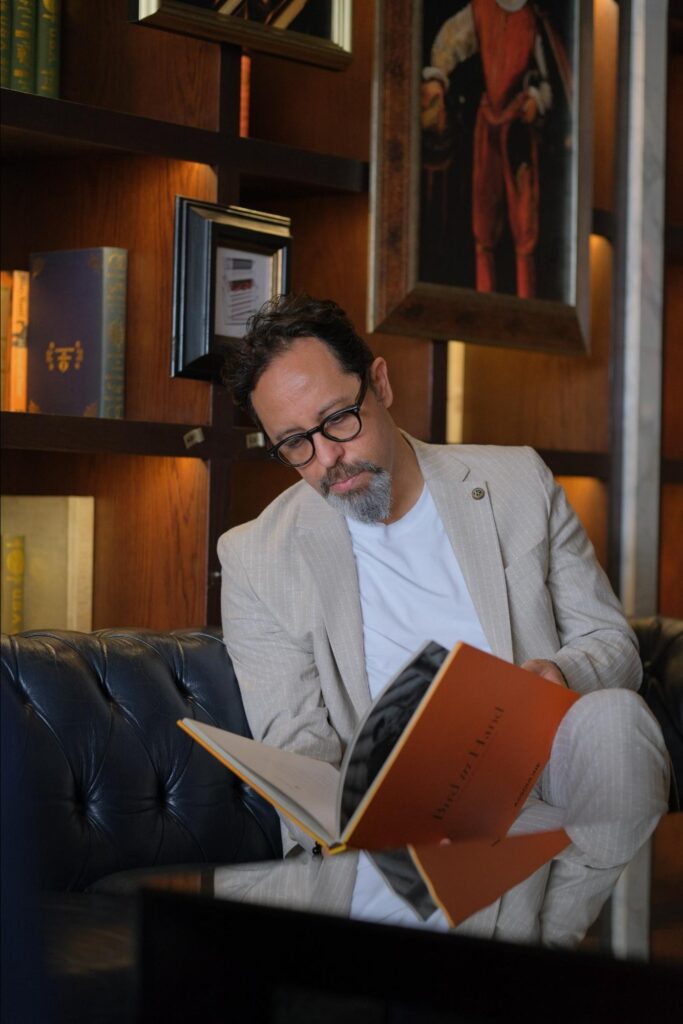 Dr. Kotti is the author of The Breast Key Book: The Hidden Stories of the Breast · via Grazia Middle East
The Stem Cell Dimension — Beyond Aesthetics
The most scientifically significant aspect of fat grafting is one that patients rarely hear about during consultation: the stem cells it carries.
Adipose tissue — body fat — is one of the richest accessible sources of mesenchymal stem cells in the human body. These are progenitor cells with the capacity to differentiate into multiple cell types, stimulate collagen synthesis, and support tissue regeneration. When fat is transferred to a new anatomical site, those stem cells are transferred with it.
“The transfer of fat cells brings stem cells into the tissues,” Dr. Kotti explains, “which helps regenerate skin and deep structures — making it a component for a much fresher look.” This is the biological basis for a phenomenon that patients describe but rarely understand: following fat grafting, the skin itself improves. Not just the contour — the texture, the elasticity, the luminosity. The tissue is genuinely being regenerated at a cellular level.
This stem cell dimension points toward a future that extends far beyond aesthetic surgery. Dr. Kotti is direct in his prediction: “One day we will even go as far as building fat cell banks, to use in medical emergencies and diseases such as myocardium regeneration caused by a heart attack, or bone regeneration after trauma defects — as the included stem cells have the capacity to adapt to their new environment and produce new cells.”
The implications are profound. Adipose-derived stem cells are already the subject of active research in cardiology, orthopaedics, and wound healing. What begins as a technique for natural breast augmentation may, within a generation, be recognised as a cornerstone of regenerative medicine.
Fat Is Fabulous — A Clinical Philosophy, Not a Slogan
The phrase fat is fabulous did not emerge from a marketing brief. It reflects a genuine clinical position: that the body’s own biological materials, properly understood and expertly mobilised, produce superior results to synthetic alternatives in the majority of cases.
Dr. Kotti is careful to note that this philosophy does not mean an uncritical embrace of excess. He encourages patients to eat well, exercise, and maintain a healthy relationship with their body composition. But he draws a firm distinction between metabolic health and the culturally conditioned impulse to war against fat entirely. “Keep some,” he says. “It’s healthy — and it’s going to be rewarding one day.”
This perspective is reinforced by the commercial and scientific context in which aesthetic surgery now operates. The global cosmetic surgery industry is projected to exceed $70 billion in market size by 2030, a scale of investment that has dramatically accelerated the pace of research and technological development across all related medical fields. The resources devoted to aesthetic surgery are, paradoxically, producing some of the most significant advances in reconstructive and regenerative medicine.
Surgeons like Dr. Kotti — who combine procedural excellence with genuine scientific curiosity — are the ones directing that progress. They are not simply performing surgeries. They are accumulating clinical evidence, refining technique, and building the empirical foundation on which the next generation of regenerative treatments will stand.
Why Transparency Matters Before Surgery
Beyond the science, Dr. Kotti is recognised for something rarer among surgeons of his standing: a commitment to patient education and transparent communication. On both his professional and personal social media platforms, he shares honest, informed, and frequently candid insights into his work — not to perform relatability, but because he believes, clinically, that informed patients achieve better outcomes.
“Information takes fear,” he says — and fear, in the context of aesthetic surgery, is one of the primary obstacles between a patient and the result they are seeking. When patients understand what fat grafting actually is, how it works, why it produces the results it does, and what the recovery entails, the decision-making process becomes grounded rather than anxiety-driven.
This is the standard against which any prospective patient should evaluate a surgeon: not simply technical credentials, but the willingness to educate, the transparency to explain, and the clinical rigour to be honest about both the possibilities and the limits of any given procedure.
Dr. Bouraoui Kotti is a plastic reconstructive and aesthetic surgeon practising in the UAE. He is a former first ambassador of Tunisia to the International Society of Aesthetic and Plastic Surgery (ISAPS) and the author of The Breast Key Book: The Hidden Stories of the Breast. An internationally awarded surgeon, he specialises in fat grafting, breast surgery, facial rejuvenation, and body contouring. Follow his work on Instagram or visit drkotti.com.
Originally featured in Grazia Middle East.
Popular Procedures
Surgical Specialties