A British Mathematician “Alfred North Whitehead” once said: “Art is the imposing of a pattern on experience, and our aesthetic enjoyment is recognition of the pattern”. With this I would like to recognize Dr Kottis’ immense talent driven by his extensive experience and thank him for his courtesy and professionalism. You are a wonderful Plastic Surgeon, but above all else, a terrific human being. Thanks again for the excellent care.
Facial · Peri-Ocular Rejuvenation · Dubai
Peri-Ocular Rejuvenation in Dubai
Are you considering peri-ocular rejuvenation in Dubai to enhance your appearance and confidence? Finding the right board-certified specialist is the most critical step in your journey. This guide covers what you need to know about the procedure, recovery, and what to expect from a premier aesthetic clinic in Dubai.
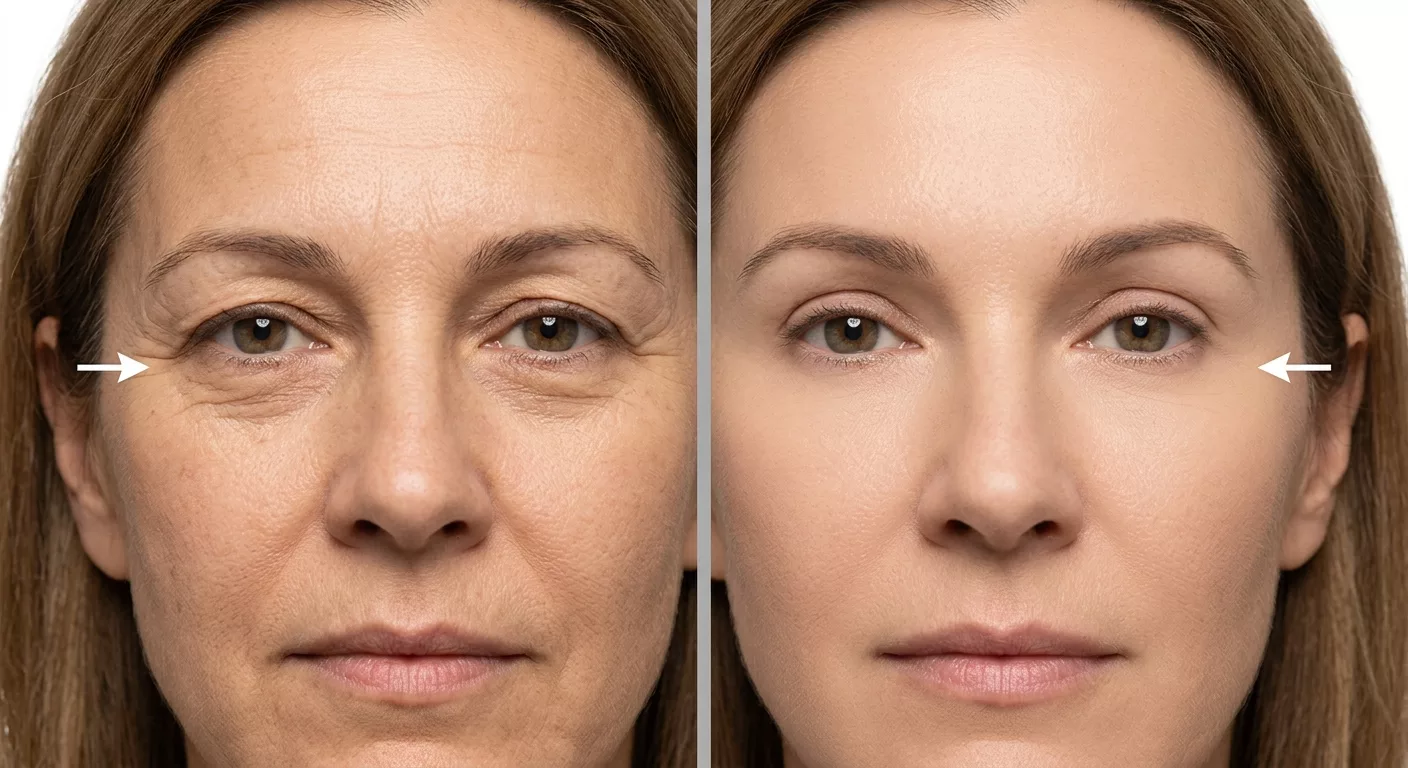
This illustration is for educational purposes only, intended to explain the surgical technique. Individual results and anatomical requirements vary per patient.
What is
Peri-Ocular Rejuvenation?
Treatment selection depends on the root cause: skin laxity or fat herniation → surgery; muscle movement (crow's feet, brow descent) → botulinum toxin; volume loss → fat grafting. Most patients need a combination.
Blepharoplasty — Surgical Option
Blepharoplasty removes excess eyelid skin and herniated fat — indicated when structural change, not volume loss, is the primary cause.
Botulinum Toxin for Crow's Feet and Brow
Botulinum toxin smooths dynamic crow's feet and creates a subtle chemical brow lift — does not address volume or skin excess.
Fat Grafting for Periocular Volume
Autologous fat grafting restores volume at the tear trough and midface with longer-lasting results than filler — suited to patients also undergoing blepharoplasty or facelift.
The Patient Journey: What to Expect
Peri-Ocular Rejuvenation — Step by Step
From your first consultation to full recovery, here is what to expect at every stage.
- 01
Initial Consultation
A thorough physical assessment and treatment planning session to align your expectations with anatomical possibilities.
- 02
Pre-Operative Preparation
Customized instructions to ensure optimal health and safety before your procedure, based on your individual medical profile.
- 03
The Procedure
Performed under appropriate anesthesia in a state-of-the-art facility, with a focus on precision, safety, and natural-looking outcomes.
- 04
Recovery Phase
Dedicated post-operative care and follow-up appointments to monitor progress. Recovery timelines depend on individual anatomy and healing response.
EBOPRAS · MD PhD · 20 yrs
Our Peri-Ocular Rejuvenation Surgeon in Dubai
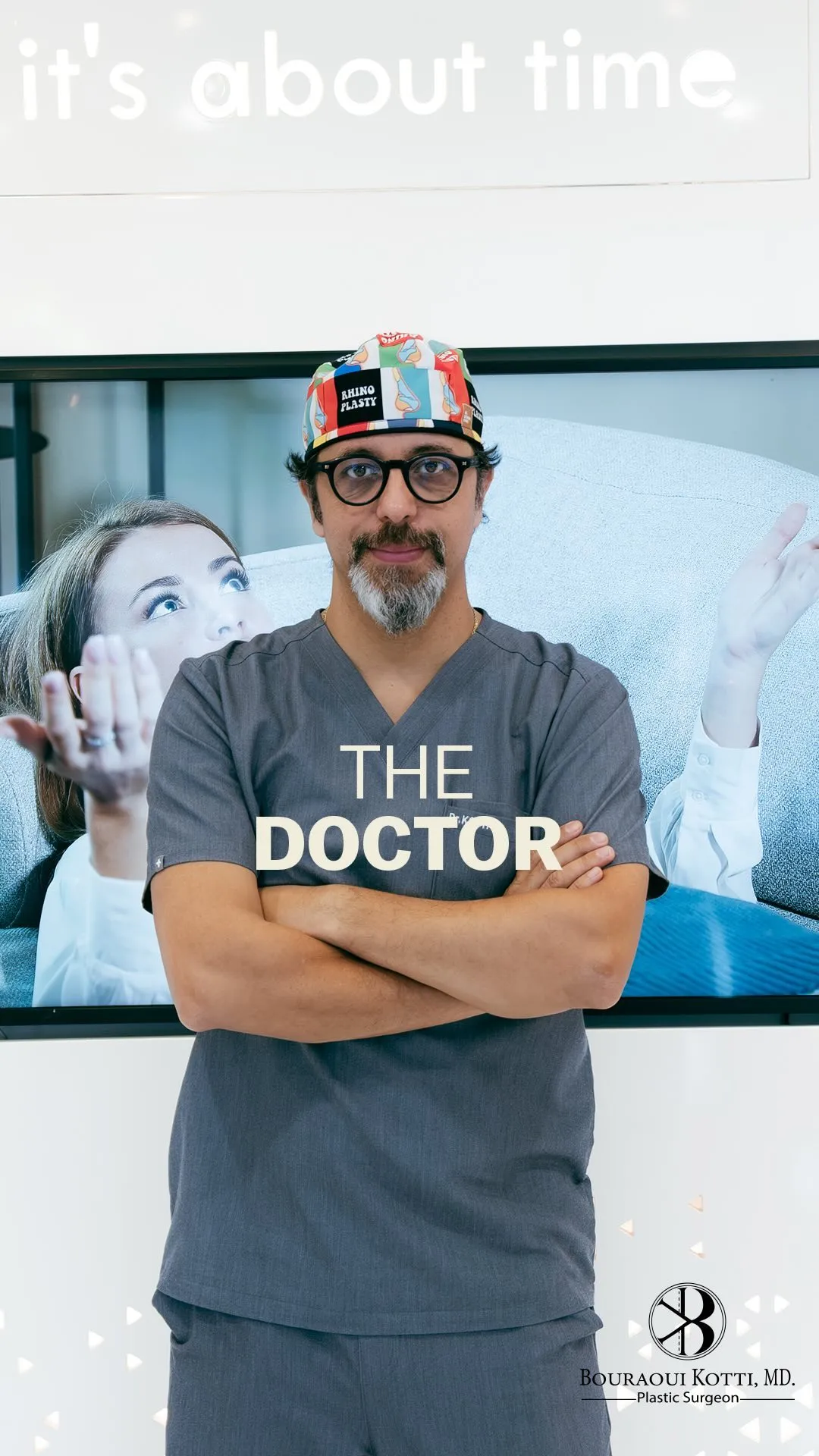
Every procedure on this page is performed by Dr. Bouraoui Kotti — EBOPRAS-certified plastic surgeon, MD PhD, with over 20 years of international experience. Review his credentials, training, and clinical philosophy before your consultation.
View Dr. Kotti's Surgeon ProfilePeri-Ocular Rejuvenation — Frequently Asked Questions
What causes dark circles and hollow under-eyes?
The most common cause is volume loss at the tear trough — the groove between the lower eyelid and the cheek — which creates a shadow as light falls into the depression. Contributing factors include genetic predisposition, age-related midface fat loss, and visible vasculature through thin lower eyelid skin. Dark circles from hyperpigmentation are a separate cause requiring different management. Treatment depends on identifying which mechanism is primary.
What is the difference between under-eye bags and dark circles?
Under-eye bags are caused by herniation of the orbital fat pad forward through the weakened orbital septum — creating a physical protrusion. Dark circles are primarily caused by hollowness at the tear trough casting a shadow, thinning skin making the underlying vasculature visible, or hyperpigmentation. They often co-exist but require different treatment: bags are addressed surgically with lower blepharoplasty; shadowing from hollowness is a volume problem; pigmentation requires skin-focused management.
What is the role of brow lift in peri-ocular rejuvenation?
Brow descent is a significant contributor to upper eyelid heaviness and a tired appearance. When the brow falls at or below the orbital rim, it pushes skin over the upper lid and reduces the visible lid platform. A brow lift — endoscopic, temporal, or thread — restores brow position and can substantially refresh the upper face without removing eyelid skin. It is assessed as part of the full upper facial evaluation during consultation.
Can peri-ocular rejuvenation be combined with facelift surgery?
Yes. Blepharoplasty is frequently performed alongside facelift surgery for patients seeking comprehensive facial rejuvenation — addressing the upper and lower thirds of the face in a single session. Fat grafting to the periocular and midface area is also commonly combined with facelift. Combined procedures reduce overall recovery time compared to staged operations and allow the surgeon to achieve a globally balanced result.
Can peri-ocular treatments be combined in one session?
Yes — combination treatment is often the most effective approach. Common pairings: upper blepharoplasty with botulinum toxin for crow's feet; lower blepharoplasty with tear trough filler for residual hollowness; blepharoplasty with brow lift when brow descent drives upper lid heaviness; fat grafting with blepharoplasty for simultaneous volume and structural correction. The plan is established during consultation based on individual anatomy.
When is non-surgical treatment enough and when is surgery necessary?
Non-surgical treatments (botulinum toxin, fat grafting) are appropriate when the primary concerns are dynamic wrinkles, mild brow descent, or volume loss — with no significant skin excess or fat herniation. Surgery becomes necessary when there is structural change that injectables cannot correct: drooping eyelid skin impairing the visual field, true herniated fat causing persistent bags, or advanced brow ptosis. The dividing line is not age but anatomy — a consultation establishes which category applies.
Does botulinum toxin treat under-eye bags?
No. Botulinum toxin relaxes muscles — it addresses crow's feet and mild brow descent but has no effect on herniated fat (under-eye bags) or skin excess. For patients with true lower eyelid fat herniation, lower blepharoplasty is the appropriate treatment. Toxin may be used alongside surgery or filler to address the full periocular area comprehensively.
Can brow descent cause eyelid heaviness?
Yes — brow ptosis (brow descent) is a common cause of upper eyelid heaviness that is frequently misidentified as excess eyelid skin. When the brow sits at or below the orbital rim, it pushes skin down over the upper lid and contributes to a hooded appearance. Performing blepharoplasty alone in this scenario removes too much skin without correcting the brow position. A pre-operative assessment distinguishes true eyelid excess from brow-driven lid heaviness.
Is peri-ocular rejuvenation suitable for men?
Yes. Male patients present with the same range of periocular concerns — excess upper eyelid skin, under-eye bags, crow's feet, and brow descent — and respond to the same treatments. The clinical approach is the same; aesthetic goals are calibrated to maintain natural masculine features. A consultation establishes the appropriate treatment plan regardless of gender.
How do I know which peri-ocular treatment is right for me?
The correct treatment depends on the root cause. Volume loss → fillers or fat grafting. Skin laxity and fat herniation → blepharoplasty. Crow's feet and mild brow descent → botulinum toxin. Most patients have more than one contributing factor. A clinical consultation — assessing brow position, eyelid skin, fat distribution, and tissue quality — establishes the right treatment plan and sequence.
Related Procedures in Dubai
Other Facial Procedures in Dubai
Verified Patient Reviews · Google 4.9★ · 200+ Authentic Stories
Patient Experiences in Dubai — Plastic & Aesthetic Surgery Published with Written Consent.
The following reviews are published with documented written patient consent.
MD PHD EBOPRAS* Certified Plastic Surgeon
Dubai, UAE
Specialist Plastic Surgeon · EBOPRAS Certified · Dubai UAE
Peri-Ocular Rejuvenation in Dubai
Individual Assessment · Natural Results.
Dr. Bouraoui Kotti is a Specialist Plastic Surgeon (EBOPRAS-certified) with over 20 years of clinical experience, providing aesthetic and reconstructive surgery based on international standards.
