



Body · Labia Minora Reduction (Labiaplasty) · Dubai

Labia Minora Reduction (Labiaplasty) in Dubai

Are you considering labia minora reduction (labiaplasty) in Dubai to enhance your appearance and confidence? Finding the right board-certified specialist is the most critical step in your journey. This guide covers what you need to know about the procedure, recovery, and what to expect from a premier aesthetic clinic in Dubai.

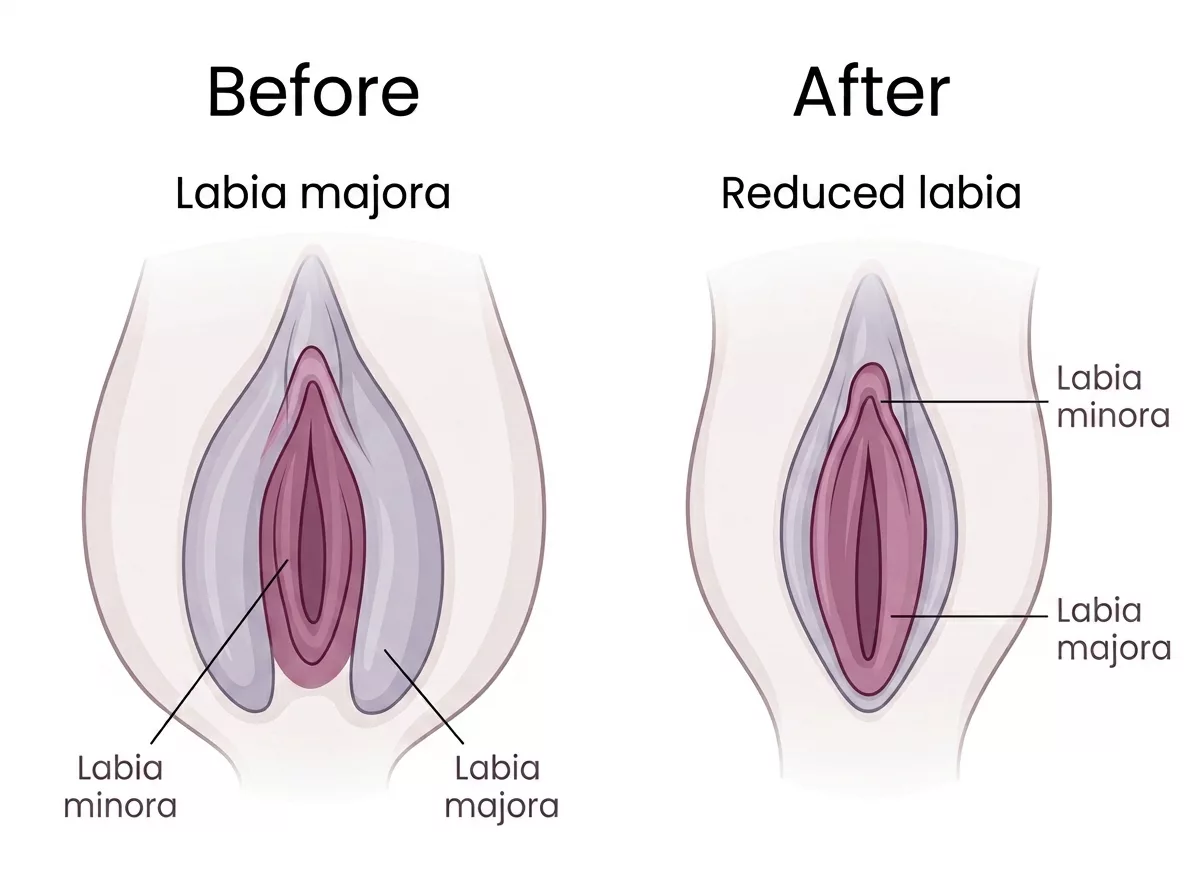
Labia Minora Reduction (Labiaplasty) Dubai — Dr. Kotti EBOPRAS before and after results

This illustration is for educational purposes only, intended to explain the surgical technique. Individual results and anatomical requirements vary per patient.

What is

Labia Minora Reduction (Labiaplasty)?

Labiaplasty — also called labia minora reduction — is surgery to reshape or reduce the inner lips of the vulva. Enlargement may be present from adolescence or develop after childbirth, ageing, or weight change. The procedure addresses both functional discomfort (chafing, irritation, pain during activity or intimacy) and aesthetic asymmetry, when clinically appropriate.
At Seline Clinic, Jumeirah, Dubai, Dr. Bouraoui Kotti performs labiaplasty using edge-trim or wedge techniques tailored to individual anatomy. Optional clitoral hood reduction may be included for harmony. Sections below cover candidacy, techniques, recovery, risks, and comparison with vaginoplasty. Results vary per individual. A consultation is required.

Who Is a Candidate for Labiaplasty?

Labiaplasty may be appropriate when enlarged, asymmetric, or redundant labia minora cause physical discomfort or distress about appearance. Common reasons patients seek assessment at Seline Clinic, Jumeirah, Dubai include:

  • Irritation, chafing, or itching during exercise, cycling, or daily wear
  • Discomfort during sexual intercourse or hygiene difficulties
  • Asymmetry or protrusion beyond the labia majora
  • Changes after childbirth, ageing, or significant weight fluctuation
  • Post-traumatic or congenital enlargement present from adolescence

Candidacy depends on anatomy, medical history, and goals — confirmed only after individual clinical evaluation with Dr. Bouraoui Kotti, EBOPRAS-certified specialist plastic surgeon.

Functional and Aesthetic Goals

Labiaplasty is not solely a cosmetic procedure. Many women pursue surgery because elongated inner labia create functional problems — friction, swelling, or pain — while others seek improved symmetry and proportion without prominent physical symptoms. Both motivations are valid clinical indications when anatomy supports surgical correction. The operative plan prioritises natural contour, comfort, and preservation of sensitivity where anatomically feasible.

Surgical Techniques: Trim vs Wedge

Dr. Bouraoui Kotti selects technique based on tissue quality, degree of enlargement, and desired scar placement:

  • Edge trim (linear resection) — removes excess tissue along the free edge of the labia minora. Suitable when uniform reduction along the border is the primary goal.
  • Wedge resection — excises a V- or wedge-shaped segment, preserving the natural edge contour. Often preferred when maintaining a non-serrated labial border is important.

Clitoral hood reduction may be performed in the same session when redundant hood tissue affects symmetry or comfort — planned only when clinically indicated, not as a default add-on.

Risks and Contraindications

As with any surgery, labiaplasty carries risks including bleeding, infection, swelling, bruising, delayed healing, asymmetry, scarring, and temporary or permanent changes in sensation. Poor technique or inadequate aftercare can worsen scarring or contour. Relative contraindications include uncontrolled diabetes, active infection, bleeding disorders, pregnancy, lactation, and unstable cardiovascular or autoimmune conditions. A full medical history is taken before booking surgery under DHA licensing standards.

Labiaplasty Recovery Timeline

PhaseWhat to expect
Days 1–7Swelling, mild discomfort managed with prescribed medication; rest; loose clothing; hygiene per surgical protocol
Weeks 2–3Gradual return to desk-based work; avoid strenuous activity and friction on the area
Weeks 4–6Most daily activities resume; sexual intercourse and vigorous exercise typically deferred until surgical clearance — often around 5–6 weeks
Months 2–3Swelling continues to subside; scars mature and fade with proper care

Individual timelines vary. A personalised post-operative protocol is provided at discharge and reviewed at follow-up.

Labiaplasty vs Vaginoplasty

Labiaplasty addresses the external labia minora (and optionally the clitoral hood) — size, shape, and symmetry. Vaginoplasty tightens internal vaginal muscles and mucosa after childbirth-related laxity. The procedures solve different anatomical problems and may be combined in a single operative plan when both external and internal concerns are present — discussed during consultation.

Can Labia Minora Be Reduced?

Yes. Labia minora reduction is the established surgical treatment when inner labial tissue is enlarged, asymmetric, or protrudes beyond the labia majora — causing chafing, a hanging appearance, or discomfort. Non-surgical methods cannot remove excess tissue; they may only ease surface irritation temporarily. Surgical labiaplasty (trim or wedge) is the definitive approach when clinical examination confirms redundant labial skin or mucosa.

How to Fix Hanging Labia

A hanging labia — when the labia minora extend past the outer lips — is corrected by surgical resection, not exercise or topical products. Dr. Bouraoui Kotti assesses whether edge trim or wedge resection better preserves a natural border while reducing protrusion. Goals include eliminating friction during sport or intercourse, improving hygiene access, and restoring proportion between inner and outer labia. Extent of tissue removal is conservative and anatomy-specific to avoid over-resection.

Labia Minora Reduction Without Surgery

Non-surgical options — laser tightening, radiofrequency, or topical remedies marketed for home use — cannot physically remove enlarged labia minora. They may modestly affect skin quality at best but do not address structural hypertrophy or hanging tissue. Women searching for labia minora reduction without surgery should understand that meaningful size reduction of protruding inner labia requires surgical labiaplasty when symptoms or anatomy warrant it. A consultation clarifies whether conservative measures are sufficient or surgery is indicated.

Can You Reduce Labia Minora Naturally at Home?

No home remedy — massage, herbal oils, exercises, or ice — can permanently shrink hypertrophic labia minora. The inner labia are mucocutaneous tissue; their size is determined by genetics, hormones, childbirth, and ageing. Temporary swelling may fluctuate, but hanging or enlarged labia do not resolve with DIY treatments. Unverified online methods risk irritation or delayed appropriate care. Evidence-based assessment with a specialist plastic surgeon is the correct first step.

Do Labia Grow Back After Labiaplasty?

Removed labial tissue does not grow back in the sense of regenerating to its pre-surgical size. Results are long-lasting. However, significant weight gain, hormonal changes, pregnancy, or ageing can alter surrounding vulvar appearance over time. Minor asymmetry or scar maturation may change how results look during the first 12–18 months. Revision labiaplasty is occasionally performed for under-correction or contour concerns — discussed if needed at follow-up.

Labia Minora vs Labia Majora Reduction (Labia Majoraplasty)

This page focuses on labia minora surgery (inner lips). Labia majora reduction — sometimes called labia majoraplasty — addresses the outer lips when they are enlarged, deflated, or sagging, often using excision or fat grafting depending on whether excess skin or volume loss is the problem. Inner and outer labia concerns are anatomically distinct and may coexist. Combined planning is possible when both require correction; technique selection is determined at examination.

Labiaplasty Side Effects

Common temporary effects include swelling, bruising, tenderness, and sensitivity at the surgical site. Less common complications include infection, bleeding, wound separation, asymmetry, hypertrophic scarring, chronic pain, and altered genital sensation. Over-resection can cause dryness or discomfort — a reason to choose conservative, experienced technique. Side effects are reviewed during informed consent; adherence to post-operative care and follow-up supports uncomplicated healing.

Labia Reduction Before and After: What to Expect

Before surgery, clinical photographs may be taken for planning (with consent). Immediately after labiaplasty, swelling obscures the final contour. Visible refinement emerges over weeks to months as oedema resolves and scars mature. Before-and-after documentation is shared on Instagram with patient consent — individual results vary by anatomy, technique, and healing response. Realistic expectations are set during consultation.

What Does Labiaplasty Pricing Depend On?

The cost depends on the surgical technique required, the complexity of the individual case, anaesthesia, facility standards, and whether clitoral hood reduction, labia majoraplasty, or combined intimate procedures are included. An accurate assessment requires an individual clinical evaluation.

Labiaplasty Near Me — Jumeirah, Dubai

Dr. Bouraoui Kotti practices at Seline Clinic, Villa 623, Jumeirah Street, Umm Suqeim 1, Dubai — DHA-licensed, EBOPRAS-certified specialist plastic surgeon. Patients across Dubai, the UAE, and the Gulf region attend for private labiaplasty consultation. Appointments are confidential; surgical planning is individualised after in-person or virtual clinical assessment.

Labia Minora Reduction (Labiaplasty) — Before & After

Before-and-after documentation for this procedure is shared on Instagram with patient consent. View clinical outcomes and updates on our profile.

Procedure insights and clinical updates for this treatment are available on Instagram.

View Before & After on Instagram

The Patient Journey: What to Expect

Labia Minora Reduction (Labiaplasty) — Step by Step

From your first consultation to full recovery, here is what to expect at every stage.

  1. 01

    Initial Consultation

    A thorough physical assessment and treatment planning session to align your expectations with anatomical possibilities.

  2. 02

    Pre-Operative Preparation

    Customized instructions to ensure optimal health and safety before your procedure, based on your individual medical profile.

  3. 03

    The Procedure

    Performed under appropriate anesthesia in a state-of-the-art facility, with a focus on precision, safety, and natural-looking outcomes.

  4. 04

    Recovery Phase

    Dedicated post-operative care and follow-up appointments to monitor progress. Recovery timelines depend on individual anatomy and healing response.

EBOPRAS · MD PhD · 20 yrs

Our Labia Minora Reduction (Labiaplasty) Surgeon in Dubai

Every procedure on this page is performed by Dr. Bouraoui Kotti — EBOPRAS-certified plastic surgeon, MD PhD, with over 20 years of international experience. Review his credentials, training, and clinical philosophy before your consultation.

View Dr. Kotti's Surgeon Profile

Labia Minora Reduction (Labiaplasty) — Frequently Asked Questions

Can labia minora be reduced?

Yes. Labia minora can be surgically reduced through labiaplasty when inner labial tissue is enlarged, asymmetric, or hangs beyond the outer labia. Trim or wedge resection removes excess tissue while preserving a natural edge. Non-surgical methods cannot achieve meaningful size reduction of hypertrophic labia — surgery is the established treatment when clinical examination supports it.

How do you fix a hanging labia?

Hanging labia — protruding labia minora — is corrected by surgical labiaplasty, not exercise or home remedies. The surgeon removes a carefully measured amount of tissue using edge-trim or wedge technique, restoring proportion and reducing chafing during activity or intimacy. Conservative resection avoids over-correction. Technique is selected at consultation based on tissue quality and how far the inner labia extend.

Do labia grow back after labiaplasty?

Excised labial tissue does not regenerate to its original size. Labiaplasty results are long-lasting. Pregnancy, weight change, or ageing may alter vulvar appearance over years, and scars mature during the first 12–18 months — which can change how results look during healing. Revision surgery is uncommon but possible for asymmetry or under-correction.

Can labia minora be reduced without surgery?

No non-surgical treatment can remove enlarged or hanging labia minora. Laser or energy-based devices may modestly affect surface skin but do not resect redundant inner-labial tissue. When protrusion causes functional problems or distress confirmed on examination, surgical labiaplasty is the appropriate intervention. A consultation determines whether symptoms can be managed conservatively or surgery is indicated.

How can I reduce labia minora naturally at home?

There is no evidence-based home method to permanently shrink labia minora. Massage, oils, exercises, and herbal remedies do not remove hypertrophic tissue. Temporary swelling may fluctuate with hormones, but structural enlargement persists. Relying on unverified online treatments can delay proper assessment. Consult an EBOPRAS-certified specialist plastic surgeon for an evidence-based plan.

What are labiaplasty surgery side effects?

Temporary side effects include swelling, bruising, soreness, and itching during healing. Potential complications include infection, bleeding, wound separation, asymmetry, scarring, painful adhesions, and temporary or permanent sensation change. Over-resection is a preventable risk with conservative technique. All risks are reviewed during informed consent; following post-operative instructions and attending follow-up reduces complication rates.

What is labia majora reduction (labia majoraplasty)?

Labia majoraplasty addresses the outer labia (labia majora) — not the inner labia targeted by standard labiaplasty. It may involve skin excision when the outer lips are enlarged or sagging, or fat grafting when volume loss causes deflation. Inner and outer labial concerns are separate anatomical problems and may be treated together when both are present. Technique is determined at clinical examination.

What does labia reduction surgery look like before and after?

Before surgery, inner labia may protrude past the outer lips. Swelling after labiaplasty masks early contour; refinement emerges over weeks to months. Before-and-after photographs are published on Instagram with patient consent — outcomes vary by anatomy, technique, and healing. Realistic expectations are set during consultation.

What does labiaplasty pricing depend on in Dubai?

Treatment costs depend on surgical complexity, technique, facility standards, and individualized planning. An in-person clinical assessment is required for an accurate, personalized estimate.

Where can I get labiaplasty near me in Dubai?

Dr. Bouraoui Kotti performs labiaplasty at Seline Clinic, Jumeirah Street, Umm Suqeim 1, Dubai — accessible from all Dubai districts. He is an EBOPRAS-certified specialist plastic surgeon, DHA-licensed, with 20+ years of international experience. Consultations are private and confidential. Book an assessment to discuss hanging labia, asymmetry, or postpartum changes.

What is labiaplasty (labia minora reduction) in Dubai?

Labiaplasty is surgical remodelling of the labia minora — the inner lips of the vulva — to reduce size, improve symmetry, or relieve discomfort from enlarged or protruding tissue. It is performed as an outpatient procedure under anaesthesia by a specialist plastic surgeon. The goal is a natural contour that preserves function and comfort. Technique and extent of tissue removal are customised at consultation based on anatomy and symptoms.

Is labiaplasty only for cosmetic reasons?

No. While some patients seek improved aesthetics alone, many pursue labiaplasty for functional reasons: chronic irritation from clothing or exercise, hygiene difficulty, pain during intercourse, or recurrent chafing when inner labia protrude beyond the outer labia. Both functional and aesthetic concerns are valid indications when clinical examination supports surgical correction.

Who is a good candidate for labiaplasty?

Suitable candidates are generally healthy adults with stable anatomy who experience discomfort or distress related to labial size or asymmetry. Common profiles include women with congenital enlargement, postpartum changes, or age-related laxity. Candidates should not be pregnant or breastfeeding, should have realistic expectations, and must disclose full medical history. Final suitability is determined during a private consultation with Dr. Bouraoui Kotti in Jumeirah, Dubai.

Is labiaplasty safe?

When performed by a DHA-licensed, board-certified specialist in an accredited facility with appropriate anaesthesia and sterile technique, labiaplasty is established intimate surgery. Risks include bleeding, infection, swelling, scarring, asymmetry, and changes in sensation. Patient selection, precise technique, and adherence to post-operative care reduce complication rates. Safety protocols and informed consent are reviewed before surgery.

How painful is labiaplasty?

The procedure itself is not felt under anaesthesia. Post-operative discomfort — soreness, swelling, and tightness — is expected in the first several days and is managed with prescribed analgesia and rest. Most patients describe pain as mild to moderate and improving progressively. Avoiding friction, following hygiene instructions, and attending follow-up appointments support comfortable healing.

Does labiaplasty leave scars?

Any surgical incision creates a scar. Scars are placed along natural labial borders or within folds to minimise visibility. With wedge or trim techniques performed carefully, scars typically mature and fade over months. Poor technique or inadequate aftercare can worsen scar appearance — another reason to choose an experienced specialist. Scar care guidance is provided at discharge.

What is the difference between trim and wedge labiaplasty?

Trim (edge resection) removes tissue along the free edge of the labia minora for uniform reduction. Wedge resection removes a central segment in a V-shape, preserving the natural border contour and often producing a less irregular edge. Dr. Bouraoui Kotti selects the approach based on tissue thickness, degree of enlargement, asymmetry, and whether the patient prioritises edge contour or maximum reduction.

Can clitoral hood reduction be combined with labiaplasty?

Yes. When redundant clitoral hood tissue contributes to asymmetry, bulk, or discomfort, hood reduction may be performed in the same session. It is not automatic — inclusion depends on clinical examination and patient goals. Combined planning ensures proportional, harmonious results without unnecessary tissue removal.

Can labiaplasty be combined with vaginoplasty?

Yes. Labiaplasty addresses external labial concerns; vaginoplasty addresses internal vaginal laxity. Combining both in one operative session — sometimes called complete intimate rejuvenation — is common when patients have both external protrusion and internal laxity after childbirth. A single anaesthesia event and coordinated recovery plan apply. Suitability is assessed individually.

What does labiaplasty recovery involve?

Recovery includes rest, prescribed medications (often including antibiotics and anti-inflammatories as indicated), careful wound hygiene, and loose clothing to reduce friction. Swelling peaks in the first week and subsides over weeks. Strenuous exercise, cycling, and sexual activity are typically avoided for approximately 5–6 weeks until cleared at follow-up. A written protocol is provided before discharge.

When can I return to work and exercise after labiaplasty?

Desk-based work is often possible within 1–2 weeks, depending on comfort and swelling. Physical jobs or activities that pressure the area may require longer leave. Light walking is usually encouraged early; gym, running, and cycling are deferred until surgical clearance — typically around 5–6 weeks. Individual guidance is given based on healing at follow-up.

Will labiaplasty affect sexual sensation?

Technique aims to preserve nerve supply and sensitivity, but any surgery near genital tissue carries a risk of temporary or permanent sensation change. Most patients report satisfactory intimacy after healing; outcomes vary individually. Discussing sensation goals during consultation allows technique selection that balances reduction with nerve preservation.

Can labiaplasty go wrong? What are the complications?

Complications can include hematoma, infection, wound separation, over-resection, under-correction, asymmetry, painful scarring, and altered sensation. Choosing an experienced EBOPRAS-certified surgeon, following pre- and post-operative instructions, and attending follow-up reduce risk. Revision surgery is occasionally required for contour asymmetry — discussed if it arises.

What are contraindications to labiaplasty?

Surgery is deferred when active genital infection, pregnancy, or lactation is present. Relative contraindications include uncontrolled diabetes, bleeding disorders, unstable cardiovascular disease, and certain autoimmune conditions. Smoking may impair healing and is addressed during pre-operative assessment. Full medical clearance is obtained before scheduling.

Can I have labiaplasty after childbirth?

Yes — postpartum labial changes are a common indication. Surgeons typically recommend waiting until tissues have stabilised and breastfeeding has ended, often several months after delivery. Timing balances healing from childbirth with surgical safety. Future pregnancy is possible after labiaplasty; further childbirth may affect results and is discussed during family planning conversations.

Why choose an EBOPRAS-certified surgeon for labiaplasty in Dubai?

EBOPRAS certification (European Board of Plastic, Reconstructive and Aesthetic Surgery) reflects rigorous specialist training in aesthetic and reconstructive surgery. Dr. Bouraoui Kotti brings 20+ years of international clinical experience, DHA-licensed practice in Jumeirah, Dubai, and direct surgeon involvement from consultation through follow-up — with strict confidentiality for intimate procedures.

Verified Patient Reviews · Google 4.9★ · 200+ Authentic Stories

Patient Experiences in Dubai — Plastic & Aesthetic Surgery Published with Written Consent.

The following reviews are published with documented written patient consent.

Swipe Reviews
Verified Patient

A British Mathematician “Alfred North Whitehead” once said: “Art is the imposing of a pattern on experience, and our aesthetic enjoyment is recognition of the pattern”. With this I would like to recognize Dr Kottis’ immense talent driven by his extensive experience and thank him for his courtesy and professionalism. You are a wonderful Plastic Surgeon, but above all else, a terrific human being. Thanks again for the excellent care.

Nadia

Verified Patient

je voudrais exprimer ma gratitude par ce simple témoignage ki ne saura être suffisant pr vs remercier!!une citation dit:soyons reconnaissants aux personnes ki ns donnent du bonheur.le résultat m’a agréablement surpris!!D doigts d’ange!Du beau travail!vs avez fait preuve de professionnalisme et de compétence!! Je suis vrmnt très heureuse

Dami

Verified Patient

Thank you Doctor Bouraoui Kotti for everything. I am very satisfied with the clinical experience and the outcomes of my mammoplasty, Botox and fillers. Looking forward to my next procedure. Thank you for your professional care.

Hana Fehri .Actress

MD PHD EBOPRAS* Certified Plastic Surgeon

Dubai, UAE

Consultant Plastic Surgeon · EBOPRAS Certified · Dubai UAE

Labia Minora Reduction (Labiaplasty) in DubaiIndividual Assessment · Natural Results.

Dr. Bouraoui Kotti is a Consultant Plastic Surgeon (EBOPRAS-certified) with over 20 years of clinical experience, providing aesthetic and reconstructive surgery based on international standards.

Menu

Expert Clinical Assessment

World-class aesthetic care in a safe, judgment-free environment.

Select one or more procedures.

Add one http:// or https:// image link per field (.jpg, .png, .webp, etc.). Preview appears when the URL is valid.

Optional notes only — do not paste image links here.