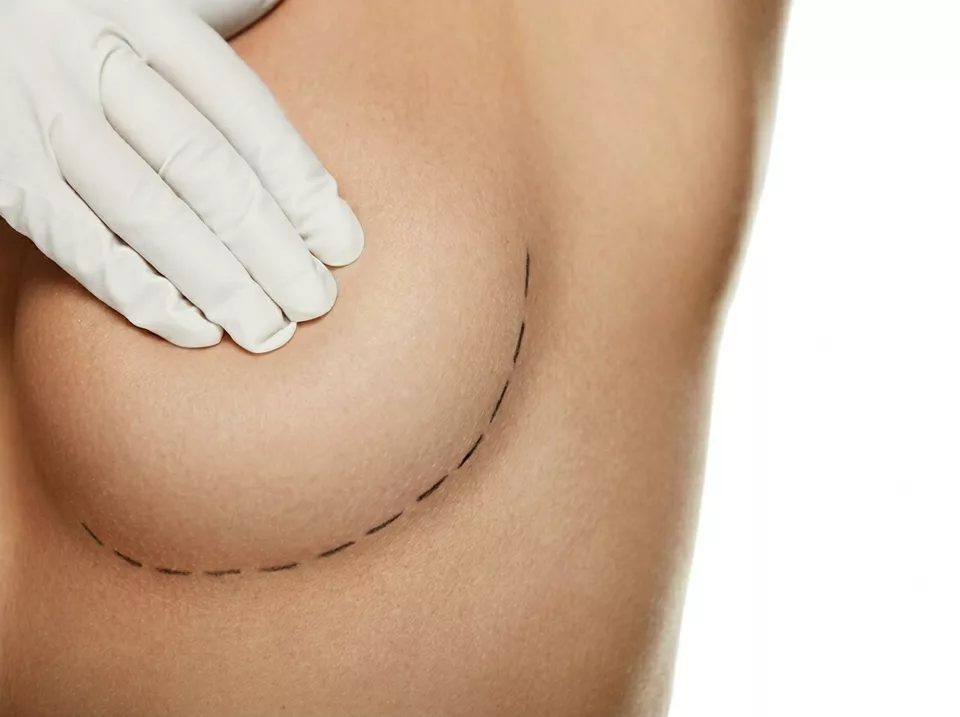
The Chignon Mastopexy is a specialized breast lift technique published in international peer-reviewed literature. It represents a conceptually different approach to mastopexy surgery — addressing the internal glandular architecture of the breast to create a durable, natural-looking result without the need for synthetic implants or mesh.
For those searching for the best plastic surgery in dubai, the Chignon technique offers a unique solution for “auto-augmentation,” using your own tissue to restore volume and projection.
The Chignon Mastopexy uses two internal glandular flaps — folded and suspended inside the breast — to create a durable anatomical support structure. It restores central volume and projection without synthetic implants. The technique was published in Aesthetic Plastic Surgery journal (2018) and provides a superior “internal lift” compared to standard skin-only procedures.
Mastopexy vs. Breast Lift: Understanding the Terms
Many patients ask, “Is mastopexy the same as a breast lift?” The answer is yes. Mastopexy is the surgical term used by EBOPRAS-certified Consultants. Whether you are seeking a bilateral mastopexy (correcting both breasts) or a mastopexy with augmentation (adding volume), the goal is always to reposition the breast to a more youthful height.
The Chignon technique goes further than a standard lift by focusing on the gland itself, solving the anatomical problem of internal tissue descent.
Advanced Mastopexy Techniques
The choice of incision pattern depends on the degree of sagging (ptosis). During your mastopexy treatment plan, the surgeon will recommend one of the following:
- Lollipop Mastopexy (Circumvertical): Ideal for moderate sagging.
- Anchor Mastopexy (Wise Pattern): Necessary for significant correction.
- Chignon Mastopexy: Can be applied through either incision to provide internal glandular support.
The Problem with Mesh in Mastopexy
A common question is, “What mesh is used in mastopexy?” While some techniques use “Internal Bra” mesh to support the breast, this introduces a foreign material into the body. The Chignon technique is designed to avoid this. By folding and suspending the patient’s own glandular flaps, it creates a natural “chignon” of tissue that provides the same support as mesh but with the biocompatibility of your own tissue.
The “Auto-Augmentation” Effect
One of the greatest advantages of the Chignon technique is its ability to restore projection without implants. By concentrating the existing breast tissue centrally, it creates an auto-augmentation effect.
However, for patients who have lost significant volume, mastopexy with implants or mastopexy with augmentation via fat transfer can still be performed alongside the Chignon flaps for a truly customized transformation.
Recovery and Longevity
How long do mastopexy results last? While no surgery can stop the clock, the Chignon Mastopexy is engineered for longevity.
- Internal Support: Because the gland is suspended, the weight of the breast is not carried by the skin alone.
- Recovery: Patients typically follow a 4-6 week recovery timeline, wearing a specialized surgical bra to support the internal architecture.
- Final Results: Scars mature over 12-18 months, often becoming very discreet as they follow the natural contours of the breast.
Choosing the Right Mastopexy Procedure
When evaluating mastopexy cost or searching for mastopexy surgery videos online, it is easy to become overwhelmed by the different patterns. The key to a successful result is not the scar shape, but the internal work performed.
Why choose the Chignon technique? ✓ Published and peer-reviewed (PubMed 29124373). ✓ Uses your own tissue (no mesh, no implants required). ✓ Addresses the internal glandular descent. ✓ Performed by EBOPRAS-certified surgical Consultants.
Conclusion
The Chignon Mastopexy represents the evolution of breast lift surgery. It moves beyond simple skin tightening to provide a structural, anatomical correction that restores the breast’s youthful projection.
Ready for a natural, long-lasting lift? Book a Consultation for a professional clinical evaluation.
Related Procedures:
- Breast Lift Dubai Complete Guide
- Breast Augmentation Dubai
- Breast Reduction Dubai
- Fat Grafting Dubai
Sources
- The Chignon Mastopexy: A Double Glandular Suspended Flaps for an Auto-Augmentation Effect — Aesthetic Plastic Surgery (2018).
- View on PubMed
Disclaimer: This information is for educational purposes. Results depend on individual anatomy. A consultation with an EBOPRAS-certified surgeon is mandatory.
Frequently Asked Questions
Is mastopexy the same as a breast lift?
Yes, mastopexy is the clinical term for a breast lift. Both terms describe the surgical repositioning and reshaping of the breast tissue and skin to address sagging (ptosis). The Chignon Mastopexy is an advanced variation that focuses on the internal glandular architecture to provide a more durable 'internal lift' compared to traditional methods.
How long do mastopexy results last?
Mastopexy results are long-lasting, typically remaining apparent for many years. However, the longevity depends on skin quality, body weight stability, and natural aging. Techniques like the Chignon Mastopexy, which create an internal glandular support structure, are designed to be more durable than techniques relying solely on skin tension.
What mesh is used in mastopexy?
While some surgeons use synthetic or biological mesh (Internal Bra) to support the breast, the Chignon Mastopexy technique typically avoids the need for foreign materials. Instead, it uses the patient's own glandular tissue (glandular flaps) to create a natural, internal support structure. This 'auto-augmentation' effect reduces the risk of foreign body reactions.
What are the disadvantages of mastopexy?
The primary 'disadvantage' of any mastopexy is the presence of permanent scars (though they fade over 12-18 months). Additionally, results are not immune to future weight fluctuations or pregnancy. The Chignon technique addresses the common disadvantage of 'bottoming out' by providing internal glandular suspension.
How much does a mastopexy cost in Dubai?
The cost of a mastopexy in Dubai depends on the surgical technique required (Lollipop, Anchor, or Chignon), whether it is a bilateral mastopexy (both sides), and if it is combined with augmentation. A personalized price depends on an individual clinical evaluation.
What is the difference between Lollipop and Anchor mastopexy?
A 'Lollipop' (circumvertical) mastopexy involves an incision around the areola and a vertical line down. An 'Anchor' (Wise pattern) mastopexy adds a horizontal incision in the breast crease. The choice depends on the degree of ptosis, which is assessed during your consultation.
Popular Procedures
Specialties
Related Clinical Articles
Breast Augmentation: Implant Types & Recovery Guide
Breast augmentation guide comparing implant types, profiles, placement planes, incisions, recovery, risks, and fat-transfer alternatives.
Apr 28, 2026
Breast Lift Dubai | Mastopexy Techniques and Recovery Guide
Breast lift and mastopexy guide covering incision patterns, Chignon technique, augmentation combinations, scars, candidacy, and recovery.
May 15, 2026

