
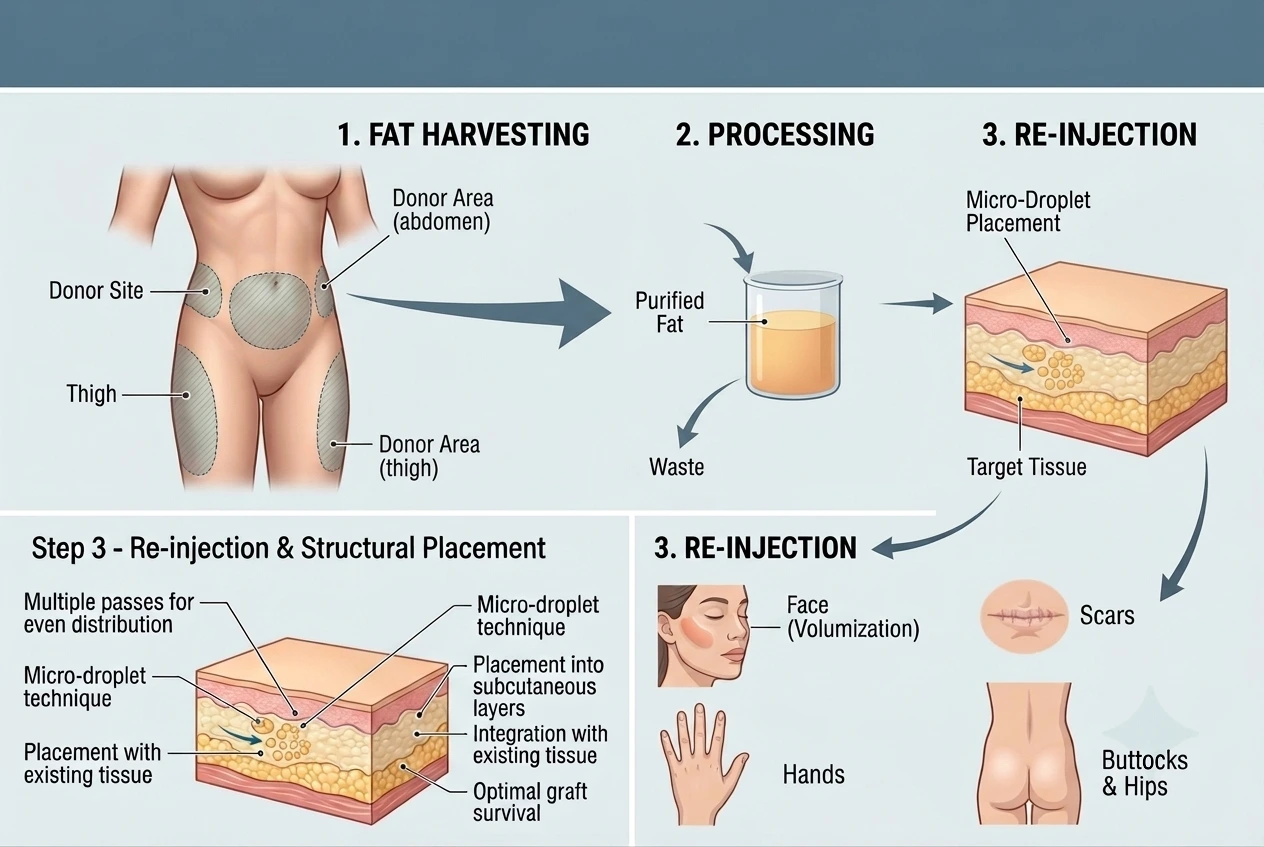
If your face feels less full than it used to, or you would like to refine a particular contour, fat grafting and dermal fillers are two options to explore. The right starting point is the change you want to make, whether that is softer-looking hollows or a subtle adjustment in volume.
If you are comparing facial fat grafting and fillers in Dubai, you do not need to choose a treatment before your consultation. Understanding how each works can help you ask useful questions and feel more comfortable with your decision.
What Is the Difference?
Facial fat grafting, also called lipofilling, transfers your own fat from a donor area to selected parts of the face. The fat is collected through liposuction, prepared and placed according to the treatment plan.
Dermal fillers are injectable products chosen for a particular area and purpose. Their effects, duration and risks depend on the material used.
| Consideration | Fat grafting | Dermal fillers |
|---|---|---|
| Material | Your own harvested fat | An injectable product |
| Treatment | Includes fat collection and transfer | Does not need a fat donor site |
| Duration | Some fat may remain long term; retention varies | Varies by product, area and individual response |
| Reversibility | Not readily reversible | Some hyaluronic-acid fillers may be dissolved by a clinician |
| Recovery | Both donor and facial areas need care | Depends on the product and treatment area |
Which Option Fits Your Goals?
Your surgeon will assess whether the concern is volume loss, skin quality or a change that needs another approach. Cheek or temple hollowing may prompt a different discussion from delicate under-eye concerns.
Fat grafting may appeal if you prefer to use your own tissue and accept the harvesting procedure and variable retention. Fillers offer a different approach without a donor site, but the specific product and treatment area still need careful consideration.
Bring a clear description of what you would like to change. It is equally helpful to explain what you want to preserve about your appearance.
What Can You Expect from the Result?
Some transferred fat is absorbed, while some may remain long term. The settled appearance takes time to assess and can change with weight fluctuations and ageing. Further treatment depends on your response and a clinical review.
Filler results also vary. Ask how the proposed product is expected to behave in the area being treated and what future maintenance might involve.
For skin-quality concerns, nanofat has a different role from volume-transfer fat. The nanofat guide explains why the preparations are not interchangeable.
Recovery and Care
Fat transfer can cause bruising, swelling and discomfort in both the face and donor area. Your surgeon should explain wound care, activity restrictions and follow-up. Filler aftercare depends on the treatment and product.
Both options carry risks, including infection, asymmetry and an unsatisfactory result. Using your own fat does not remove surgical risks, and a dissolvable filler is not risk-free. Ask about the risks for your treatment area and how any problem would be managed.
Discussing Fat Grafting and Fillers in Dubai
A useful consultation should leave you with a clear understanding of your options, the likely change and the care involved. You can ask questions, compare alternatives and take time to decide.
Read more about facial fat transfer in Dubai or request a consultation with Dr. Bouraoui Kotti to discuss what matters to you. The aim is a plan that fits your features, priorities and comfort with treatment.
This article provides general education. Suitability, risks and expected results require an individual clinical assessment.
Frequently Asked Questions
How long will a fat graft last?
Some transferred fat may remain long term after integration, but the amount retained and the timing vary between patients and treatment areas. The final appearance can also change with weight fluctuations and ageing. Dr. Bouraoui Kotti discusses expected variability, risks and follow-up during an individual assessment.
What is the difference between fat grafting and dermal fillers?
Facial fat grafting transfers a patient's own processed fat through surgery, while dermal fillers are injectable products whose materials, effects, duration and risks depend on the product. Fat retention is variable and transfer is not readily reversible. A clinician can compare these options with the concern, anatomy and medical history.
How long is fat grafting recovery?
Recovery after facial fat grafting varies with the treatment plan, donor site and individual healing. Swelling, bruising and activity restrictions should be discussed with the treating surgeon. Follow the specific aftercare instructions and seek clinical advice about unexpected or worsening symptoms rather than relying on a fixed online timeline.
Popular Procedures
Specialties
Related Clinical Articles
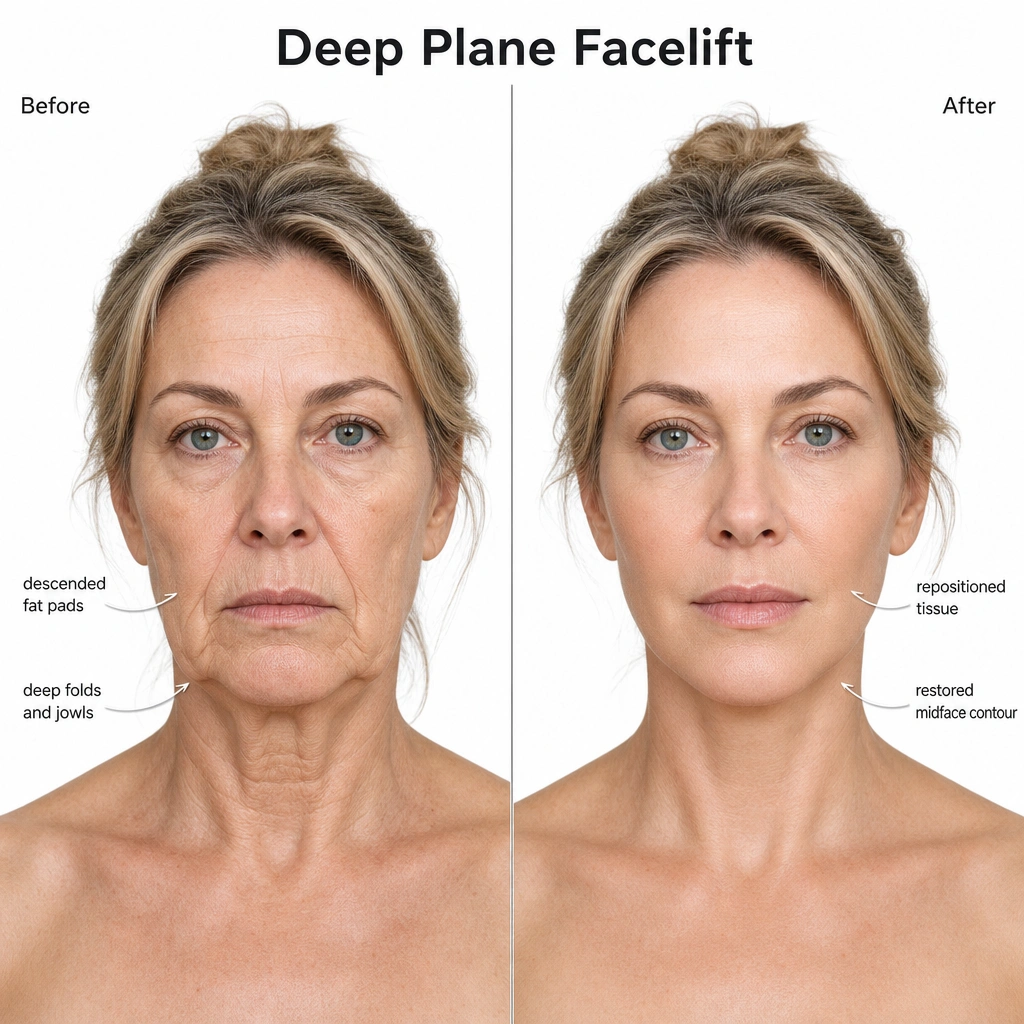
Deep Plane Facelift in Dubai: How It Works and What to Expect
Considering a deep plane facelift in Dubai? Learn how it works, how it differs from other techniques, and what to discuss about suitability, recovery and risks.
Jul 7, 2026
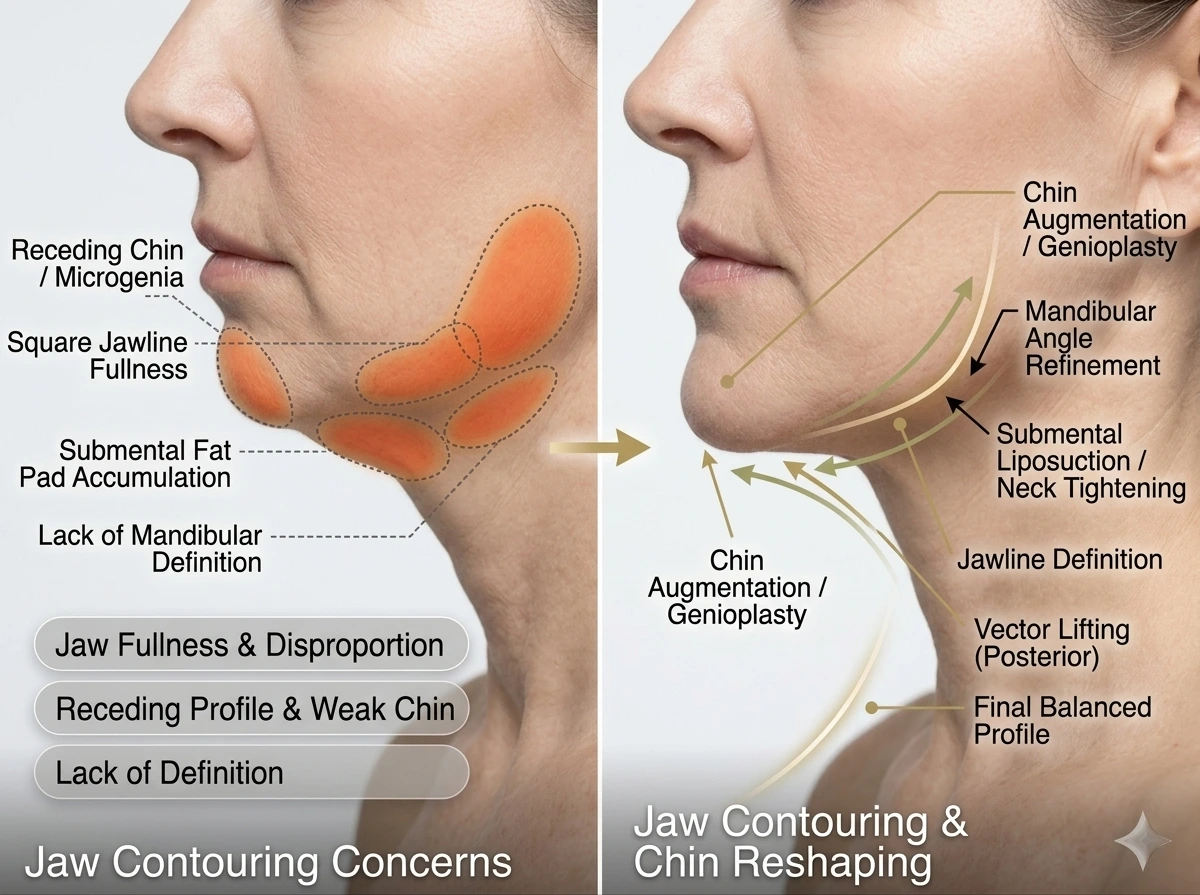
What's the Difference? Jaw Contouring and Jaw Reduction
Jaw contouring may reshape bone or soft tissue, while jaw reduction surgically narrows selected bone. Compare options, candidacy, recovery, risks and cost factors.
Aug 18, 2026
