
Jaw Contouring vs. Jaw Reduction: What's the Difference?
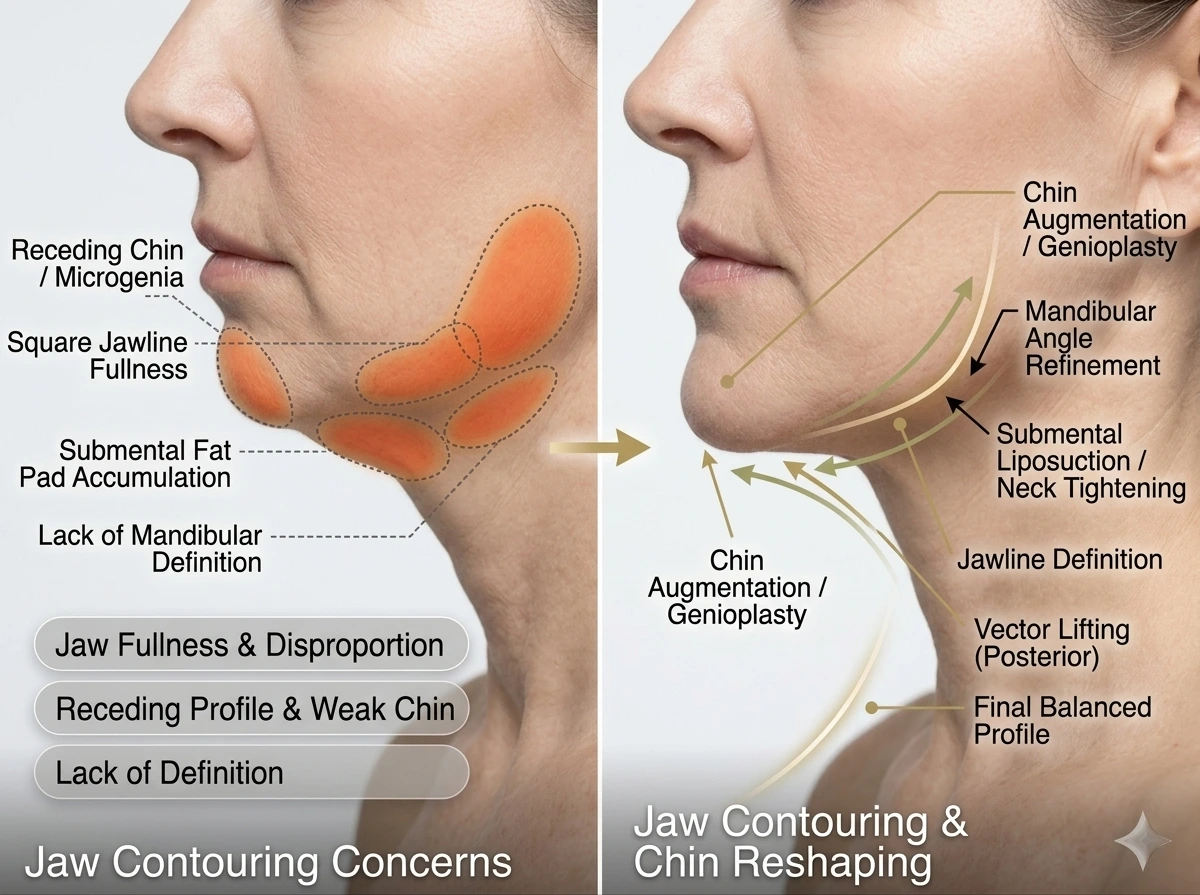
If you would like more jawline definition or a different balance between your chin and lower face, it helps to start with the change you have in mind. Jaw contouring covers several treatments; jaw reduction specifically changes the shape or width of the jaw bone.
You do not need to know which procedure to ask for. An assessment can help identify whether bone, fat, skin or a combination is shaping the area you want to change.
Matching the Approach to Your Goal
| Concern | Options that may be discussed |
|---|---|
| Less chin or jawline projection | Filler, fat grafting or a specialist chin-surgery assessment |
| Fullness beneath the chin | Liposuction when skin quality is suitable |
| Loose skin or jowls | Neck or lower-face lifting |
| Jaw-bone width | Specialist assessment for jaw reduction |
| Bite or skeletal imbalance | Orthodontic and oral/maxillofacial assessment |
These concerns can overlap. A consultation helps you understand what each option could change and what would remain the same.
Filler and Liposuction
Filler adds volume to selected areas of the chin or jawline. It can change the outline temporarily, but does not narrow bone or remove loose skin. Read about non-surgical jaw contouring for more detail.
Jawline liposuction removes selected fat beneath the chin and along the upper neck. Skin elasticity and chin position affect the result. If loose skin is the main concern, a neck contouring assessment may be more useful.
Implants and Jaw Reduction
An implant adds projection; jaw reduction reshapes bone. These are different goals, and both require careful planning around facial proportions, teeth, nerves and the tissues covering the bone.
“V-line surgery” describes a desired shape rather than one fixed operation. The plan may involve the jaw angles, chin or both. Your specialist can explain what would suit your features and the recovery involved.
If you also have difficulty chewing, a bite concern or marked skeletal asymmetry, mention it early. An oral and maxillofacial assessment can address function as well as appearance.
Understanding the Care Involved
Recovery and risks depend on the treatment. Injectables may cause bruising, swelling or uneven contours and can rarely cause vascular injury. Surgery has additional considerations, including healing, infection, altered sensation and possible revision.
Ask for guidance specific to the proposed procedure, including follow-up and whom to contact with concerns. Cost also depends on the agreed treatment, imaging, anaesthesia and aftercare.
Find Your Starting Point
Describe what you like about your features as well as what you would like to change. This helps keep the discussion focused on your preferences and facial balance.
You can request a consultation to explore suitable options or find the appropriate specialist pathway. Take time to understand the plan before deciding.
Further Reading
This article provides general education. Treatment availability, suitability and expected results require individual assessment.
Frequently Asked Questions
What is jawline contouring?
Jawline contouring is an umbrella term for treatments that alter lower-face definition. Depending on the anatomy and goal, it may mean filler, submental liposuction, a neck or lower-face lift, chin augmentation, mandibular contouring, or functional orthognathic surgery.
What is the difference between surgical and non-surgical jawline contouring?
Non-surgical jawline contouring generally changes soft-tissue volume with injectables and is temporary. Surgical options may address fat, loose tissue, chin projection, or the jaw bone. They have different indications, recovery periods, and risks.
Is jawline liposuction the same as jaw surgery?
No. Jawline or submental liposuction removes selected fat beneath the chin and along the upper neck; it does not reshape the mandible or correct the bite. Jaw-bone surgery requires a different assessment and specialist pathway.
Popular Procedures
Specialties
Related Clinical Articles
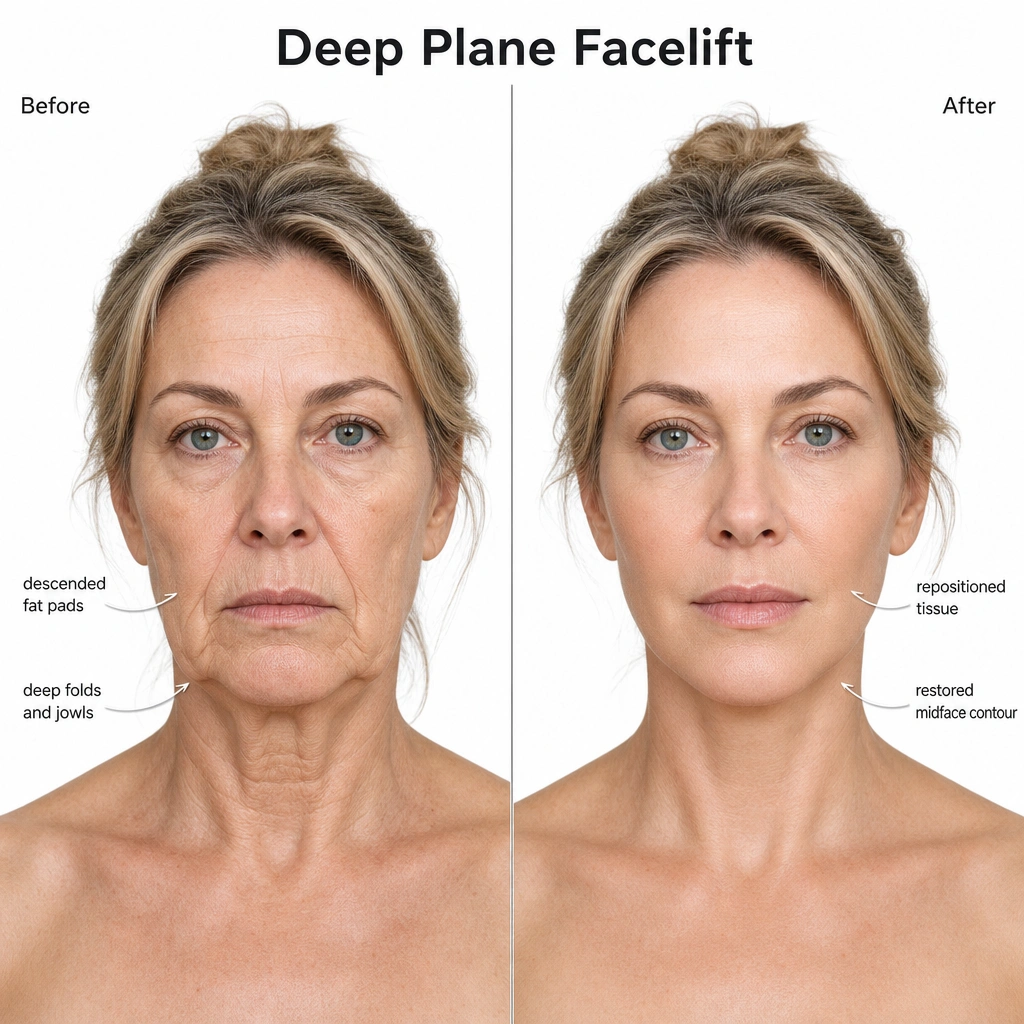
Deep Plane Facelift Technique: How the Tissue Is Repositioned
Understand the deep plane facelift technique: the SMAS layer, retaining-ligament release, composite tissue movement and how it differs from SMAS plication.
Jul 7, 2026
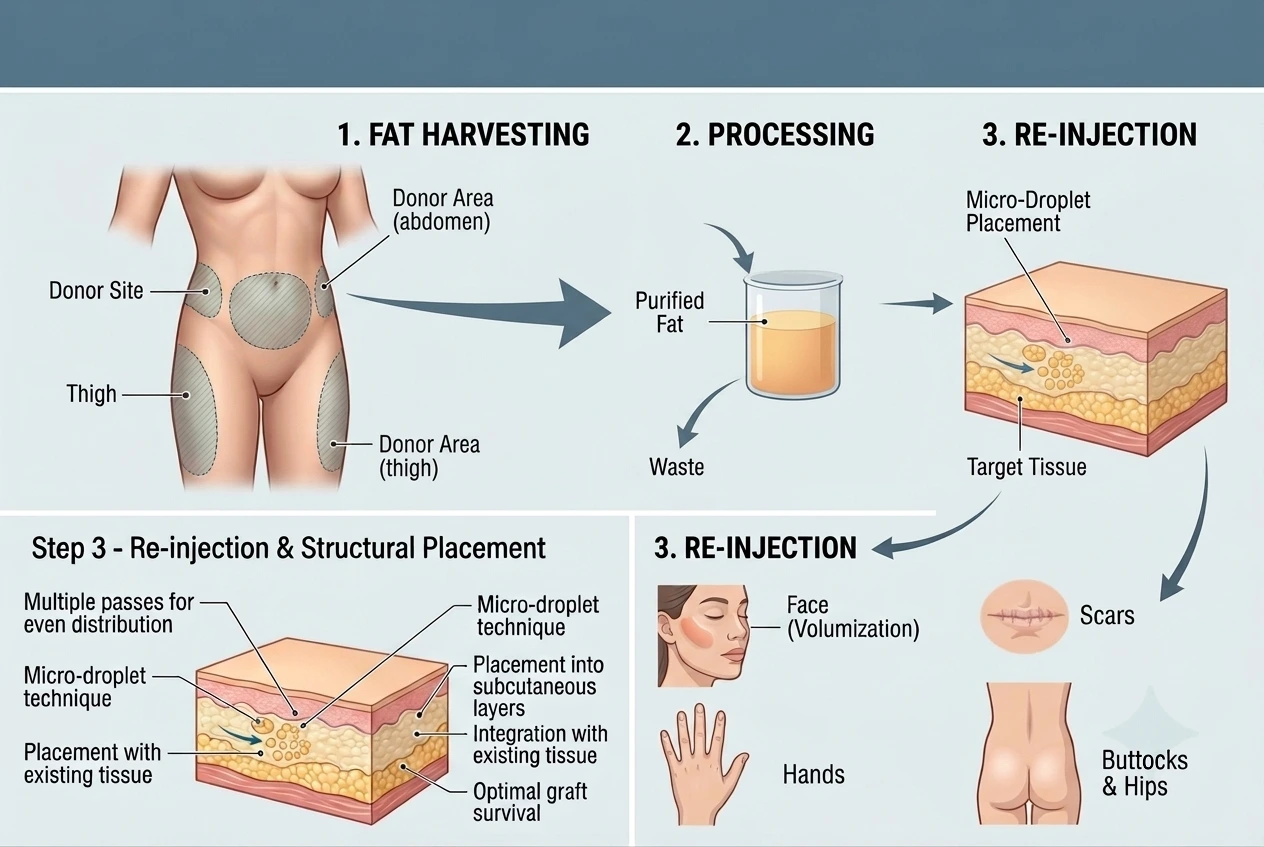
Facial Fat Grafting vs Fillers in Dubai: Your Options
Compare facial fat grafting and dermal fillers in Dubai: treatment differences, longevity, recovery, risks and questions to discuss during your consultation.
Jun 10, 2026
