Neck Lift in Dubai 2026: Natural Cervicoplasty & Jawline Contouring
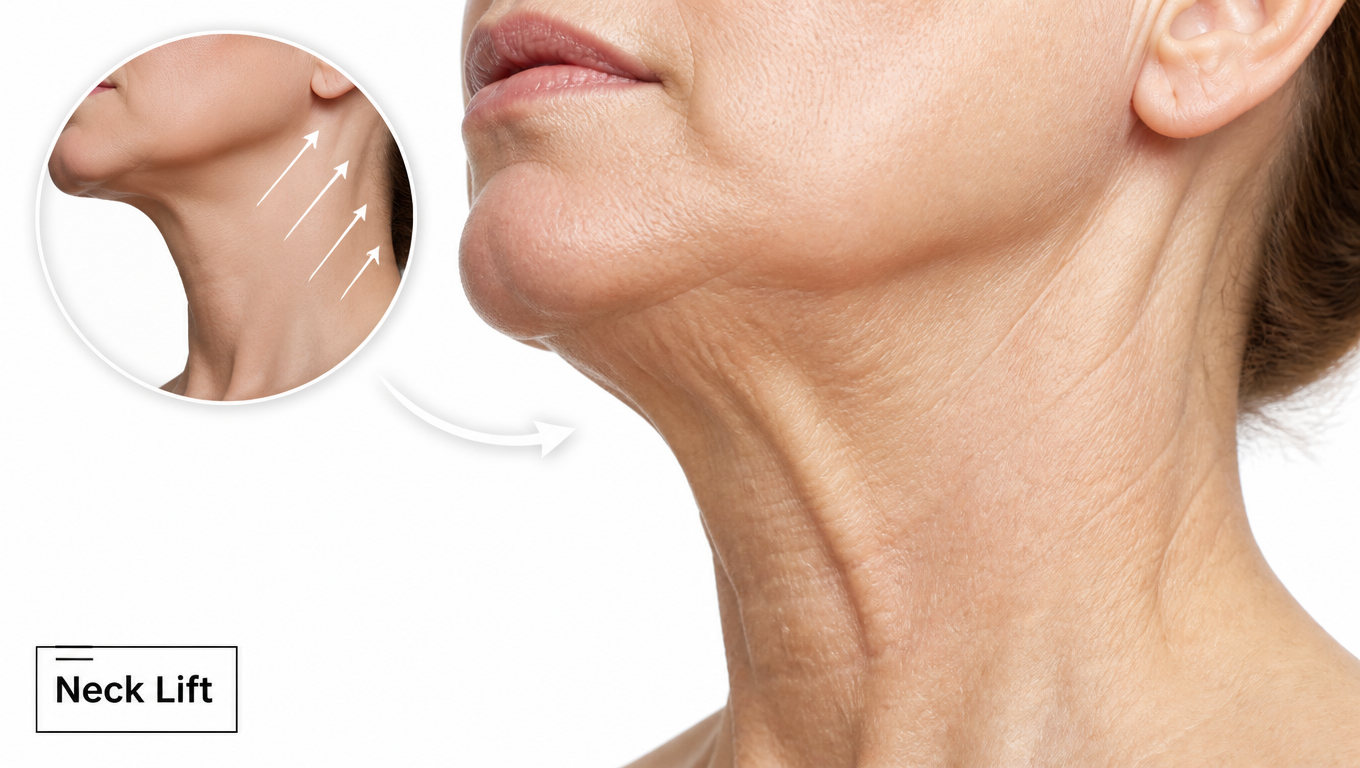
Educational illustration of neck laxity and the direction of surgical lifting; not a patient result.
A neck lift — known clinically as cervicoplasty — is a surgical procedure designed to improve the contour and appearance of the neck and jawline by removing excess skin, tightening muscles, and addressing fat deposits. It is one of the most frequently requested facial rejuvenation procedures in Dubai, particularly among patients seeking a more defined profile.
See real neck lift results → Browse documented before and after transformations from our Dubai clinic.
As patients look for the top plastic surgeons in Dubai, the focus is increasingly on achieving natural, long-lasting results that harmonize the face and neck.
A neck lift (cervicoplasty) surgically tightens the skin and platysma muscle of the neck to address jowling and ‘turkey neck’. The appropriate technique ranges from a limited lift to a full neck-facelift combination, selected based on the degree of change present. Recovery typically takes 3–6 weeks. In Dubai, the procedure must be performed by an EBOPRAS-certified Consultant in a DHA-licensed facility.
Why Patients Choose Dr. Kotti for Neck Lift in Dubai
Dubai has emerged as a global destination for facial rejuvenation, attracting patients who seek the best facelift surgeon in Dubai and elite neck contouring. Dr. Bouraoui Kotti, an EBOPRAS-certified Consultant plastic surgeon with over 20 years of international experience, offers a precision-focused approach to cervicoplasty that prioritises natural jawline definition over artificial tightening.
Factors contributing to patient preference include:
- EBOPRAS-certified surgical expertise — International certifications and years of clinical experience in facial anatomy
- Advanced facilities — State-of-the-art hospitals with the highest safety accreditations in Dubai
- Natural Results — A focus on subtle, “un-operated” looks that restore a youthful jawline without visible pulling
- Combined Procedures — Many patients choose to combine their neck lift with a mini face lift or nose surgery for complete facial harmony
What Is a Neck Lift (Cervicoplasty)?
A neck lift, clinically known as cervicoplasty, is a surgical procedure designed to improve the contour and appearance of the neck and jawline by addressing the three primary components of neck aging: excess skin, muscle banding (platysma bands), and submental fat accumulation.
Neck lift surgery Dubai procedures vary by technique — from limited lifts for early signs of aging to comprehensive neck-facelift combinations for significant rejuvenation. The fundamental principle remains consistent: remove what cannot be tightened and tighten what cannot be removed through non-surgical means.
The procedure targets specific anatomical concerns:
- Excess neck skin — loose, sagging skin that creates “turkey neck” appearance
- Platysma muscle banding — visible vertical bands in the neck caused by muscle separation
- Submental fullness — double chin or fat accumulation beneath the jawline
- Jowl formation — descent of soft tissue along the jawline creating loss of definition
Unlike non-surgical treatments that provide temporary improvement, a surgical neck lift produces long-lasting results by physically removing excess tissue and tightening supporting structures. Peer-reviewed studies in Archives of Facial Plastic Surgery have demonstrated that properly performed cervicoplasty with platysmaplasty provides durable improvement in neck contour with high patient satisfaction rates.
Who Is a Candidate for Neck Lift Surgery in Dubai?
Ideal candidates for neck lift surgery meet specific anatomical and medical criteria:
Anatomical requirements:
- Excess neck skin that does not respond to diet or exercise
- Visible platysma muscle bands when contracting neck muscles
- Submental fullness (double chin) despite healthy body weight
- Loss of jawline definition due to tissue descent
- Good skin elasticity to support healing
Medical considerations:
- Stable weight for at least 6 months prior to surgery
- Good general health with no uncontrolled medical conditions
- Non-smoker status or willingness to cease smoking pre- and post-operatively
- Realistic expectations about surgical outcomes
- No active infections or inflammatory conditions in treatment areas
Lifestyle factors:
- Ability to comply with post-operative activity restrictions
- Commitment to proper wound care and follow-up appointments
- Understanding that results are long-lasting but aging continues
Patients considering neck lift surgery should be aware that the procedure addresses the neck and jawline specifically. Patients with significant mid-face aging may benefit from combining neck lift with a facelift for comprehensive lower-face rejuvenation. Those seeking improvement in upper facial areas may consider eyelid surgery (blepharoplasty) or brow lift for complete facial harmony.
Contraindications include active smoking (significantly impairs wound healing), uncontrolled diabetes, severe cardiovascular disease, and unrealistic expectations about surgical outcomes. Patients planning significant future weight loss are advised to wait until weight stabilisation is achieved.
What Is the Difference Between a Neck Lift and a Facelift?
While many patients search for mini face lift dubai cost, it is important to understand that a facelift primarily addresses the mid-face and cheeks, whereas a neck lift specifically targets the area from the jawline to the collarbone.
For the most comprehensive neck lift before and after results, these procedures are often combined to ensure the lower face and neck age at the same rate.
Customized Neck Lift Techniques: From Mini-Lifts to Full Contouring
The extent of the surgery depends on individual anatomy. During your consultation, Dr. Kotti will evaluate which of the 4 primary options is right for your specific needs:
-
Type 1: Limited Neck Lift — Best for mild laxity; often involves liposuction and minimal skin tightening for early jawline definition. This approach addresses submental fullness and early muscle banding with minimal incisions and shorter recovery.
-
Type 2: Standard Neck Lift — Addresses moderate jowling and muscle separation with precise platysmaplasty technique. This comprehensive approach combines liposuction, muscle tightening, and skin excision through strategically placed incisions around the ear and under the chin.
-
Type 3: Extended Neck Lift — For significant skin excess, often after major weight loss, requiring comprehensive contouring. This technique addresses more extensive tissue descent and may require longer incisions for optimal access and tightening.
-
Type 4: Neck Lift with Facelift — The gold standard for total lower-face rejuvenation, harmonizing neck and mid-face aging. This combined procedure ensures all facial areas age at a consistent rate and provides the most comprehensive rejuvenation for patients with significant aging across multiple facial zones.
Platysmaplasty technique A critical component of neck lift surgery is platysmaplasty — the surgical tightening of the platysma muscle. This sheet-like muscle runs from the collarbone to the jawline and can develop visible vertical bands with age. During platysmaplasty, the separated muscle edges are sutured together in the midline, creating a tight muscular sling that supports the neck structures and defines the jawline. Peer-reviewed studies in Facial Plastic Surgery have demonstrated that proper platysmaplasty technique is essential for durable neck contouring results.
Liposuction component Most neck lift procedures include liposuction of the submental area to address double chin and excess fat deposits. This is performed before skin excision and muscle tightening to allow the tissue to settle into its new position. The liposuction component is particularly valuable for patients with good skin elasticity but persistent submental fullness despite healthy body weight.
Recovery: What to Expect
Recovery from a neck lift depends on the complexity of the procedure. The following represents a typical post-operative course; individual recovery varies according to technique used and each patient’s general health and compliance with aftercare guidance.
Immediate post-operative period (Days 1–3)
- Swelling and bruising are most pronounced during this period
- Mild to moderate discomfort managed with prescribed analgesics
- Head should be elevated at all times to reduce swelling
- Soft diet recommended to minimise jaw movement
- Dressings and drains (if placed) around the neck and chin area
- Limited mobility; patients rest with head elevated on multiple pillows
Weeks 1–2: Initial healing phase
- Swelling and bruising begin to resolve progressively
- Sutures removed or absorb depending on technique used
- Most patients comfortable returning to light daily tasks and desk work
- Avoid strenuous activity, heavy lifting, and vigorous exercise
- Compression garment may be recommended to support healing
- Gradual return to normal diet as comfort permits
Weeks 3–6: Progressive recovery
- Most restrictions on activity are progressively lifted
- Visible improvement in neck contour as swelling resolves
- Scars begin to soften and fade from pink to pale
- Light exercise may be permitted depending on individual healing
- Final position of tightened tissues becomes increasingly apparent
Months 3–6: Final results phase
- Scars continue to fade and mature
- The final, sharp contour of the jawline becomes fully visible
- Residual swelling fully resolved
- Normal exercise and activity can resume
- Final outcome stable and long-lasting
Long-term considerations Neck lift results are long-lasting, though the natural aging process continues. The removed skin does not return, and the tightened muscles maintain their corrected position. Results are most durable in patients who maintain stable weight, protect their skin from sun exposure, and follow a healthy lifestyle. Significant weight gain or future aging may affect results over time, though the improvement provided by surgery remains visible relative to the untreated state.
Scar management Incisions for neck lift surgery are strategically placed to minimise visibility — typically around the ears and potentially under the chin. These scars are designed to heal within natural creases and hairlines. Proper scar management includes silicone sheets or gels once incisions are fully healed, scar massage to promote softening, and strict sun protection to prevent permanent darkening. Scars continue to improve for up to 12 months post-operatively.
Why Dubai Patients Prefer Dr. Kotti for Neck Contouring
Dubai patients choose Dr. Bouraoui Kotti for neck lift surgery because of his EBOPRAS-certified expertise and precision-focused surgical approach. Unlike generalists who may apply standardised techniques, Dr. Kotti customises each cervicoplasty to the patient’s individual facial anatomy, ensuring natural jawline definition that complements their unique features.
Key differentiators:
- Individualised assessment — Each patient receives a detailed anatomical evaluation before any surgical plan is proposed
- Natural contouring philosophy — The goal is defined jawlines without visible pulling or artificial tightening
- 20+ years international experience — Trained in Europe and the USA, bringing global best practices to Dubai
- DHA-licensed practice — Full regulatory compliance in Jumeirah, Dubai with state-of-the-art facilities
What Are the Risks and Complications of Neck Lift Surgery?
All surgical procedures carry inherent risks, and neck lift surgery is no exception. However, when performed by an EBOPRAS-certified Consultant in an accredited facility, cervicoplasty has an established safety profile with complication rates comparable to other facial plastic surgery procedures.
Common and expected side effects include:
- Swelling and bruising (resolves over 2–4 weeks)
- Temporary numbness along the jawline and neck (may persist for several months)
- Mild discomfort managed with prescribed analgesics
- Tightness sensation as tissues heal and settle
- Fatigue during the initial recovery period
Rare but serious complications can include:
- Hematoma (blood collection) — may require drainage
- Seroma (fluid collection) — managed with aspiration or drainage
- Infection — minimised through sterile technique and post-operative care
- Nerve injury — rare; most temporary, permanent injury extremely uncommon
- Asymmetry or contour irregularities — may require revision surgery
- Hypertrophic or unfavorable scarring — influenced by individual healing factors
The most significant factor in minimising complications is surgical experience. EBOPRAS-certified Consultants have completed rigorous training and examination in plastic surgery techniques, ensuring adherence to established safety protocols. Patient compliance with post-operative instructions — particularly head elevation, activity restrictions, and wound care — is equally critical in achieving optimal outcomes.
Risk minimisation strategies Several factors contribute to optimal safety outcomes:
- Selection of an EBOPRAS-certified Consultant with documented facial surgery experience
- Performance of surgery in a DHA-licensed accredited facility
- Comprehensive pre-operative medical evaluation
- Strict adherence to sterile surgical techniques
- Detailed post-operative instructions and follow-up care
- Patient commitment to activity restrictions and wound care protocols
How Do I Prepare for Neck Lift Surgery in Dubai?
Preparation for neck lift surgery begins at the consultation and continues through the pre-operative period. A thorough medical evaluation is performed to assess candidacy, including physical examination of the neck and jawline, review of medical history, and discussion of aesthetic goals.
Pre-operative instructions typically include:
- Discontinue smoking and nicotine products at least 4–6 weeks before surgery (critical for wound healing)
- Avoid blood-thinning medications and supplements (aspirin, ibuprofen, fish oil) as directed
- Maintain stable weight in the weeks leading to surgery
- Arrange for post-operative transportation and initial recovery support
- Complete any required medical clearances from primary care physicians
- Prepare recovery space with elevated pillows for head elevation
Patients should prepare their recovery space at home — arrange comfortable resting areas where they can keep their head elevated, have prescribed medications filled in advance, and ensure soft foods are available for the initial post-operative period. Most patients need approximately 1–2 weeks off work for a neck lift, though this varies by profession and individual healing rate.
Nutritional preparation Optimising nutrition before surgery can support healing. Patients are advised to maintain adequate protein intake, stay well-hydrated, and avoid excessive alcohol consumption in the weeks leading to surgery. Some surgeons recommend specific supplements to support healing, though this should be discussed individually with the operating surgeon.
Pre-operative consultation The consultation is a critical component of preparation. During this visit, the surgeon will:
- Perform detailed anatomical assessment of neck and jawline
- Discuss aesthetic goals and realistic expectations
- Recommend appropriate surgical technique based on individual anatomy
- Review potential risks and complications
- Provide detailed pre-operative and post-operative instructions
- Answer all questions and address concerns
Patients should come to consultation prepared to discuss their medical history, medications, previous surgeries, and specific aesthetic concerns. Bringing photographs of the neck and jawline from different angles can help facilitate discussion of goals and expectations.
Frequently Asked Questions
How much does a neck lift cost in Dubai?
The cost of a neck lift in Dubai depends on the surgical technique, the amount of skin and muscle correction required, anaesthesia, facility fees, and whether other procedures are combined. Every patient receives a tailored quotation following a clinical evaluation.
What is the average cost of a neck lift?
There is no single average price that applies to every patient. The final cost depends on the extent of surgery, the complexity of platysma repair, anaesthesia and facility requirements, and whether a facelift, liposuction, or another procedure is included. An individual consultation is required for an accurate quotation.
Is it risky to get a neck lift?
When performed by a board-certified Consultant in an accredited facility, the risks are very low. Modern anesthesia and surgical techniques ensure that complications are rare and recovery is predictable.
Who are the top plastic surgeons in Dubai?
Dubai is home to many world-class Consultants. When choosing, you should prioritize EBOPRAS-certified surgeons with extensive portfolios of neck lift before and after results and a clear focus on patient safety.
Related procedures:
- Facelift / Neck Lift Surgery Dubai — Primary cervico-facial procedure page
- Facelift Cost & Recovery Guide — Informational recovery and technique guide
- Eyelid Surgery (Blepharoplasty) — Restore a youthful look to the eyes
- Nose Surgery (Rhinoplasty) — Harmonize facial proportions
- See Results — Browse before & after documentation
Book a consultation for a comprehensive anatomical assessment and personalised treatment plan.
Conclusion
A neck lift is a powerful tool for restoring confidence and achieving a more youthful, defined appearance. Whether you are dealing with early signs of aging or significant skin laxity, the key to success is an individualized treatment plan.
Medical Disclaimer: This information is for general educational purposes only. Individual results, recovery timelines, and candidacy depend on anatomy and medical history. A clinical consultation with a DHA-licensed EBOPRAS-certified surgeon is required before any procedure. Results are not guaranteed.
Frequently Asked Questions
How much does a neck lift cost in Dubai?
The cost of a neck lift in Dubai depends on the surgical technique, the amount of skin and muscle correction required, anaesthesia, facility fees, and whether other procedures are combined. A personalised quotation can only be provided after a clinical assessment.
Where is the cheapest country to get a neck lift?
While some patients search for the 'cheapest' options globally, the value of a neck lift depends on safety, surgeon qualifications, and the longevity of results. Dubai is a premier destination because it offers the highest medical standards and EBOPRAS-certified expertise, ensuring that patients receive world-class care that prioritises health over the lowest possible price.
What is the average cost of a neck lift?
There is no single average price that applies to every patient. Neck lift cost depends on whether the procedure is limited or comprehensive, the complexity of platysma repair, anaesthesia and facility requirements, and any combined procedures. An individual consultation is required for an accurate quotation.
How risky is neck lift surgery?
A neck lift is a safe and established procedure when performed by a Consultant plastic surgeon in an accredited facility. While all surgery carries some risk (such as temporary numbness or hematoma), these are minimized by using meticulous surgical techniques and following strict international safety protocols. Your individual risk profile is discussed in detail during your consultation.
What is a neck lift (cervicoplasty)?
A neck lift is a surgical procedure that improves the contour of the neck and jawline by removing excess skin, tightening the platysma muscle, and addressing fat deposits. It ranges from a limited lift to a full neck-facelift combination, selected based on individual anatomy.
How long is neck lift recovery?
Recovery generally follows a 3–6 week timeline. Most patients return to light activity within 2 weeks, while swelling and bruising gradually resolve over the following month. Final results emerge as the tissue settles over 3–6 months.
Can a neck lift address a double chin?
Yes. Submental fullness (double chin) is commonly addressed during a neck lift through liposuction and muscle tightening. If significant skin laxity is present, the surgical lift is the most effective way to restore a sharp jawline.
Who is a good candidate for neck lift surgery?
Ideal candidates for neck lift surgery have excess neck skin, muscle banding (platysma bands), or submental fullness that does not respond to diet or exercise. Patients should be in good general health, non-smokers, and have realistic expectations about surgical outcomes. Suitability is confirmed through individual anatomical assessment.
What is the difference between a neck lift and liposuction?
Liposuction addresses fat deposits only and does not remove excess skin or tighten muscles. A neck lift combines liposuction with skin excision and muscle tightening (platysmaplasty) to address all three components of neck aging — fat, skin laxity, and muscle separation. Patients with significant skin laxity require a neck lift rather than liposuction alone.
How long do neck lift results last?
Neck lift results are long-lasting, though the natural aging process continues. The removed skin does not return, and the tightened muscles maintain their corrected position. Results are most durable in patients who maintain stable weight and protect their skin from sun exposure. Significant weight gain or future aging may affect results over time.
Can a neck lift be combined with other procedures?
Yes. A neck lift is frequently combined with a facelift for comprehensive lower-face rejuvenation, eyelid surgery (blepharoplasty) for upper facial harmony, or non-surgical treatments like chemical peels. Combining procedures reduces total recovery time and ensures all facial areas age at a consistent rate.
What are the risks of neck lift surgery?
Risks include temporary numbness, swelling, bruising, hematoma, infection, and scarring. More serious complications such as nerve injury are rare when performed by an EBOPRAS-certified Consultant. All risks are reviewed comprehensively during the pre-operative consultation.
Popular Procedures
Specialties
Related Clinical Articles
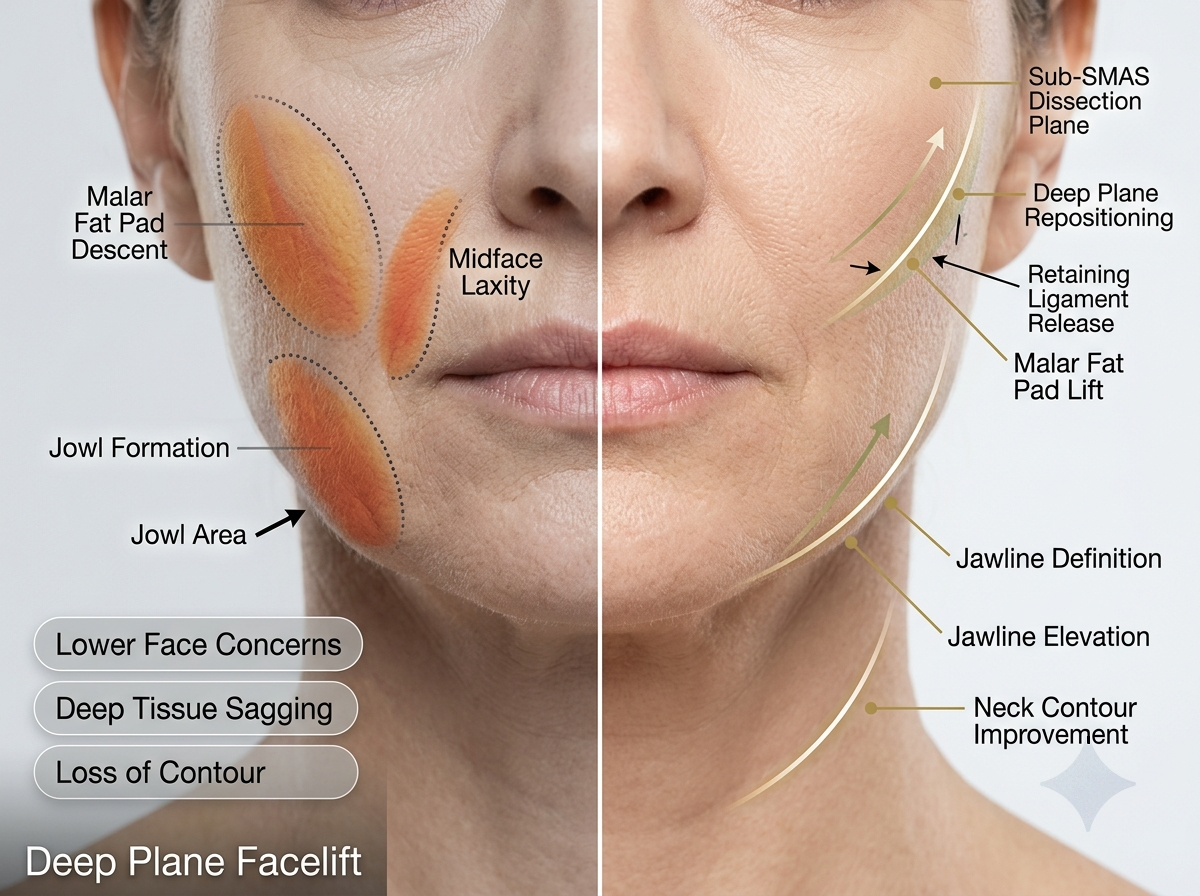
Deep Plane Facelift Technique: Surgical Anatomy Explained
Understand deep plane facelift anatomy, ligament release, facial nerve safety, risks, candidacy, and how the technique compares with SMAS and mini facelifts.
Jul 7, 2026
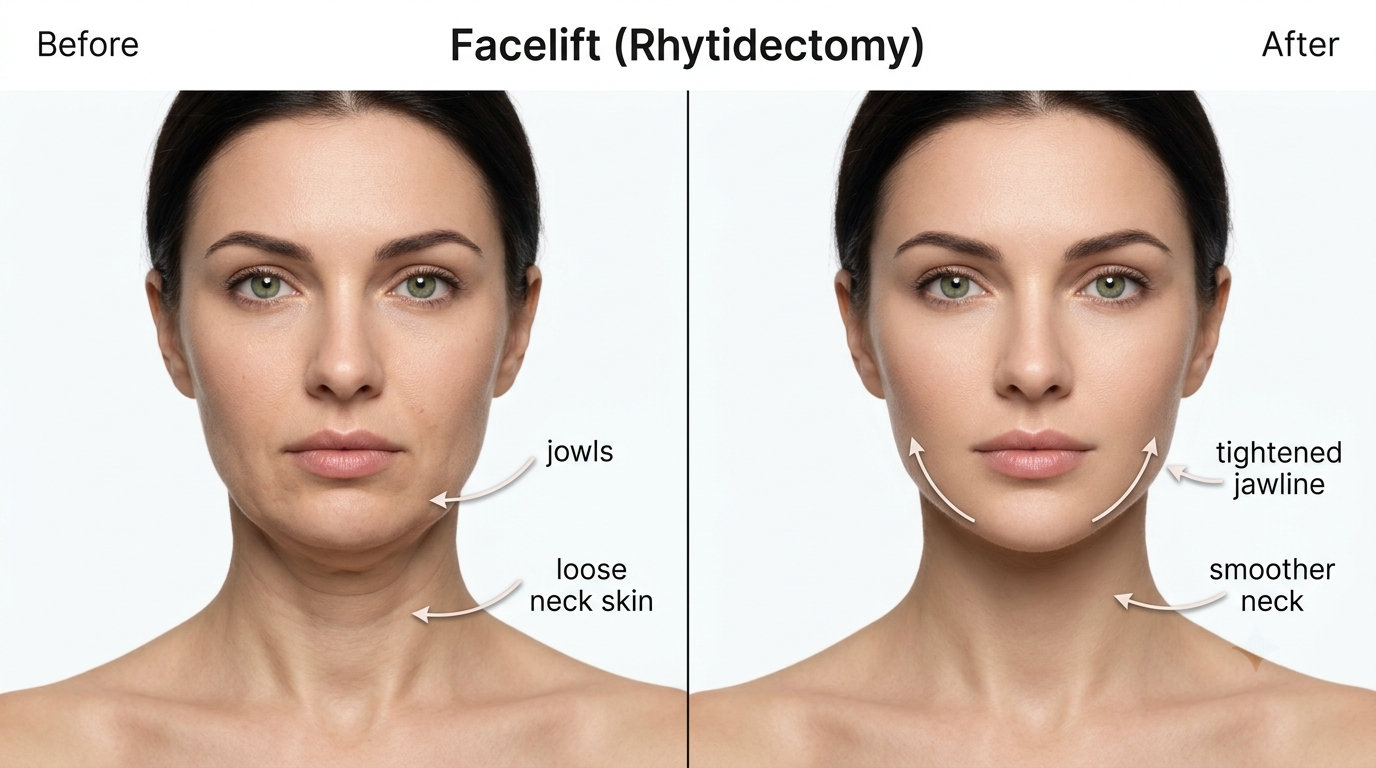
Facelift Cost and Recovery in Dubai | 2026 Guide
Facelift recovery in Dubai — technique options, recovery stages, and candidacy factors for informed clinical planning.
Jun 18, 2026

