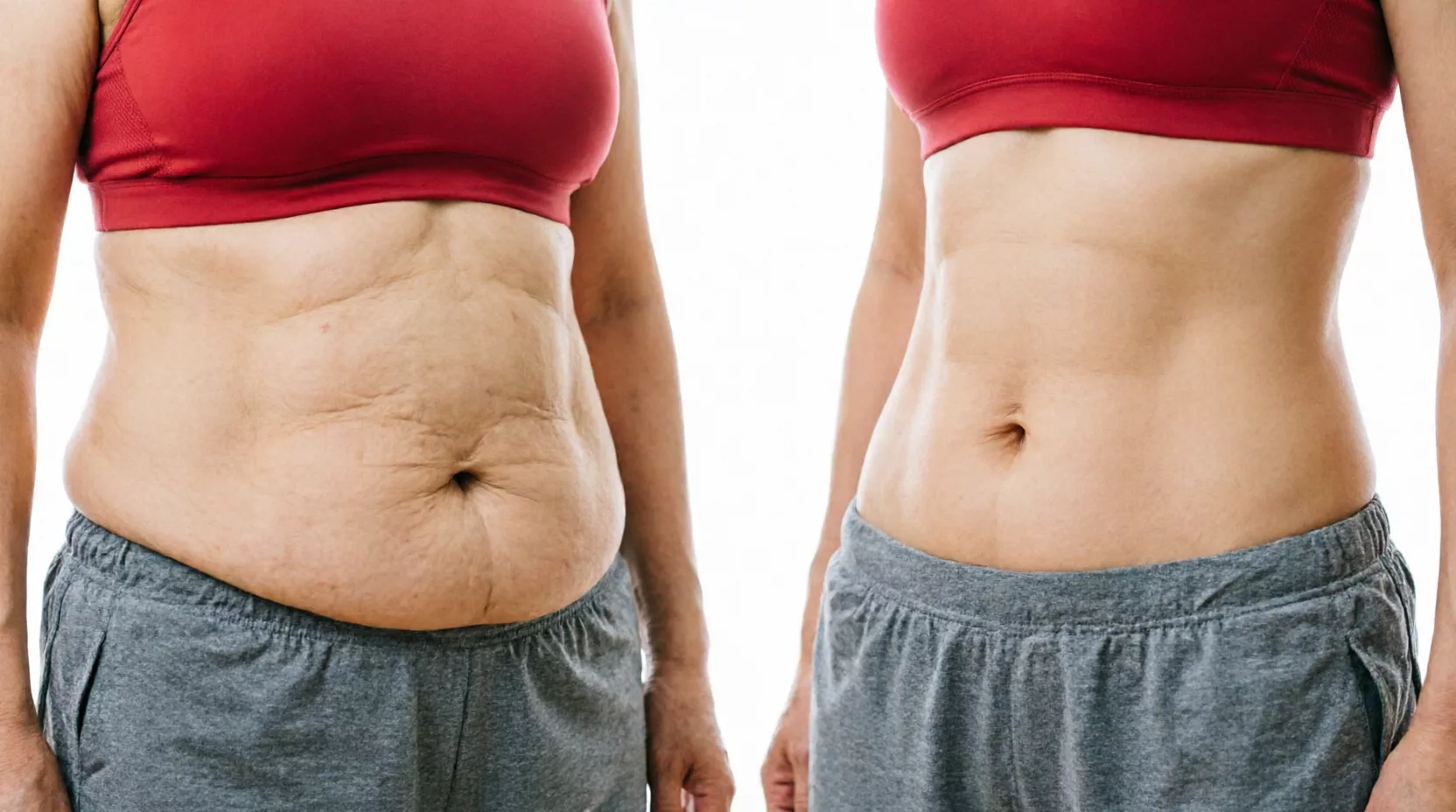
Abdominoplasty recovery is staged: light activity usually returns first, desk work often follows around weeks 2–3, and strenuous exercise is commonly delayed until weeks 6–8 and clinical clearance. Swelling and scar maturation continue for several months.
This recovery guide supports the dedicated abdominoplasty in Dubai treatment page. It explains how mobility, work, compression, swelling, exercise, scars, and follow-up typically progress after tummy tuck surgery. The exact timeline varies with the operation performed, combined procedures, medical history, and individual healing.
The milestones below are general educational guidance rather than personal medical instructions. Each patient receives an individual post-operative protocol and should follow the treating surgeon’s clearance.
Recovery After a Tummy Tuck
Tummy tuck recovery time is one of the most commonly asked questions. The timeline follows a predictable structure:
Days 1–3: Rest at home; limited mobility; mild to moderate discomfort managed with prescribed analgesics; compression garment worn continuously.
Days 3–7: Drain removal at clinic follow-up (if drains were placed); progressive increase in mobility; short walks encouraged to reduce clot risk.
Week 2: Return to desk work may be possible; no lifting, bending, or strenuous activity; compression garment continues.
Weeks 3–4: Progressive increase in activity; most patients feel comfortable with light daily tasks.
Weeks 4–6: Compression garment is gradually discontinued according to surgeon instruction; exercise resumes only after clinical clearance.
Months 3–12: Swelling continues to settle, scars mature, and the final contour becomes clearer.
Common tummy tuck surgery side effects — swelling, bruising, and temporary numbness along the lower abdominal skin — are expected to resolve progressively. New or worsening symptoms should be reported to the surgical team promptly.
How Is Tummy Tuck Cost Assessed in Dubai?
The cost depends on the surgical technique required, the complexity of the individual case, anaesthesia, facility standards, and whether procedures are combined. An accurate assessment requires an individual clinical evaluation; the page therefore does not publish fixed prices or ranges.
Dr. Bouraoui Kotti performs individualized assessment at Seline Clinic, Jumeirah. The consultation determines whether the patient needs a mini or full procedure, whether diastasis recti repair is indicated, and whether liposuction or a more extensive skin excision is clinically appropriate.
What Changes the Final Abdominoplasty Price?
| Cost factor | Why it changes the quotation |
|---|---|
| Mini, full, or extended technique | A larger treatment area requires more operative planning, theatre time, and wound management. |
| Diastasis recti repair | The extent of muscle separation affects the required dissection and repair. |
| Liposuction | Adding abdominal, flank, or circumferential liposuction increases procedure scope. |
| Previous surgery or scars | C-section scars, hernia repair, or previous abdominal surgery may make planning more complex. |
| Anaesthesia and operating time | Longer or combined procedures require additional anaesthesia and theatre resources. |
| Hospital and overnight care | Facility charges and the need for monitored admission affect the total. |
| Pre-operative testing and aftercare | Medical clearance, garments, medication, and follow-up may be included or billed separately. |
| Surgeon qualifications and experience | The fee may reflect specialist certification, experience with complex body contouring, and continuity of follow-up. |
An online photograph cannot reliably establish these factors. A responsible quote follows an abdominal-wall examination, review of medical history, discussion of pregnancy and weight stability, and an anaesthetic risk assessment.
What Should Be Included in a Tummy Tuck Quote?
Ask for a written quotation that clearly states whether it includes:
- The plastic surgeon’s professional fee
- Anaesthetist fees
- Hospital, operating-theatre, and recovery-room charges
- Pre-operative blood tests or medical clearance
- Compression garments and prescribed medication
- Planned overnight admission, if required
- Post-operative appointments and dressing care
- The policy for unexpected additional treatment or revision surgery
A headline figure may cover only one part of the episode of care. Compare the complete surgical plan and written inclusions rather than an isolated amount.
Does Facility Choice Affect the Price and Safety?
Yes. Dubai Health Authority guidance states that full abdominoplasty must be performed in a DHA-licensed hospital setting. Hospital classification, anaesthesia support, recovery monitoring, and escalation arrangements therefore form part of both the safety plan and the cost.
Surgeon credentials are also material. Dr. Bouraoui Kotti is an EBOPRAS-certified Consultant Plastic Surgeon with an MD-PhD and more than 20 years of international surgical experience. Credentials do not guarantee a particular result, but they are objective factors patients can verify when comparing quotations.
Is the Cheapest Tummy Tuck Quote the Best Value?
Not necessarily. A cheaper quote may describe a smaller operation, exclude liposuction or muscle repair, omit hospital and anaesthesia charges, or provide a different follow-up package. Conversely, a higher price does not by itself prove better care.
Compare like with like:
- Confirm the exact operation and treated areas.
- Verify the surgeon’s specialist credentials and current licence.
- Confirm the hospital and anaesthesia arrangements.
- Review what is included before and after surgery.
- Ask how complications, extra nights, or revisions would be handled financially.
The aim is an appropriate, clearly documented surgical plan—not the lowest or highest number.
What Is a Tummy Tuck (Abdominoplasty)?
A tummy tuck is a surgical procedure with two distinct goals: removing excess skin and fat from the abdomen, and tightening the abdominal musculature. These two components address problems that cannot be treated by liposuction alone.
The procedure is performed under general anaesthesia. A horizontal incision is made low on the abdomen — typically within or just above the natural bikini line — to allow removal of excess tissue from below the navel. In a full abdominoplasty, the navel is repositioned through a separate incision, and the abdominal muscles are repaired under direct vision.
The result is a flatter, firmer abdominal profile — and for patients with diastasis recti (muscle separation), the corrected core function is a significant clinical outcome in addition to the aesthetic change.
Tummy tuck surgery procedures vary by technique — the extent of skin excision, whether the navel requires repositioning, and the degree of muscle repair required. The fundamental principle remains consistent: remove what cannot be tightened and tighten what cannot be removed through non-surgical means.
Who Is a Candidate for a Tummy Tuck?
Ideal candidates are patients who:
- Have excess abdominal skin that cannot be addressed by diet, exercise, or liposuction
- Have muscle separation (diastasis recti) from pregnancy or significant weight change
- Have completed their family — subsequent pregnancy can alter results
- Are at or near their target weight and weight-stable for at least 6 months
- Are non-smokers or willing to stop smoking for the perioperative period
- Are in good general health with no uncontrolled medical conditions
A tummy tuck is not a weight loss procedure. It addresses skin excess and muscle laxity — not fat volume. Patients with significant fat deposits are advised to achieve a stable weight before undergoing abdominoplasty.
Medical contraindications include uncontrolled diabetes, active smoking (significantly increases wound healing complications), and unrealistic expectations about what surgery can achieve. Patients planning future pregnancies are advised to wait — while pregnancy after abdominoplasty is medically safe, it can reverse some of the aesthetic improvements and may require revision surgery.
For patients with significant internal visceral fat (fat around the organs within the abdominal cavity), a tummy tuck will not address this — the procedure targets the external abdominal wall only. These patients may benefit from weight management programs before proceeding with body contouring surgery.
Types of Tummy Tuck Procedures
The extent of the procedure is determined by the individual’s anatomy — specifically the amount of skin excess and whether the entire abdominal wall or only the lower portion requires correction:
| Technique | Area Addressed | Navel Repositioning | Incision Length |
|---|---|---|---|
| Mini Tummy Tuck | Lower abdomen only (below navel) | Not required | Shorter |
| Full Tummy Tuck | Entire abdominal wall | Yes | Hip to hip |
| Extended / 360 Body Lift | Abdomen + flanks + lower back | Yes | Circumferential |
| Lipo-Abdominoplasty | Skin + fat (simultaneous liposuction) | Yes (if full) | Variable |
Mini Tummy Tuck
A mini tummy tuck is appropriate for patients with excess skin limited to the lower abdomen below the navel, good skin elasticity above, and no significant diastasis recti in the upper abdominal region. Because the navel does not need to be repositioned, the incision is shorter and the procedure is less complex.
Full Abdominoplasty
The full tummy tuck is the most commonly performed technique. It addresses the entire abdominal wall, repositions the navel, and allows full repair of the rectus abdominis muscles along their entire length. It is indicated for patients with skin excess above and below the navel, or with muscle separation in the upper abdomen.
Extended / 360 Body Lift
For patients with massive weight loss affecting not only the abdomen but the flanks and lower back, an extended body lift or belt lipectomy addresses the full circumferential torso. This is a more complex procedure requiring longer recovery.
Lipo-Abdominoplasty
Lipo-abdominoplasty combines traditional abdominoplasty with simultaneous liposuction of the abdominal wall and flanks. This technique is particularly valuable for patients with both skin excess and residual fat deposits that cannot be removed through skin excision alone. Peer-reviewed studies in Aesthetic Surgery Journal have demonstrated that lipo-abdominoplasty, when performed by experienced surgeons, can achieve superior contouring outcomes while maintaining patient safety profiles comparable to traditional abdominoplasty techniques.
How Do I Prepare for Tummy Tuck Surgery?
Preparation for abdominoplasty begins at the consultation and continues through the pre-operative period. A thorough medical evaluation is performed to assess candidacy, including physical examination of the abdominal wall, review of medical history, and discussion of aesthetic goals.
Pre-operative instructions typically include:
- Discontinue smoking and nicotine products at least 4–6 weeks before surgery
- Avoid blood-thinning medications and supplements (aspirin, ibuprofen, fish oil) as directed
- Maintain stable weight in the weeks leading to surgery
- Arrange for post-operative transportation and initial recovery support
- Complete any required medical clearances from primary care physicians
Patients should prepare their recovery space at home — arrange comfortable resting areas, have prescribed medications filled in advance, and ensure compression garments are available. Most patients need approximately 2 weeks off work for a full tummy tuck, though this varies by profession and individual healing rate.
Tummy Tuck vs. Liposuction: Which Is Right for You?
The distinction between liposuction and abdominoplasty is anatomical:
| Liposuction | Tummy Tuck | |
|---|---|---|
| Removes fat | ✓ | ✓ (combined) |
| Tightens excess skin | ✗ | ✓ |
| Repairs diastasis recti | ✗ | ✓ |
| Repositions navel | ✗ | ✓ (full) |
| Ideal for | Good skin elasticity | Skin laxity + muscle separation |
| Recovery | 1–2 weeks | 6–8 weeks |
For many patients, the optimal result comes from combining both — removing fat via liposuction while simultaneously excising excess skin and repairing the muscle. This combination is called lipo-abdominoplasty and is frequently the technique of choice for comprehensive abdominal contouring.
For a full breakdown, see the dedicated liposuction vs tummy tuck guide.
What Is Diastasis Recti and How Does a Tummy Tuck Fix It?
Diastasis recti is the separation of the two rectus abdominis muscles along the midline of the abdomen. It occurs most commonly following pregnancy — the growing uterus stretches the midline connective tissue (linea alba), causing the muscles to migrate laterally. It can also result from significant weight gain.
Visible signs include:
- A visible ridge or dome in the centre of the abdomen when straining or sitting up
- Persistent “pooch” or lower abdominal fullness despite low body weight
- Core weakness, lower back discomfort, or pelvic floor dysfunction
During a tummy tuck, the separated muscles are sutured back to the midline under direct vision — restoring both aesthetic contour and functional core stability. This repair is one of the most clinically significant aspects of the procedure and cannot be achieved by non-surgical means.
For patients who had a tummy tuck and also have breast concerns post-pregnancy, a Mommy Makeover Dubai combines both in a single anaesthetic episode.
Tummy Tuck Before and After: What to Expect
Understanding the tummy tuck before and after progression helps set realistic expectations:
Immediately post-operatively: The abdomen is flat and the excess skin is gone, but significant swelling masks the final result. Compression garments are applied in the operating theatre.
Week 1: Swelling is substantial; most patients are mobile but restricted to light activity. Drain removal typically occurs in the first week.
Week 2: Return to desk work and light daily activities. The abdominal contour is visible despite residual swelling.
Weeks 4–6: Swelling continues to diminish. Compression garment use continues. The new abdominal shape becomes increasingly visible.
Months 3–6: The scar softens and begins to mature. The final proportion of the contour is visible by month 3.
Month 12: Scar is fully mature — typically a fine, pale line positioned within or just above the bikini line. Full final result visible.
The most significant change in before and after documentation is visible in the standing profile view: the elimination of skin overhang and the restoration of a flat, firm lower abdominal contour.
What Are the Risks and Complications of Tummy Tuck Surgery?
All surgical procedures carry inherent risks, and tummy tuck surgery is no exception. However, when performed by an EBOPRAS-certified Consultant in an accredited facility, abdominoplasty has an established safety profile with complication rates comparable to other major aesthetic procedures.
Common and expected side effects include:
- Swelling and bruising (resolves over 6–8 weeks)
- Temporary numbness along the lower abdominal incision (may persist for several months)
- Mild discomfort managed with prescribed analgesics
- Fatigue during the initial recovery period
Rare but serious complications can include:
- Seroma (fluid collection beneath the skin) — managed with drainage or aspiration
- Hematoma (blood collection) — may require surgical evacuation
- Wound healing complications or delayed wound closure
- Infection — minimized through sterile technique and post-operative care
- Asymmetry or contour irregularities — may require revision surgery
The most significant factor in minimising complications is surgical experience. EBOPRAS-certified Consultants have completed rigorous training and examination in plastic surgery techniques, ensuring adherence to established safety protocols. Patient compliance with post-operative instructions — particularly smoking cessation and activity restrictions — is equally critical in achieving optimal outcomes.
How Are Tummy Tuck Scars Managed?
The tummy tuck incision is placed strategically low on the abdomen, typically within or just above the natural bikini line, to optimise scar concealment. The final scar appearance depends on individual healing factors, surgical technique, and post-operative scar management.
Scar maturation timeline:
- Weeks 1–2: Incision is pink to red; stitches dissolve or are removed
- Months 1–3: Scar begins to flatten and fade; may feel firm or raised
- Months 3–6: Scar softens and continues to fade; some areas may remain slightly raised
- Months 6–12: Final scar maturation; typically a fine, pale line within the bikini line
Scar management strategies include:
- Silicone sheets or gels applied once the incision is fully healed
- Scar massage to promote softening and flattening
- Sun protection (UV exposure can cause permanent darkening)
- Patience — scars continue to improve for up to 12 months post-operatively
For patients with previous abdominal surgeries (C-sections, appendectomies, laparoscopy), the tummy tuck incision can often be placed to incorporate or improve existing scars. This is discussed and planned during the consultation based on individual scar patterns.
When Should I Consider Revision Tummy Tuck Surgery?
Revision abdominoplasty may be appropriate for patients who have undergone previous tummy tuck surgery and are dissatisfied with their results. Common reasons for revision include residual skin excess, scar asymmetry or unfavorable scarring, persistent contour irregularities, or recurrence of muscle separation.
Revision surgery considerations:
- The complexity of revision depends on the original technique and the nature of the concern
- Scar tissue from previous surgery can make revision technically more challenging
- Revision should be performed by an experienced Consultant familiar with revision techniques
- Realistic expectations are critical — revision improves but does not always “perfect” results
Patients considering revision should bring their previous operative reports and medical records to consultation. This allows the surgeon to understand what was performed previously and plan the most appropriate revision approach.
How to Choose a Qualified Tummy Tuck Surgeon
The objective criteria to verify when choosing a surgeon are: board certification (EBOPRAS, FRCS, or equivalent), a current health-authority specialist licence, documented subspecialty experience in body contouring procedures, and an accredited surgical facility.
Related procedures:
- Tummy Tuck (Abdominoplasty) in Dubai — Full procedure details, surgeon credentials, and consultation booking
- Liposuction 360 Dubai — Complementary fat removal
- Mommy Makeover Dubai — Combined post-pregnancy restoration
- Belt Lipectomy (360 Body Lift) — For extensive skin excess
- Liposuction vs Tummy Tuck — Comparison guide
Book a tummy tuck consultation in Dubai for an individual clinical evaluation of candidacy and technique selection.
Medical Disclaimer: This information is for general educational purposes only. Individual results, recovery timelines, and candidacy depend on anatomy and medical history. A clinical consultation with a DHA-licensed EBOPRAS-certified surgeon is required before any procedure. Results are not guaranteed.
Frequently Asked Questions
How long is recovery after a tummy tuck?
Recovery follows a staged timeline: return to light activity at 2 weeks, desk work by weeks 2–3, and full exercise resumption after 6–8 weeks. Compression garments are worn for 6 weeks. Final results — including full scar maturation — are visible at 12 months post-operatively.
When can I return to work after abdominoplasty?
Many patients can return to desk-based work after 2–3 weeks, but jobs involving lifting, prolonged standing, or physical exertion require longer. Clearance depends on procedure extent, healing progress, and the surgeon's assessment.
When can I exercise after a tummy tuck?
Short walks begin early to support circulation. Strenuous exercise, abdominal training, and heavy lifting are generally deferred for 6–8 weeks and resumed only after clinical clearance.
How long should compression garments be worn after abdominoplasty?
Compression is commonly used for about 6 weeks, although the exact garment and duration depend on swelling, skin condition, procedure extent, and the surgeon's post-operative protocol.
How long do tummy tuck scars take to heal?
The incision closes during early recovery, but scar maturation is gradual. Scars commonly flatten and fade over 6–12 months, with timing affected by skin type, healing response, sun exposure, and scar care.
Popular Procedures
Specialties
Related Clinical Articles
BBL Recovery Guide: Sitting, Safety & Long-Term Results
BBL recovery varies by procedure and patient. Learn about sitting, sleeping, wound care, swelling, warning signs and how transferred fat changes over time.
May 7, 2026
Cosmetic Surgery Trends Dubai 2026 | Clinical Guide
Cosmetic surgery trends in Dubai for 2026, including technique advances, patient safety, recovery, and consultation priorities.
Apr 21, 2026

