Gynecomastia vs Chest Fat: Signs, Causes and Assessment
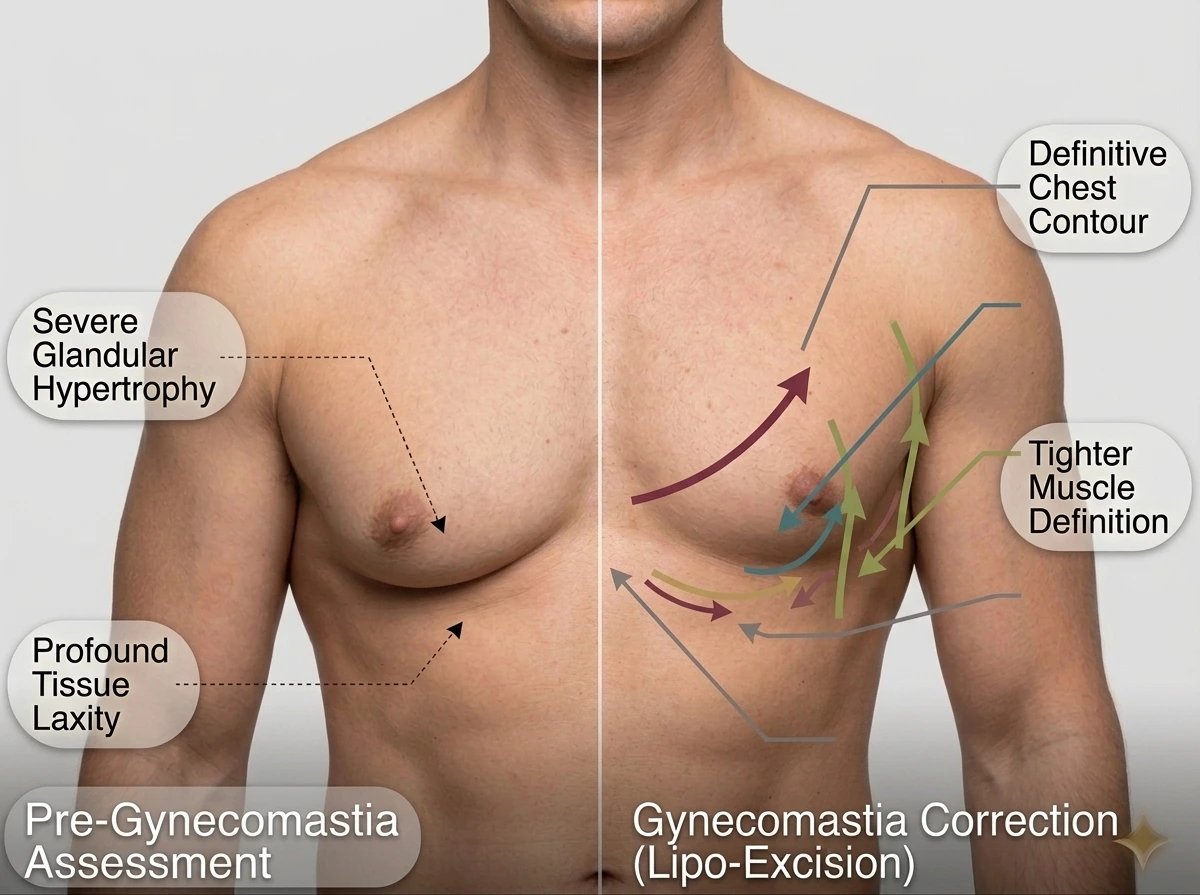
Gynecomastia is enlargement of glandular breast tissue in males. Chest fat, also called fatty pseudogynecomastia, is an increase in fatty tissue without the same glandular enlargement. The two can look similar, and many patients have a mixed presentation containing gland, fat and loose skin.
The practical difference between gyno and chest fat is therefore the type and distribution of tissue—not simply chest size. A clinical examination can distinguish these components more reliably than photographs or self-testing.
Gynecomastia often produces a firm or rubbery area beneath the nipple and areola. Fatty chest fullness is generally softer and more diffuse, but mixed cases are common and appearance alone cannot confirm a diagnosis.
What Does Gynecomastia Look and Feel Like?
People searching “gynecomastia looks like” are often concerned about fullness directly behind the nipple, a puffy areola, asymmetry, tenderness or a chest shape that persists despite weight loss. These features can occur with gynecomastia, but none is diagnostic by itself.
Common findings can include:
- A firm or rubbery disc beneath the nipple and areola
- Enlargement on one side or both sides
- A puffy or projecting areola
- Tenderness, particularly when the tissue has developed recently
- Broader chest fullness when gland and fat occur together
A prominent male nipple or puffy areola does not automatically mean gynecomastia. Nipple projection, areolar anatomy, gland, fat and skin laxity all contribute to appearance.
What Does Chest Fat Look and Feel Like?
Queries such as “fat on chest men” usually describe soft, diffuse fullness spread across the chest rather than a defined disc under the areola. The fullness often changes with overall weight gain or loss and may extend toward the side of the chest.
This is sometimes called pseudogynecomastia. The term fat gynecomastia is widely used online, but it can be misleading: true gynecomastia refers to glandular tissue, while pseudogynecomastia is predominantly fat. A mixed case contains both.
| Feature | Glandular gynecomastia | Predominantly chest fat |
|---|---|---|
| Typical texture | Firm or rubbery beneath the areola | Soft and diffuse |
| Distribution | Often centred behind the nipple | Spread across the chest |
| Response to weight loss | Gland may remain | Fat volume may decrease |
| Tenderness | Can occur, especially early | Less typical |
| Possible treatment | Cause-specific care or gland excision | Weight management or liposuction when appropriate |
These are general patterns, not a self-diagnosis tool.
“Do I Have Gynecomastia?”
The search “gynecomastia do I have” cannot be answered accurately from one visual sign. Assessment considers:
- When the change began and whether it is stable
- Whether one or both sides are affected
- Pain, tenderness, discharge or skin change
- Weight history and recent body-composition changes
- Prescription medicines, supplements and anabolic-steroid exposure
- Symptoms that may suggest a hormonal or other medical cause
- The amount of gland, fat and loose skin on examination
In some cases, a clinician may recommend laboratory tests or imaging. These are not required for every patient; the history and examination determine whether further investigation is appropriate.
Common Causes of Gynecomastia
Gynecomastia can occur during puberty, with ageing, or alongside hormonal changes. Medicines, anabolic steroids, some health conditions and other exposures may contribute. Sometimes no single cause is identified.
Do not stop prescribed medication without advice from the clinician who manages it. If a medicine may be contributing, the prescribing clinician can assess the risks and possible alternatives.
Weight gain does not necessarily cause glandular gynecomastia, but it can increase chest fat and make existing glandular tissue more visible. Weight loss may reduce the fatty component while leaving the gland behind.
Can Exercise Remove Gynecomastia?
Exercise can strengthen the pectoral muscles and reduce body fat when paired with an appropriate nutrition plan. It cannot selectively burn fat from one area, and it does not reliably remove established glandular tissue.
For a chest that is predominantly fatty, overall fat loss may produce a meaningful improvement. For glandular or mixed enlargement, a residual mound beneath the areola may remain even after weight stabilizes.
Treating Gyno Without Surgery
Treating gyno without surgery depends on its cause and how long it has been present. Observation may be appropriate in some adolescent cases because pubertal gynecomastia can improve over time. When a medicine, hormone-related condition or other medical factor is involved, addressing that cause under clinical supervision may help.
Creams, supplements, massage and targeted chest exercises have not been shown to reliably remove established glandular tissue. Non-surgical fat-reduction treatments also do not remove a firm gland beneath the nipple.
When Surgery May Be Considered
Surgery may be discussed when chest enlargement is persistent, causes physical discomfort or significant concern, and the patient is medically suitable. The technique depends on the tissue present:
- Liposuction addresses a predominantly fatty component.
- Gland excision removes firm tissue through a planned incision.
- Skin removal may be needed when there is substantial laxity.
- A combined approach may be appropriate for mixed tissue.
The dedicated gynecomastia surgery in Dubai guide explains candidacy, operative planning, recovery, risks and cost factors. It owns the surgical-treatment intent; this article is limited to recognition and clinical assessment.
Warning Signs That Need Medical Assessment
Most male chest enlargement is benign, but not every breast or chest lump is gynecomastia. Seek prompt medical review for:
- A hard, fixed or distinctly one-sided lump
- Nipple discharge or bleeding
- Skin dimpling, ulceration or nipple retraction
- Rapid enlargement or a new change without a clear explanation
- Enlarged lymph nodes in the underarm
- Testicular symptoms or other systemic changes
An online article cannot rule out other causes.
Clinical Takeaway
Gynecomastia is glandular enlargement; pseudogynecomastia is predominantly fat; and many men have both. Texture, location, weight response and symptoms provide clues, but they do not replace examination. The safest next step is an appropriate medical assessment that distinguishes gland, fat and skin before any treatment is considered.
Frequently Asked Questions
How can I tell the difference between gynecomastia and chest fat?
Gynecomastia involves glandular tissue, often felt as a firm or rubbery disc beneath the nipple, while fatty chest fullness is usually softer and more diffuse. Many men have a mixture of gland, fat and loose skin, so physical examination is the reliable way to distinguish them.
Does gynecomastia feel hard or soft?
Glandular gynecomastia often feels firmer or more rubbery than surrounding fat, but texture varies and self-examination cannot establish a diagnosis. A new hard, fixed or one-sided lump requires medical assessment.
Can weight loss remove gynecomastia?
Weight loss may reduce fatty chest fullness but does not reliably remove established glandular tissue. It can still improve the overall contour and make the remaining gland easier to identify.
Can gynecomastia be treated without surgery?
Management depends on the cause, duration and symptoms. Recent gynecomastia related to a medicine or medical condition may improve when the underlying factor is addressed under medical supervision. Established glandular tissue often does not resolve with exercise or supplements.
When should a male breast lump be checked urgently?
Seek prompt medical assessment for a hard or fixed lump, nipple discharge or bleeding, skin dimpling, nipple retraction, rapid one-sided enlargement, enlarged underarm nodes or other concerning changes.
Popular Procedures
Specialties
Related Clinical Articles
BBL Recovery, Safety, Sitting & Results: Dr. Kotti
BBL recovery guide covering sitting, sleeping, wound care, exercise, warning signs and how Brazilian Butt Lift results settle during individual healing.
May 7, 2026
Fat Grafting vs Fillers Dubai: Clinical Comparison
Fat grafting vs fillers in Dubai: compare longevity, feel, treatment volume, candidacy, downtime, limitations, and potential risks.
Jun 10, 2026

