
Mastopexy Breast Lift: Techniques, Cost and Volume Options
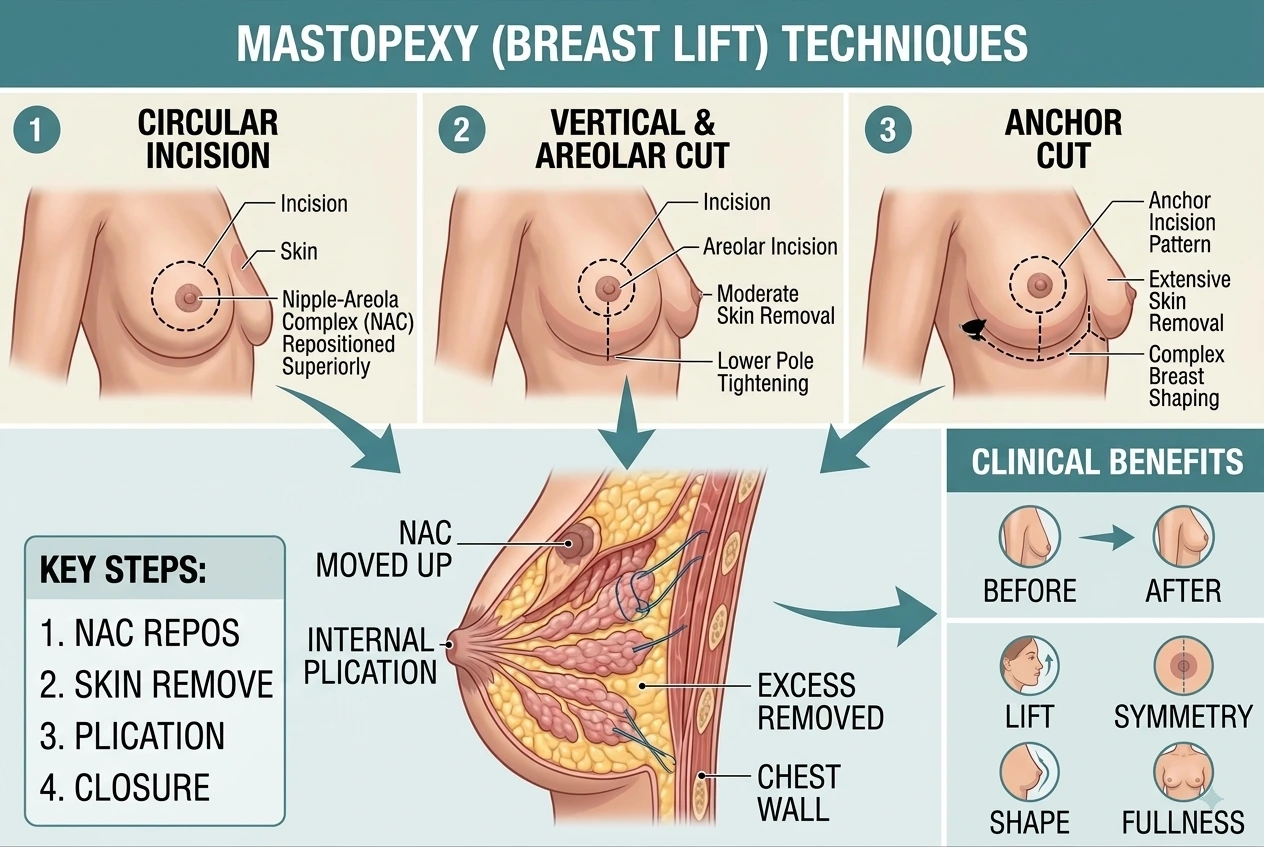
Mastopexy is a surgical breast lift that reshapes existing tissue and removes excess skin to address sagging. It can be performed alone, with an implant or with selected fat transfer. The appropriate technique depends on nipple position, skin excess, breast volume and your goals. Scars, recovery and cost follow the individual plan. A breast lift, sometimes written as breastlift or described informally as a boob lift, can address changes after pregnancy, weight loss or ageing. A consultation should establish whether you want a higher breast position, different volume, or both. This guide explains mastopexy techniques and practical questions to ask before deciding on surgery.
What Does a Surgical Breast Lift Change?
A mastopexy lift can reshape the breast, remove selected loose skin and reposition the nipple and areola. It may also reduce an enlarged areola when appropriate. It does not automatically make breasts larger or produce a particular cup size. The American Society of Plastic Surgeons breast lift overview explains the operation and its limitations.
For someone considering a breast lift for sagging breasts, the assessment includes the nipple’s relationship to the breast fold, tissue distribution, skin quality and asymmetry. A photograph alone cannot establish the correct technique. There is no single upper-to-lower breast proportion that every patient should aim for: chest shape, existing anatomy and personal preferences matter.
Mastopexy Techniques: Donut, Vertical and Anchor Lifts
The incision pattern describes the skin access and resulting scars. Internal tissue reshaping is another part of the operation. Ask your surgeon to explain both, including why a particular scar pattern is needed.
| Technique | Typical incision pattern | Main planning consideration |
|---|---|---|
| Donut mastopexy, also called periareolar or circumareolar lift | Around the areola | Selected limited corrections; it may not provide enough reshaping for greater skin excess |
| Vertical or lollipop lift | Around the areola and down to the breast fold | Allows more skin removal and reshaping than an areola-only approach in suitable cases |
| Anchor breast lift, also called inverted-T lift | Around the areola, vertically downward and along the breast fold | Allows more extensive correction, with an additional scar in the fold |
An anchor breast lift is not chosen simply because a breast is large, and a donut mastopexy is not automatically appropriate for a small breast. Skin excess, tissue quality and the required nipple movement guide the decision. A shorter incision can leave concerns untreated if the anatomy requires a more extensive lift.
Scars are permanent, although their appearance often softens with healing. Their final width, colour and visibility vary.
Breast Lift With No Augmentation
A breast lift without augmentation uses existing breast tissue without adding an implant or transferred fat. This may suit someone who is satisfied with their volume but wants to address sagging or nipple position. Reshaping redistributes the tissue available; it cannot create an unlimited increase in upper-breast fullness.
Ask to discuss the expected contour with a lift alone before adding another procedure. The breast lift versus implants guide explains how position and volume goals influence the choice.
Can You Have a Breast Lift on Small Breasts?
Yes. Small breasts can have loose skin, asymmetry or a low nipple position. Cup size alone does not determine whether mastopexy is appropriate or which incision is needed. The assessment should establish how much tissue is available for reshaping and whether the desired change is a lift, enlargement or both.
If maintaining a small breast size is a priority, make that clear during consultation. Ask which part of the proposed plan addresses sagging and what it would mean for scars and fullness.
Chignon Mastopexy and Tissue Reshaping
The Chignon Mastopexy describes an approach using the patient’s breast tissue to create an auto-augmentation effect. Dr. Bouraoui Kotti’s paper, published in Aesthetic Plastic Surgery in 2018, describes two suspended glandular flaps. Auto-augmentation here means rearranging existing tissue; it does not mean adding an implant or harvesting fat from another area.
A published technique is one option to assess against individual anatomy. The available tissue, desired contour and surgical risks determine suitability, and the technique does not guarantee a specific result.
Breast Lift and Augmentation: When Are They Combined?
Breast lift and augmentation may be discussed when sagging and insufficient volume are both concerns. An implant adds volume while mastopexy addresses the skin envelope and nipple position. The procedures may be combined or staged according to the tissues, planned change and risk assessment.
Implants add their own considerations, including device selection, capsular contracture, rupture, monitoring and possible future surgery. They are not lifetime devices. An implant alone may not correct significant sagging. Compare the proposed lift-only result with the combined plan and review the breast augmentation procedure information.
Mastopexy With Fat Transfer
Mastopexy with fat transfer combines breast reshaping with selected volume added from the patient’s own fat, collected by liposuction. This may be considered for contour refinement or selected fullness goals when donor fat and breast tissues are suitable.
Fat transfer has different limits from implants. Some transferred fat is absorbed, and the volume retained is variable; additional treatment may be discussed. It also adds a donor-site procedure and recovery. Risks include fat necrosis, cysts, calcification and infection. Tell clinicians performing breast imaging about previous breast surgery and fat grafting.
Fat injection alone cannot remove significant excess skin or replace a lift when nipple repositioning is needed. Confirm which part of the plan treats sagging and which adds volume.
Breast Lift Cost: What Should a Mastopexy Price Include?
Breast lift cost, mastopexy cost and boob lift price refer to the same broad pricing question, but quotations may cover different operations. A lift alone, lift with implants and lift with fat harvesting involve different equipment, operating time and aftercare.
Request a written quotation after examination that identifies:
- The proposed operation, including any implant, fat transfer or reduction
- Surgeon, anaesthesia and operating-facility fees
- Tests, medication, dressings and support garments
- Follow-up appointments and any planned overnight care
- Charges and arrangements for additional treatment or revision
The surgeon’s fee is only part of the complete treatment cost. Published prices from another country are not a Dubai quotation. The breast lift procedure page provides local consultation information; a confirmed plan is needed for an individual price.
Recovery After a Breast Lift Operation
Recovery depends on the incision pattern, tissue work, combined procedures and healing. Arrange transport, help at home and time away from work before surgery. Ask the clinic for specific instructions about wound care, support bras, medication and follow-up.
| Stage | What to plan for |
|---|---|
| First days | Rest, help with daily tasks, prescribed pain relief and dressing care; swelling and soreness are expected |
| Following weeks | Gradual return to light routines as cleared; work and driving depend on movement, medication and job demands |
| Exercise and lifting | Resume only according to the surgeon’s plan, particularly after combined surgery |
| Later months | Ongoing changes in swelling, breast shape and scar appearance |
Follow individual recovery instructions rather than a fixed schedule. A support garment and drains may be used according to the operation. Contact the clinic about worsening pain, redness, fever, discharge or sudden swelling; severe breathing difficulty or chest pain needs emergency care.
Risks and Long-Term Results
A surgical breast lift carries risks including bleeding, infection, poor healing, unfavourable scars, asymmetry, changes in nipple sensation, loss of nipple or areolar tissue and revision surgery. Breastfeeding may be affected. Discuss personal risks, nicotine use, medicines, health conditions and future pregnancy plans before consent.
A lift does not stop ageing or future tissue stretching. Weight changes, pregnancy and skin quality affect how results evolve. Review clinical photographs with comparable starting anatomy and follow-up timing; another patient’s outcome cannot predict yours.
How to Compare Breast Lift Surgeons
When comparing breast lift surgeons, use the consultation to understand the proposed treatment and who will provide your care. Check recognized specialist qualifications, current local licensing, relevant experience, facility arrangements and access to follow-up.
Ask the surgeon to explain:
- Why this mastopexy technique fits your skin, nipple position and tissue volume
- What a lift alone could achieve compared with implants or fat transfer
- Where scars would sit and what limitations to expect
- Your personal risks, recovery restrictions and options if healing is delayed
- What the quotation covers and who handles urgent concerns
You can review Dr. Bouraoui Kotti’s qualifications and experience and request a breast lift consultation to discuss an individual plan.
This article provides general education. Suitability, risks and expected outcomes require examination and an individual discussion with a qualified plastic surgeon.
Frequently Asked Questions
What is mastopexy?
Mastopexy is a surgical breast lift that reshapes existing breast tissue, removes selected excess skin and repositions the nipple and areola when needed. It treats sagging but does not automatically increase breast size.
Can I have a breast lift with no augmentation?
Yes. A breast lift can reshape existing tissue without adding an implant or transferred fat. The achievable fullness depends on the tissue available, skin quality and technique. A lift alone does not provide the added volume of an implant.
Can a breast lift be performed on small breasts?
Yes. Small breasts can develop sagging or a low nipple position. Suitability depends on nipple position, skin excess and tissue quality rather than cup size alone. Discuss whether the goal is repositioning, more volume or both.
What is the difference between an anchor breast lift and donut mastopexy?
A donut lift places the incision around the areola and suits selected limited corrections. An anchor lift adds vertical and breast-crease incisions, allowing more extensive skin removal and reshaping. The appropriate pattern depends on anatomy and the degree of sagging.
What affects breast lift cost?
Cost depends on the planned technique, complexity, surgeon, anaesthesia, operating facility, tests, garments and follow-up. Implants, fat harvesting or staged treatment may add costs. An individual examination and itemized quotation are needed.
Can mastopexy be combined with fat transfer?
Selected patients may combine a lift with fat transfer to add volume in specific areas. Suitability depends on donor fat and breast tissues. Some transferred fat is absorbed, and risks include fat necrosis, cysts, calcification and infection. Further treatment may be needed.
How long does breast lift recovery take?
Recovery is gradual and depends on the operation, combined procedures, health and healing. Light activity returns before strenuous exercise or lifting. Follow-up determines when work, driving and exercise can resume; scars and contour continue changing over months.
How should I compare breast lift surgeons?
Check recognized plastic-surgery qualifications, current local licensing, relevant experience, facility and anaesthesia arrangements, and follow-up access. Ask for an explanation of the proposed technique, alternatives, scars and personal risks, alongside comparable clinical cases.
Popular Procedures
Specialties
Related Clinical Articles

Augmentation Mammoplasty in Dubai: Bilateral Surgery Guide
Bilateral augmentation mammoplasty explained: implants, fat transfer, risks and recovery with Dr. Bouraoui Kotti in Dubai. Request an individual consultation.
Sep 12, 2026
Breast Lift vs Implants: Do You Need a Lift, Implants or Both?
Compare breast lift vs implants for breast position and volume. Explore scars, recovery, risks and cost factors, and when a combined operation may be discussed.
Sep 15, 2026
