
8 Things You Should Know About A Tummy Tuck for Men

A male tummy tuck (male abdominoplasty) removes excess abdominal skin and fat while tightening separated abdominal muscles. It is body-contouring surgery — not weight loss. Men typically seek a flatter, firmer abdomen with a straight, masculine waistline. Procedure types include mini (lower abdomen only), full (entire abdomen with muscle repair), extended (includes flanks), and reverse (upper abdomen). Drainless technique uses progressive-tension sutures to avoid drains. Cost varies by procedure, surgeon, facility, and location. Recovery: 1–2 weeks desk work, 6–8 weeks full activity. A board-certified plastic surgeon consultation is required to determine candidacy and exact pricing.
What Does a Tummy Tuck Not Address?
A tummy tuck does not remove visceral fat around the internal organs or treat obesity. The operation addresses selected skin and abdominal-wall concerns; suitability depends on examination, health and the planned procedure.
1. The Location of Loose Skin Determines the Procedure Type
The operation is selected by where loose skin sits, whether muscle repair is needed, prior scars, and overall health. “Small tummy tuck” informally means mini — not a separate standard procedure.
Procedure Comparison Table
| Procedure | Treatment Area | Incision | Navel Reposition | Muscle Repair | Typical Recovery (Desk Work) | Relative Cost |
|---|---|---|---|---|---|---|
| Mini tummy tuck | Lower abdomen only (below navel) | Shorter, low horizontal | No | Case-dependent | 5–7 days | Lower |
| Full tummy tuck | Entire abdomen (above & below navel) | Hip-to-hip + around navel | Yes | Yes (standard) | 10–14 days | Moderate |
| Extended tummy tuck | Abdomen + flanks/hips | Hip-to-hip, curves toward back | Yes | Yes | 2–3 weeks | Higher |
| Reverse tummy tuck | Upper abdomen only | Near lower breast crease | No | Rarely | 1–2 weeks | Moderate-Higher |
| Fleur-de-lis | Vertical + horizontal (massive weight loss) | Inverted T / anchor | Yes | Yes | 3–4 weeks | Highest |
| Drainless (any type) | As above + progressive-tension sutures | Same as base procedure | As base | As base | 2–3 days faster early | Moderate add-on |
Tummy tuck vs. liposuction: Liposuction removes fat only — it does not excise skin or repair muscle. If you have a skin apron or muscle separation, liposuction alone will worsen contour. The tummy tuck vs liposuction comparison explains the difference.
Male vs. Female Tummy Tuck: Key Differences
| Factor | Male Approach | Female Approach |
|---|---|---|
| Contour goal | Flat, straight waistline; athletic definition | Hourglass; tapered waist; feminine curves |
| Incision placement | Lower, hidden by underwear/swim trunks | Often lower but may differ for C-section scars |
| Muscle repair | Focus on rectus diastasis; preserve oblique definition | Often more extensive; may include waist narrowing |
| Liposuction combo | Flanks/love handles prioritized for V-taper | Hips/flanks for hourglass |
| Skin resection | Conservative — avoid over-tightening | May allow more aggressive tightening |
2. A Male Tummy Tuck Must Fit Your Anatomy and Goals
A male tummy tuck is not a separate standardized operation. The same core assessment applies: stable weight (within 10% ideal BMI), good health, skin excess, abdominal-wall condition, fat distribution, and prior scars. Incision placement and contour goals are planned around individual male anatomy.
Critical Anatomical Distinctions for Men
| Factor | What Your Surgeon Evaluates |
|---|---|
| Visceral vs. subcutaneous fat | Visceral (inside abdomen) = not treatable by tummy tuck. Subcutaneous (pinchable) = treatable. |
| Skin elasticity | Determines how well skin redrapes; poor elasticity may need extended resection. |
| Abdominal wall integrity | Diastasis recti width/depth; hernia presence (umbilical, incisional). |
| Fat distribution | Men carry more mid-abdominal/lower abdominal fat; flanks often need liposuction for V-taper. |
| Prior scars | Appendectomy, hernia repair, laparoscopy ports — affect incision planning. |
| Chest/breast position | Gynecomastia or chest laxity may influence reverse tummy tuck suitability. |
Male Tummy Tuck Before and After Photos
If you are looking for male tummy tuck before and after photographs, ask the clinic whether it has relevant cases to review. Compare:
- Similar starting anatomy (skin excess, BMI, muscle separation)
- Consistent posture, camera angle, lighting
- 6–12 month follow-up timing (final results)
- Whether liposuction or other procedures were combined
- Scar position and maturity
A photograph documents one person’s result; it cannot predict yours.
3. Drainless Surgery Still Requires Aftercare
“Drainless tummy tuck” uses progressive-tension sutures (quilting sutures) to close the space beneath the abdominal skin without surgical drains.
Drainless vs. Traditional: Trade-offs
| Aspect | Traditional (with Drains) | Drainless (Progressive-Tension) |
|---|---|---|
| Drains | 1–2 Jackson-Pratt drains for 5–10 days | None |
| Seroma risk | Lower (drains evacuate fluid) | Slightly higher (no active evacuation) |
| Early mobility | Limited by drain tubes | Easier — no tubes to manage |
| Discomfort | Drain site soreness | Less drain-related discomfort |
| Suitability | All patients, extensive dissection | Best for BMI <30, limited dissection, no combined procedures |
| Surgeon preference | Universal | Technique-dependent; not all offer it |
Fluid collection (seroma) can still occur with drainless technique. A surgeon may recommend drains based on operation extent and your anatomy. Ask why a particular approach is proposed. The ASPS overview of drainless tummy tuck techniques outlines trade-offs.
4. You Need to Arrange Help at Home Before Surgery
Arrange practical help before the operation. Depending on the procedure and your mobility, everyday tasks (standing, reaching, bathing, cooking, childcare) may be difficult for the first 3–7 days.
Pre-Surgery Checklist
- Responsible adult to drive you home and stay 24–48 hours (longer for extended/fleur-de-lis)
- Childcare/pet care for 1–2 weeks
- Meals prepared or delivery arranged for 1–2 weeks
- Essentials within reach — water, phone, medications, charger, remote
- Comfortable rest area — recliner or bed with pillows for slight flexion (reduces tension on incision)
- Loose clothing — button-front shirts, elastic-waist pants, slip-on shoes
- Compression garment (if surgeon provides pre-op; otherwise bring to surgery)
- Time off work — see recovery timeline below; arrange flexibility
- Transport for follow-up appointments (cannot drive while on narcotics or with restricted movement)
- Medical disclosure — full history, medications, supplements, nicotine, prior abdominal surgeries
Nicotine use (smoking, vaping, patches, gum) must stop 4–6 weeks before and after surgery — it impairs healing and increases necrosis risk.
5. Recovery Happens in Stages — Week-by-Week Timeline
This timeline is educational, not a clearance schedule. Recovery differs by patient, procedure extent, and combined procedures. Follow your surgeon’s specific instructions.
Male Tummy Tuck Recovery Timeline
| Phase | Timeline | Activity Level | Key Milestones | Restrictions |
|---|---|---|---|---|
| Immediate | Days 1–3 | Bed rest → short assisted walks | Drains placed/removed; pain controlled; garment on | No lifting >5 lbs; no driving; narcotics as needed; bent posture |
| Early | Days 4–7 | Light household activity | Drain removal (if applicable); first follow-up; shower (if cleared) | No lifting >10 lbs; no core engagement; no driving on narcotics |
| Week 2 | Days 8–14 | Desk work possible (if cleared) | Swelling/bruising peak then improve; incision check | No lifting >15 lbs; no strenuous activity; compression 23/7 |
| Weeks 3–4 | Days 15–28 | Light daily activities; walk 20–30 min | Energy improves; garment may reduce to 12 hrs/day | No heavy lifting; no core work; no swimming/soaking |
| Weeks 5–6 | Days 29–42 | Gradual return to gym (lower body) | Surgeon clears progressive activity | No heavy lifting >25 lbs; no direct ab work; scar care starts |
| Weeks 7–8+ | Day 43+ | Full activity with surgeon clearance | Final contour emerges; scars mature | Progressive overload; continue scar management 12+ months |
Recovery by Procedure Type
| Procedure | Desk Work | Light Cardio | Heavy Lifting / Core | Full Clearance |
|---|---|---|---|---|
| Mini | 5–7 days | 2 weeks | 4–6 weeks | 6 weeks |
| Full | 10–14 days | 3 weeks | 6–8 weeks | 8 weeks |
| Extended | 2–3 weeks | 3–4 weeks | 8–10 weeks | 10–12 weeks |
| Reverse | 7–10 days | 2–3 weeks | 4–6 weeks | 6–8 weeks |
| Fleur-de-lis | 3–4 weeks | 4 weeks | 10–12 weeks | 12+ weeks |
| + Drainless | -1–2 days | -3–5 days | Same | Same |
The NHS tummy tuck recovery overview and ASPS recovery guide emphasize: recovery depends on surgery extent and individual healing. Your surgeon’s instructions are your plan.
6. Know Which Symptoms Need Medical Attention
Normal healing includes: swelling, bruising, discomfort, temporary numbness/tingling, tightness, mild drainage (first 48 hrs). Contact your surgical team promptly for:
| Symptom | Urgency | Action |
|---|---|---|
| Fever >101°F (38.3°C) | Urgent | Call surgeon immediately |
| Increasing redness/spreading warmth | Urgent | Call surgeon immediately |
| New/worsening pain not relieved by meds | Urgent | Call surgeon immediately |
| Sudden swelling (one side) | Urgent | Call surgeon immediately |
| Wound separation / opening | Urgent | Call surgeon immediately |
| Heavy bleeding soaking dressings | Emergency | ER / call 911 |
| Shortness of breath / chest pain | Emergency | Call 911 (possible PE) |
| Calf pain/swelling (one leg) | Emergency | ER (possible DVT) |
| Fainting / dizziness | Emergency | Call 911 |
Your clinic should provide after-hours contact protocol. Save the number before surgery day.
7. Tummy Tuck Cost: What Determines Price & What to Ask
There is no single price. Cost depends on procedure type, correction extent, surgeon expertise, facility, anesthesia, geography, and included services.
Key Cost Factors
| Factor | Impact on Cost | Notes |
|---|---|---|
| Procedure extent | High | Mini < Full < Extended < Fleur-de-lis |
| Surgeon expertise | High | Board-certified, high-volume, fellowship-trained = premium |
| Facility type | Medium | Hospital OR > AAAASF outpatient > office-based |
| Anesthesia type | Medium | General (anesthesiologist) > CRNA > local/IV sedation |
| Geographic market | Medium | Major metros typically higher than smaller markets |
| Muscle repair complexity | Medium | Simple plication < component separation < mesh |
| Combined procedures | High | Each add-on increases OR time & facility fees |
| Revision vs. primary | High | Revision typically 1.5–2× primary cost |
| Drainless technique | Low-Medium | Add-on for progressive-tension sutures |
What to Ask for in a Written Quotation
| Item | Should Be Included? |
|---|---|
| Surgeon fee | ✅ Yes |
| Anesthesia fee (anesthesiologist/CRNA) | ✅ Yes |
| Facility fee (OR, recovery room) | ✅ Yes |
| Pre-op labs / medical clearance | ✅ Yes |
| Compression garment(s) | ✅ Yes |
| Post-op visits (global period: 90 days) | ✅ Yes |
| Drain supplies / removal visits | ✅ Yes (if applicable) |
| Prescription medications | ⚠️ Sometimes separate |
| Pathology (if tissue sent) | ⚠️ Often separate |
| Revision surgery (if needed later) | ❌ Typically not included |
| Overnight stay (if required) | ⚠️ Confirm inclusion |
| Financing options | Ask! |
Comparing headline prices alone may not compare the same operation or level of care. A quotation should follow an in-person or virtual examination.
8. Your Consultation Should Produce a Clear Treatment Plan
Use the consultation to build a plan around your anatomy, health, and life responsibilities. Bring this list:
7 Essential Questions for Your Surgeon
- Which type and extent of abdominoplasty are you recommending, and why? (Mini / Full / Extended / Reverse / Fleur-de-lis)
- Will abdominal-wall repair (plication) or liposuction be included? If so, which areas?
- What technique: traditional drains or drainless (progressive-tension sutures)? Why?
- What restrictions should I expect for walking, driving, work, lifting, and exercise — by week?
- How long should I arrange help at home and time away from work? (Get a written timeline)
- How will dressings, drains (if any), garments, and follow-up be managed?
- What is included in the written quotation, and what could cost extra? (Get itemized breakdown)
Red Flags to Avoid
- ❌ Surgeon not certified by a recognized plastic surgery board (e.g., American Board of Plastic Surgery, EBOPRAS, FRCS Plast, RCPSC, or equivalent national board)
- ❌ Surgery in non-accredited facility (no AAAASF, JCAHO, Medicare, or equivalent international accreditation)
- ❌ No male-specific before/after gallery
- ❌ Pressure to decide same-day; no cooling-off period
- ❌ Vague or verbal-only pricing
- ❌ Dismisses your questions or rush through consent
What to Look For (Green Flags)
- ✅ EBOPRAS-certified (European Board of Plastic, Reconstructive and Aesthetic Surgery) — rigorous pan-European standard; certification earned 2008, Madeira
- ✅ 20+ years clinical practice (since 2006 MD, Summa Cum Laude; 2007 French College Diploma; 2008 PhD + EBOPRAS)
- ✅ International fellowship training: United States (Los Angeles) and Norway (Oslo) post-doctoral fellowships, 2008–2010
- ✅ Medical education across 4 countries: Tunis (MD), Paris (French College), Nice (PhD), Madeira (EBOPRAS)
- ✅ 5 years dedicated post-oncologic reconstructive surgery at Salah Azaiz Institute, Tunis
- ✅ Male body contouring expertise: abdominoplasty (mini, full, extended, fleur-de-lis), liposuction, gynecomastia, post-bariatric reconstruction
- ✅ Male-specific portfolio with 1-year+ follow-up cases (request gallery access at consultation)
- ✅ Accredited facility: Seline Clinic, Jumeirah, Dubai — JCI-accredited / AAAASF-equivalent standards
- ✅ Professional memberships: ASPS (American Society of Plastic Surgeons), ISAPS (International Society of Aesthetic Plastic Surgery) — former ISAPS National Secretary for Tunisia (2010–2018)
- ✅ Academic contributions: PhD research, peer-reviewed publications, author of “The Hidden Stories of the Breast” (clinical work on breast aesthetics & anatomy), developer of The Breast App (AI-assisted surgical planning tool)
- ✅ Recognized: IPRAS “Rising Star” (2012), Marquis Who’s Who Lifetime Achievement (2021)
- ✅ Clear, written quotation with itemized inclusions (surgeon, anesthesia, facility, garment, 90-day global follow-up)
- ✅ Thorough consultation — virtual or in-person; anatomy assessment, 3D imaging available, no pressure, cooling-off period
Quick-Reference Summary Cards
Procedure Selector: Which One Fits You?
| If you have… | Consider… |
|---|---|
| Loose skin only below navel, minimal muscle separation | Mini tummy tuck |
| Loose skin above AND below navel, muscle separation | Full tummy tuck |
| Loose skin extending to flanks/hips (post-weight-loss) | Extended tummy tuck |
| Loose skin only in upper abdomen, good lower tone | Reverse tummy tuck |
| Massive weight loss, vertical + horizontal excess | Fleur-de-lis |
| Want no drains, BMI <30, limited dissection | Ask about drainless option |
Cost Planning Framework
Base Procedure (varies by type/extent)
+ Liposuction areas (if needed)
+ Drainless add-on (if applicable)
+ Revision contingency (10–15%)
= **Total Budget Range** (discuss with your surgeon)
Pro tip: Many practices offer financing (CareCredit, Alphaeon, in-house). Ask at consultation.
Next Steps
| Ready to… | Action |
|---|---|
| See real results | Ask your surgeon to view their male-specific before/after gallery |
| Check your candidacy | Book a consultation → |
| Compare procedures | Read tummy tuck vs liposuction → |
| Learn about recovery | Review the week-by-week timeline above |
Related Resources
- Male Abdominoplasty Procedure Page — candidacy, risks, technique details
- Tummy Tuck vs Liposuction for Men
This article provides general education and does not replace individual medical advice. Surgical risks, recovery, and costs vary. A consultation and follow-up with a board-certified plastic surgeon are required to determine a suitable plan. Your quotation will reflect your specific procedure, anatomy, and geographic market.
Last medically reviewed: 2026-10-01 | Next review due: 2027-04-01
Frequently Asked Questions
What is a male tummy tuck?
A male tummy tuck (male abdominoplasty) is a surgical procedure that removes excess abdominal skin and fat while tightening separated or weakened abdominal muscles (diastasis recti). Unlike liposuction, it addresses skin laxity and muscle separation. The goal for men is typically a flatter, firmer abdomen with a straight, masculine waistline — not an hourglass contour.
How much does a male tummy tuck cost?
Cost varies significantly by procedure type (mini, full, extended, reverse, fleur-de-lis), surgeon expertise, facility, anesthesia, geographic location, and whether liposuction or muscle repair is included. Always request a written, itemized quotation after an in-person or virtual examination. Many practices offer financing options.
How long does tummy tuck recovery take for men?
Initial recovery: 1–2 weeks for desk work, 3–4 weeks for light activity. Full recovery: 6–8 weeks for strenuous exercise and heavy lifting. Muscle repair extends timelines. Drainless technique may shorten early recovery by 2–3 days. Individual healing varies — follow your surgeon's specific clearance schedule.
What is the difference between a mini, full, and extended tummy tuck for men?
Mini: addresses lower abdomen only (below navel), shorter incision, no navel repositioning. Full: treats entire abdomen (above and below navel), includes muscle repair, navel repositioned, hip-to-hip incision. Extended: full tummy tuck plus flank/hip skin removal, longer incision toward back. Reverse: upper abdomen only, incision near breast crease.
Is drainless tummy tuck better for men?
Drainless tummy tuck uses progressive-tension sutures to eliminate surgical drains. Benefits: no drain management, potentially less discomfort, slightly faster early mobility. Not suitable for all — higher BMI, extensive dissection, or combined procedures may still require drains. Seroma risk remains. Discuss with your surgeon.
When can I see male tummy tuck before and after photos?
Ask your surgeon during consultation to view their male-specific before/after gallery. Look for: similar starting anatomy, consistent angles/lighting, 6–12 month follow-up photos, and whether liposuction was combined. Results vary — photos show possibilities, not guarantees.
Will a tummy tuck remove visceral fat?
No. A tummy tuck removes subcutaneous fat (under the skin) and excess skin. Visceral fat surrounds internal organs and cannot be removed surgically via abdominoplasty. Men with significant visceral fat should achieve target weight before surgery for optimal contouring results.
What are the risks of male tummy tuck surgery?
Common: swelling, bruising, numbness, seroma (fluid), scarring. Less common: infection, hematoma, poor wound healing, asymmetry, skin necrosis, blood clots (DVT/PE). Risk increases with smoking, high BMI, diabetes, and combined procedures. Choose a board-certified plastic surgeon to minimize complications.
How do I choose the best male tummy tuck surgeon near me?
Verify: board certification by a recognized plastic surgery board (e.g., **EBOPRAS** — European Board of Plastic, Reconstructive and Aesthetic Surgery; American Board of Plastic Surgery; FRCS Plast; RCPSC), hospital privileges, male-specific before/after gallery, experience with your procedure type (mini/full/extended/reverse/fleur-de-lis), facility accreditation (AAAASF, JCI, JCAHO, Medicare-certified, or equivalent international standard), professional memberships (ASPS, ISAPS), academic contributions, and patient reviews. Schedule consultations with 2–3 surgeons.
Popular Procedures
Specialties
Related Clinical Articles
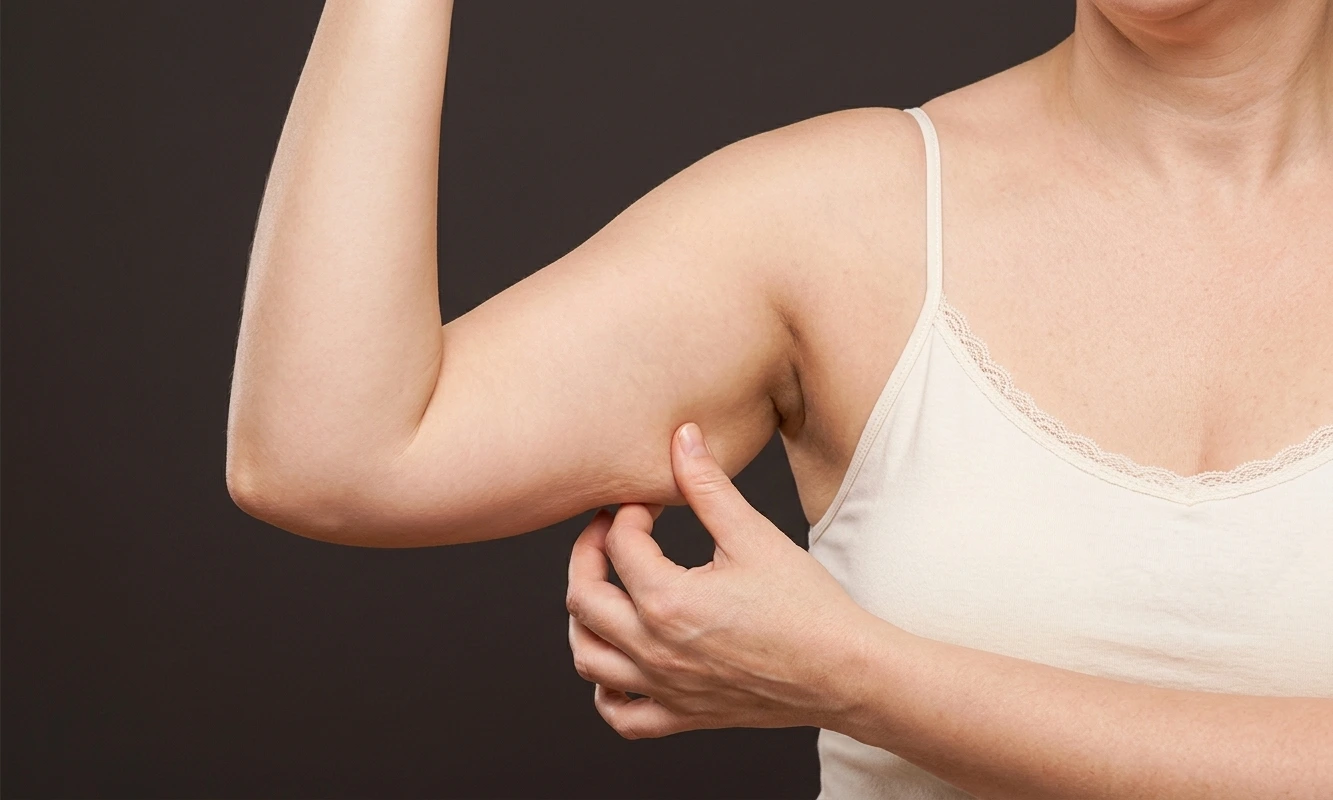
Arm Liposuction or Arm Lift: Which Is Right for You?
Arm liposuction or arm lift? Compare fat removal and loose skin removal, scars, recovery, risks and cost factors before discussing your care options in Dubai.
Sep 8, 2026

What Is BBL Recovery Like? Sitting, Healing & Results
BBL recovery: sitting, sleep, wound care, exercise and warning signs after a Brazilian Butt Lift. Healing varies; follow your surgeon’s individual care plan.
May 7, 2026
