
Thread Lift: Is It Right for You? Benefits and Recovery

Considering a subtle lift without the recovery involved in a surgical facelift? A thread lift may suit selected people with mild to moderate skin laxity and realistic expectations. It is a minimally invasive treatment often described as non-surgical, but it still involves placing sutures beneath the skin. Shorter downtime does not mean no recovery or no risk.
A face thread lift places medical sutures beneath the skin to provide limited support and a temporary contour change. Searches may call it a face lift using threads or a face threading face lift, but it is not the same operation as a surgical facelift.
Threads may create a subtle, temporary change in selected patients with limited tissue descent. They do not remove substantial loose skin, release facial retaining ligaments or reproduce the deeper repositioning possible with facelift surgery. The best choice depends on anatomy, expected longevity and whether threads, skin treatment, volume restoration or surgery matches the actual concern.
How Do Facial Threads Create a Lifting Effect?
A clinician introduces sutures through small entry points and places them in a planned soft-tissue layer. Barbs, cones or other anchoring features engage tissue so that tension can create an immediate mechanical change. Absorbable thread materials also trigger a healing response around the suture as they gradually break down.
Marketing sometimes describes this as a “non-surgical facelift.” That phrase can overstate the mechanism. A thread lift does not provide surgical exposure, broad tissue release, excision of excess skin or the same control over deeper facial layers.
Thread systems differ in material, length, thickness, anchoring design and intended use. Results and risks therefore cannot be inferred from the word “thread” alone. Patients should know the exact product, number of threads, proposed tissue plane and regulatory status for the intended use.
Where Can a Face Lift Using Threads Create a Visible Change?
In a carefully selected patient, threads may be considered for a limited change in areas such as the cheek, jawline or brow. The desired effect should be modest and anatomically achievable without promising that the face will look surgically lifted.
Threads cannot reliably:
- remove meaningful excess facial or neck skin;
- correct heavy jowls or substantial tissue descent;
- restore facial volume that has been lost;
- improve every type of wrinkle or skin texture concern;
- reposition deep facial structures to the same extent as surgery; or
- stop ageing or guarantee a fixed duration.
Volume loss, skin quality, muscle activity and tissue descent can coexist. A thread addresses only selected aspects of that combination.
Which Is More Suitable: Thread Lift or Facelift?
| Consideration | Thread lift | Surgical facelift |
|---|---|---|
| Mechanism | Limited suture support through small access points | Surgical release, repositioning and skin redraping according to technique |
| Best-matched concern | Selected mild tissue descent and a subtle temporary goal | More meaningful lower-face or neck descent in a suitable patient |
| Excess skin removal | No | Selected excess skin can be redraped and removed |
| Anaesthesia | Often local; sedation may be used | Sedation or general anaesthesia depending on the plan |
| Scars | Small entry points, with possible puncture marks | Permanent incisions planned around natural contours and hair-bearing areas |
| Recovery | Usually shorter, but swelling, bruising and dimpling can occur | More involved bruising, swelling, incision care and activity restriction |
| Duration | Variable and temporary | Longer-lasting structural correction, although ageing continues |
| Revision issues | Thread removal or treatment of irregularity may be required | Surgical revision may be required for complications or recurrent ageing |
The dedicated facelift surgery in Dubai page explains deep plane, SMAS and other surgical planning. Use it to compare the extent of correction and recovery involved before choosing a treatment.
Who Is a Suitable Candidate for a Face Thread Lift?
Potential candidacy requires an in-person examination. A clinician assesses:
- the location and degree of tissue descent;
- skin thickness, elasticity and sun damage;
- facial volume and skeletal support;
- previous filler, energy treatments, threads or surgery;
- scarring tendency, infection risk and relevant health conditions;
- medicines, supplements, smoking or nicotine use; and
- whether the patient accepts a subtle and temporary result.
Significant loose skin, heavy tissue, advanced jowling or expectations of surgical-scale correction may make threads a poor match. Very thin skin may increase visibility or palpability, while thick or heavy tissue may limit the effect. Age alone does not determine candidacy.
What Is the Best Age to Do a Thread Face Lift?
There is no single best age. Early signs of ageing, skin quality and the degree of sagging matter more than an age cutoff. An individual examination is needed to assess suitability.
Who May Benefit, and Who Should Consider Other Options?
A subtle change in early cheek, brow, jawline or neck sagging may be a reasonable goal. Very loose skin, heavy jowls or thin, fragile tissue need particular caution. Wanting a permanent or dramatic change makes threads a poor fit. The healing response can stimulate collagen, but that does not guarantee a visible or lasting lift. The ASPS overview discusses these treatment limitations.
Are Thread Lifts Really Worth It?
Judge value against the change you want, not the most dramatic photograph online. A modest temporary improvement may be worthwhile to one person and disappointing to another. Ask what the proposed treatment can achieve, what it cannot change, and what maintenance or correction could involve. Recovery time, total cost and alternatives all belong in that discussion.
Why Do Some Plastic Surgeons Advise Against Thread Lifts?
Surgeons do not all share one opinion. Concerns include short-lived improvement, contour problems and the effect of previous threads on later surgery. A small retrospective study of ten facelift patients with previous repeated thread treatments described fibrosis and more difficult dissection. Its size and selected population mean it cannot predict every patient’s outcome.
Why Do Thread Material and Design Matter?
Threads may be absorbable or non-absorbable and may use barbs, cones or other configurations. Materials and approvals vary by manufacturer and country. “PDO thread” describes a material, not a complete treatment plan or proof that a device is suitable for every facial area.
A patient should receive the product name, material, traceability information and an explanation of whether it is intended primarily for support, tissue repositioning or another use. Non-absorbable does not mean permanent aesthetic lift, and absorbable does not mean that every effect or complication disappears when the material degrades.
How Is a Face Thread Lift Performed?
After assessment, photography and consent, the clinician marks the planned vectors and access points. Anaesthesia is administered according to the procedure. The threads are introduced into the intended tissue plane, engaged and adjusted before the access points are dressed.
There is no universal thread pattern. Placement must account for facial nerves, vessels, the parotid gland and duct, retaining structures, prior procedures and the direction of tissue movement. More threads do not automatically create a better or safer result.
How Long Does a Thread Lift Last?
Result duration depends on the thread system, placement, tissue weight, skin quality, healing and how outcome is measured. The immediate appearance may include temporary swelling and mechanical tension that should not be confused with the settled result.
A systematic review and meta-analysis of facial thread lifting reported lower pooled satisfaction at longer follow-up than immediately after treatment and concluded that loss of rejuvenation effect over time should be discussed before treatment. Evidence quality, techniques and follow-up periods vary, so a universal promise such as “lasts several years” is not appropriate.
What Should You Expect From a Thread Lift After 3 Months?
A three-month review is an opportunity to compare your current contour with baseline photographs and discuss satisfaction, symmetry or persistent symptoms. It is not a universal deadline for a final result or proof of long-term durability. The thread-lifting meta-analysis found that satisfaction can decline over longer follow-up.
Is a Thread Lift Painful?
Local anaesthesia helps limit discomfort during placement. Soreness and tightness may follow; a completely painless experience cannot be promised. Ask how discomfort will be managed and report severe or increasing pain.
Downtime and Activity Restrictions After Facial Threading
Swelling, bruising, tenderness, tightness, asymmetry or temporary dimpling can occur early. Individual instructions may cover:
- sleeping position and pressure on the treated areas;
- facial massage, skin treatments and makeup;
- strenuous exercise and heat exposure;
- wide mouth opening and selected dental procedures; and
- timing of follow-up and when to contact the clinic.
Return to work or social activity depends on visible swelling, bruising, the treatment extent and the patient’s role. “No downtime” is not a guarantee.
Increasing pain, spreading redness, fever, drainage, worsening asymmetry, an exposed thread, persistent weakness, marked sensory change or visual symptoms requires prompt medical assessment.
What Is the Downside of a Thread Lift?
Possible complications include:
- bruising, swelling, pain and hematoma;
- skin dimpling, bunching or contour irregularity;
- asymmetry or an unsatisfactory short-lived effect;
- visible, palpable, migrated or extruded threads;
- infection, inflammatory reaction or granuloma;
- hair loss near an access point;
- altered sensation or nerve injury;
- injury to a vessel, gland or duct; and
- the need for thread removal or corrective surgery.
A systematic review of thread-lift complications found that many adverse effects were transient but persistent contour problems, infection, inflammatory reaction and injury to vessels or glands could require treatment. A 2026 meta-analysis reported substantial variability between studies, reinforcing that complication rates cannot be applied as one guaranteed personal estimate.
Why Do Previous Threads Matter for Future Facelift Surgery?
Previous threads can alter tissue planes through fibrosis, inflammation or retained material. They do not automatically prevent later surgery, but the facelift surgeon needs the product, date, number, vectors, previous complications and any removal records. Operative planning may change when threads are palpable, infected, migrated or surrounded by scar tissue.
Using repeated thread treatments to postpone a facelift is not necessarily simpler or more economical. The long-term plan should consider cumulative cost, tissue changes, maintenance and whether the treatment continues to match the anatomy.
How Should You Assess Thread Lift Before-and-After Photos?
Ask for comparable lighting, facial expression, head position and camera distance, with the follow-up interval clearly labelled. Confirm whether fillers or other treatments were also performed. Immediate pictures and later follow-up photographs answer different questions.
Can Day-by-Day Recovery Photos Tell You What to Expect?
A photo diary records one person’s experience. It cannot provide a personal clearance date for work, exercise or social events. Ask the clinician for an individual recovery plan and scheduled reviews.
What About “Thread Lift Gone Wrong” Photos?
An online image alone cannot establish the cause of a contour change or whether treatment is needed. If your concern is about your own result, arrange a clinical assessment rather than trying to diagnose it from comparison photos.
How Can You Find a Thread Lift Consultation Near You?
Check the clinician’s local licence, relevant training, treatment experience and follow-up arrangements. Ask who handles complications and which alternatives will be discussed. If you are considering facial rejuvenation in Dubai, book a consultation with Dr. Kotti to explore a plan suited to your anatomy and goals.
How Should You Plan for Maintenance and Total Treatment Cost?
Thread-lift cost depends on the product, number of threads, treatment areas, clinician training, facility, anaesthesia, aftercare and the complexity created by previous treatment. A package priced only by thread count may not explain diagnosis, placement or complication care.
Comparing one thread session with facelift surgery is not a direct price comparison. Surgery usually has a higher initial cost and more recovery, while temporary treatments may involve maintenance. A useful written plan defines the intended change, likely limitations, included follow-up and what happens if removal or correction becomes necessary.
Which Questions Help Compare Threads With Other Options?
- What anatomical change is causing the concern?
- Why are threads appropriate instead of filler, skin treatment, surgery or no treatment?
- What exact thread system, material and number are proposed?
- What degree and duration of change are realistic?
- What will the treatment not improve?
- What are the clinician’s training and experience with this device and facial anatomy?
- How are dimpling, infection, extrusion or nerve symptoms managed?
- How could this treatment affect later facial surgery?
Sources and Further Reading
-
The Facelift After Thread Lifting: Surgical and Aesthetic Complications
-
Meta-analysis of Complications Following Facial Thread Lifting
-
Safety Profile of Thread Lifts on the Face and Neck — Systematic Review
This guide provides general education and does not establish candidacy. Thread lifting and facelift surgery carry risks, results vary, and consultation is required.
Frequently Asked Questions
Are thread lifts really worth it?
They may be worthwhile for a suitable person seeking a subtle, temporary improvement. Compare the expected change, recovery, risks and potential maintenance costs with your goals. They are a poor match for someone expecting a permanent or dramatic surgical result.
Why do plastic surgeons not like thread lifts?
There is no universal view among plastic surgeons. Some are cautious about limited longevity, complications and tissue changes that may complicate a later facelift. Others offer threads to selected patients. Ask why a clinician recommends or advises against them for your anatomy.
What is the downside of a thread lift?
The effect is temporary and may be less noticeable than expected. Downsides include recovery symptoms, dimpling, asymmetry, visible or palpable threads, infection and possible removal or correction. Repeated treatment can add cost.
What is the best age to do a thread face lift?
There is no single best age. People with early signs of ageing are more commonly considered, but skin quality, tissue weight, degree of sagging, health and expectations matter more than an age cutoff.
Is a thread lift painful?
Local anaesthesia is commonly used to limit discomfort during placement. Tenderness, tightness or soreness can occur afterward. Tell the clinician about pain during treatment and seek assessment for severe or worsening pain afterward.
What is a face thread lift?
A face thread lift places medical sutures beneath the skin to create limited mechanical support and a temporary contour change. Some threads are absorbable and have cones or barbs that engage tissue. It is not equivalent to surgical release and repositioning of deeper facial structures.
How long does a thread lift last?
There is no universal duration. It depends on thread material and design, placement, anatomy, tissue quality and healing. Published studies show that satisfaction can decline with time, so a fixed multi-year result should not be guaranteed.
Is a thread lift the same as a facelift?
No. A thread lift provides limited support through small access points. A surgical facelift can release and reposition deeper tissues and redrape selected excess skin. The two treatments have different capabilities, scars, recovery and risks.
Who may be suitable for a thread lift?
A medically suitable person with limited tissue descent, appropriate skin and realistic expectations about a subtle temporary change may be considered. Significant loose skin, heavy tissue, marked jowling or a request for broad structural correction may not be well matched to threads.
What are the risks of a thread lift?
Risks include swelling, bruising, pain, dimpling, asymmetry, palpable or visible threads, extrusion, infection, inflammatory reaction, migration, contour irregularity, sensory symptoms and injury to nearby structures. Persistent problems can require thread removal or surgery.
What is thread lift recovery like?
Early swelling, bruising, tenderness, tightness or dimpling may occur. Instructions about facial movement, sleeping position, skin care, exercise and dental work vary with the treatment. Increasing pain, spreading redness, drainage, weakness or visual symptoms need prompt assessment.
How much does a thread lift cost?
Cost depends on the thread system, number and treatment areas, clinician expertise, facility, aftercare and management of previous treatments. Maintenance and the possibility of removal or later surgery should be included when comparing long-term cost.
Popular Procedures
Specialties
Related Clinical Articles
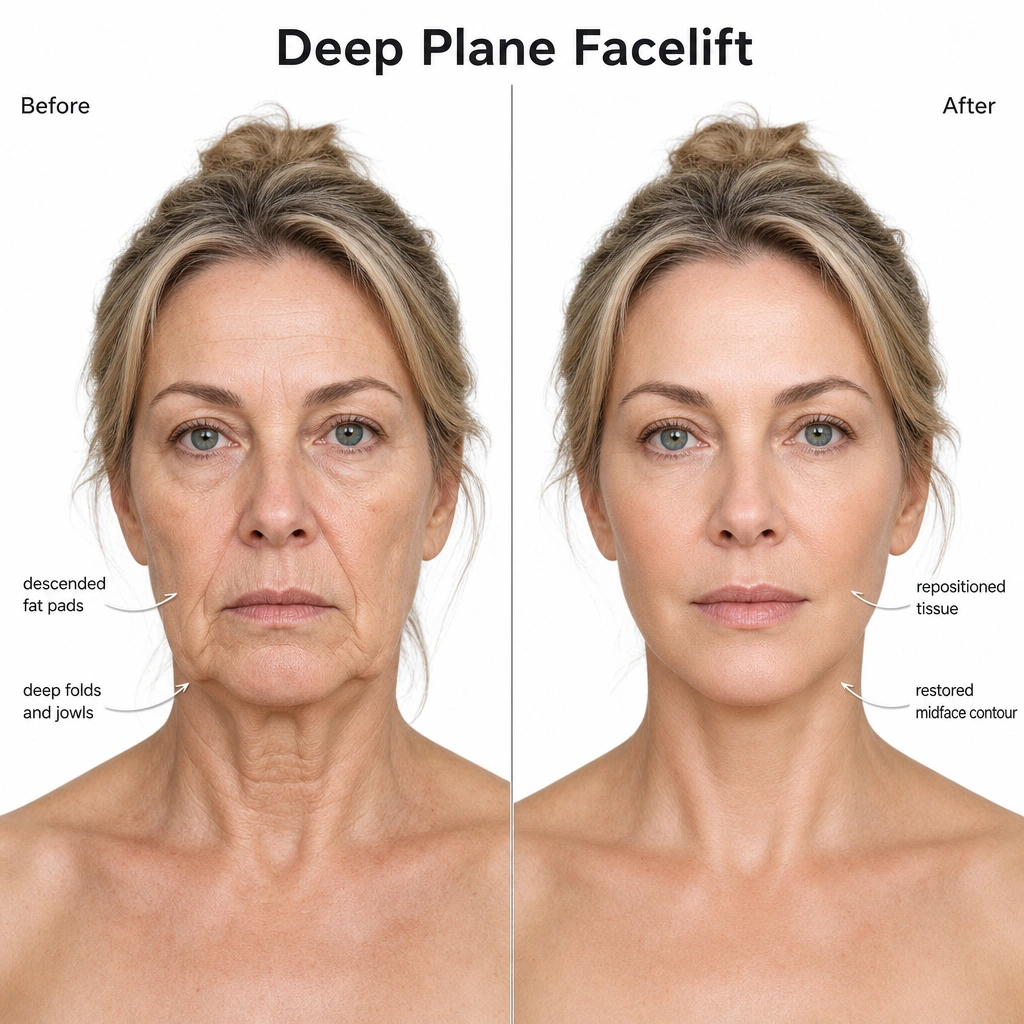
Is a Deep Plane Facelift Right for You? A Full Guide
Explore deep plane facelift anatomy, cost factors, recovery timeline, scarring, risks, candidacy, and comparisons with SMAS and mini facelifts in Dubai.
Jul 7, 2026
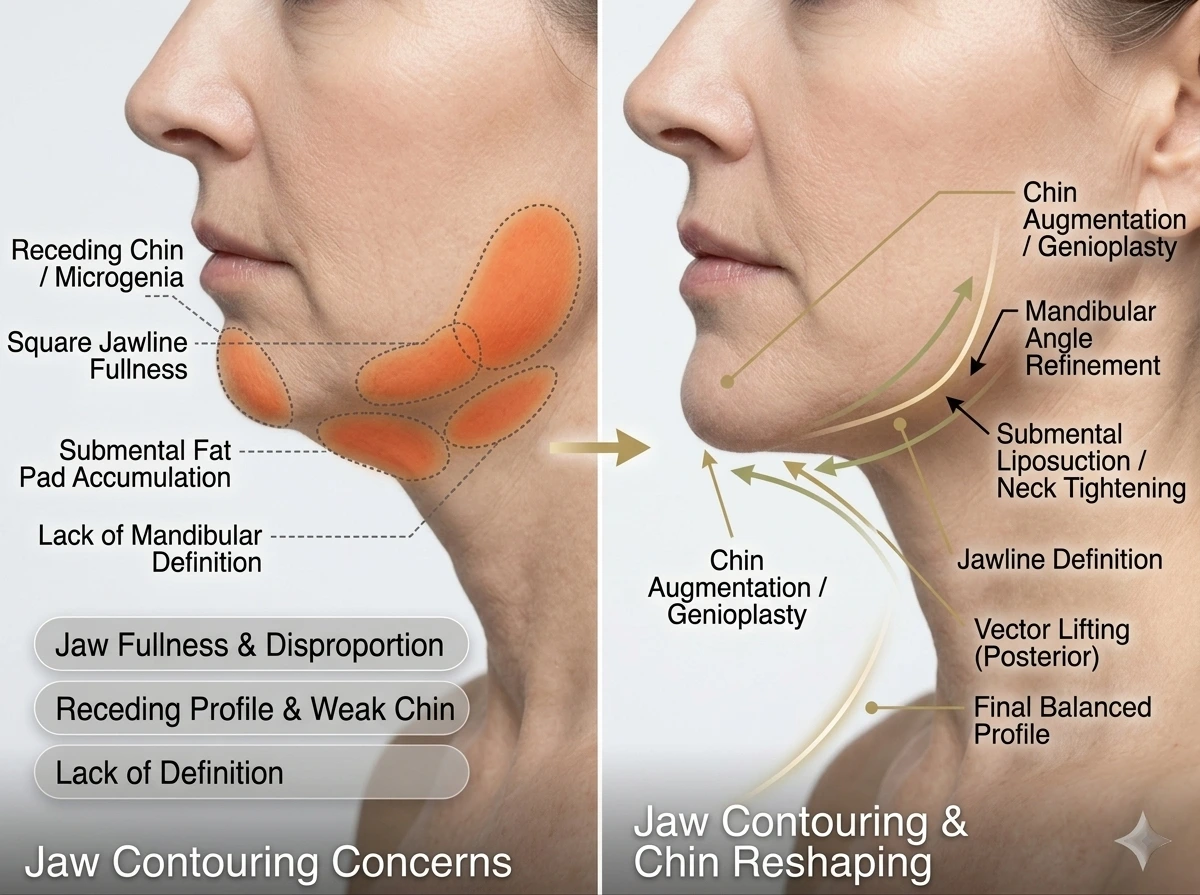
What's the Difference? Jaw Contouring and Jaw Reduction
Jaw contouring may reshape bone or soft tissue, while jaw reduction surgically narrows selected bone. Compare options, candidacy, recovery, risks and cost factors.
Aug 18, 2026
