What Is Liquid Rhinoplasty? Nose Filler Results, Limits and Suitability
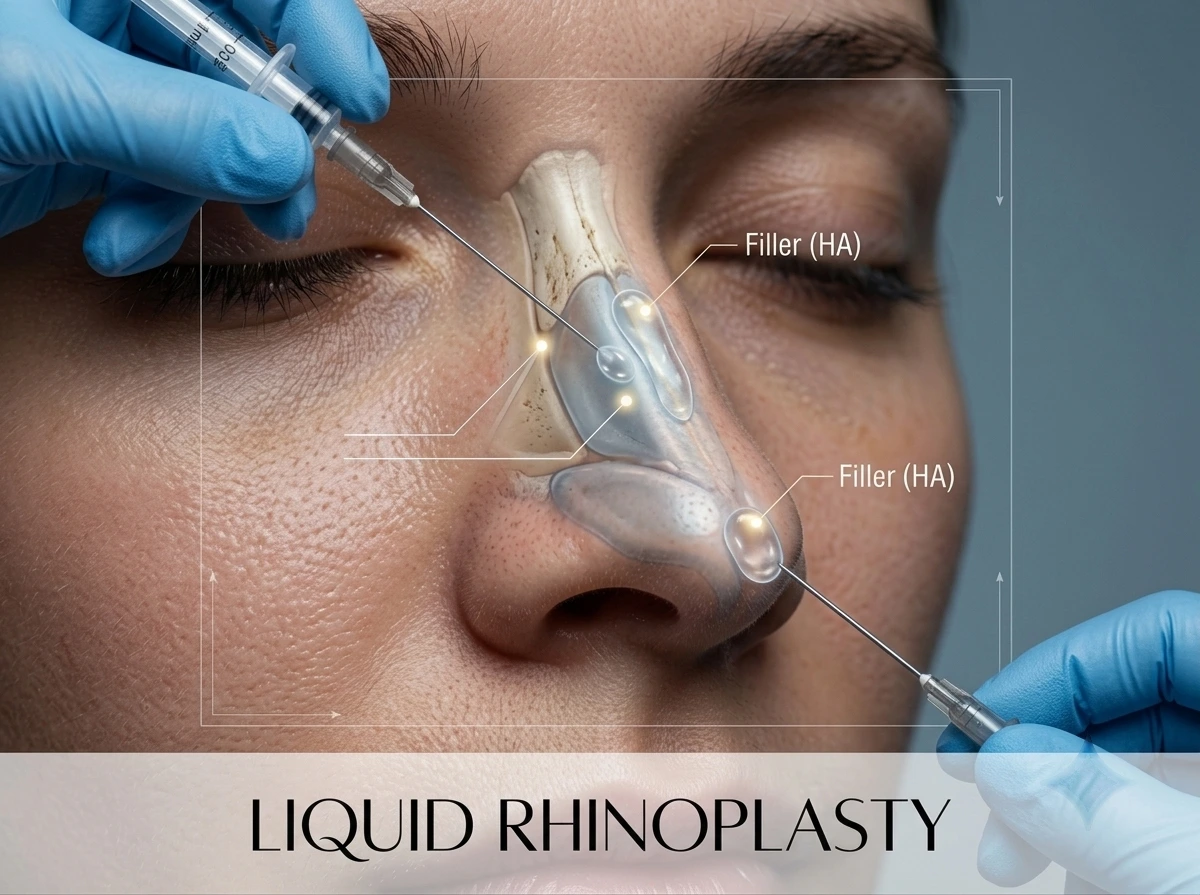
A liquid rhinoplasty is temporary nasal contouring with injectable dermal filler. It is also called injectable rhinoplasty, a liquid nosejob or a non surgical nosejob. The treatment adds volume at selected points; it does not remove bone or cartilage and is not a smaller version of surgical rhinoplasty.
Quick answer: Liquid rhinoplasty may camouflage a small profile irregularity, alter the apparent transition from the forehead to the nose, or refine selected asymmetry. It cannot make the nose physically smaller, correct major structural deformity or improve nasal breathing. The nose has a complex blood supply, so filler injection carries uncommon but potentially permanent vascular and visual risks.
How Does Liquid Rhinoplasty Change the Nose?
The clinician examines the nose from the front, oblique, profile and base views, then determines whether adding a small amount of filler could create the requested visual change. Depending on the plan, filler may be placed around a depression, along part of the dorsum, at the radix or at carefully selected tip-support points.
The mechanism is additive. Filling a depression can make the profile line appear straighter, but the original hump remains. Adding carefully selected volume can change apparent proportions, but it cannot remove tissue. This distinction is central to informed consent.
The term non invasive rhinoplasty is common in searches but medically imprecise. The procedure penetrates the skin with a needle or cannula and introduces an implantable material into tissue. It may avoid surgical incisions and general anaesthesia, but it is still an invasive medical procedure with site-specific risks.
Which Nose Concerns Can Filler Camouflage?
In a suitable patient, filler may be considered for:
- selected shallow depressions or contour transitions;
- camouflage of a modest dorsal irregularity by adding volume around it;
- limited asymmetry when additive correction is appropriate;
- a small change in apparent radix height or profile continuity; or
- temporary visual assessment before deciding whether any lasting structural change is wanted.
Filler cannot reliably:
- reduce a large nose or remove a dorsal hump;
- narrow wide nasal bones or nostrils;
- shorten an overprojected nose;
- correct a deviated septum or nasal obstruction;
- repair major post-traumatic or post-surgical structural problems; or
- provide the same control and durability as surgery.
When the goal is reduction, airway improvement or structural reconstruction, review the dedicated rhinoplasty in Dubai page. That procedure page owns surgical candidacy and consultation intent; this guide addresses temporary filler-based contouring.
Why Is Nose Filler Different From Surgical Rhinoplasty?
| Consideration | Liquid rhinoplasty | Surgical rhinoplasty |
|---|---|---|
| Main mechanism | Adds filler volume | Reshapes bone, cartilage and soft tissue |
| Can make the nose smaller? | No | May reduce selected structures when appropriate |
| Breathing correction | No | Functional work may be combined when indicated |
| Anaesthesia | Commonly topical or local; protocol varies | Usually general anaesthesia or selected sedation |
| Result duration | Temporary and product-dependent | Long-lasting structural change, although ageing continues |
| Recovery | Usually shorter, but swelling and bruising occur | More substantial swelling and activity restrictions |
| Principal unique concern | Vascular occlusion, skin injury and visual complications | Bleeding, infection, breathing change, scarring and revision among other surgical risks |
| Reversibility | HA filler may be reduced, but reversal is not guaranteed to restore baseline | Structural surgery is not simply reversible |
Neither option is automatically better. They solve different anatomical problems and have different risk profiles.
Why Is Nose Filler a High-Risk Injection Area?
The nose contains vessels that communicate with the circulation around the eye. If filler enters or compresses a blood vessel, it can obstruct blood flow. Consequences can include tissue ischemia and necrosis, visual impairment or blindness, and rarely neurological injury.
The US Food and Drug Administration’s dermal-filler guidance describes inadvertent vascular injection as the most concerning filler risk and notes that injection into the nose is not an FDA-approved filler use. Regulatory approval differs between countries, so patients in Dubai should ask which exact product is proposed, whether that product is authorized for the intended use locally, and what emergency protocol is available.
A systematic review of nonsurgical rhinoplasty complications found that most reported events were minor but documented vascular occlusion, skin necrosis and vision loss. A more recent updated systematic review likewise emphasized that rare arterial complications can be severe. A high satisfaction rate in a study does not remove this low-frequency, high-consequence risk.
Who Is Liquid Rhinoplasty Suitable For?
Potential candidacy requires a limited additive goal, realistic expectations and medical suitability for the proposed filler. Assessment should include:
- the precise feature the patient wants changed;
- nasal skin, vascular anatomy and previous surgery or trauma;
- any existing filler, including product, date and injection location;
- breathing symptoms or a suspected structural problem;
- infection, inflammation, medicines, allergies and bleeding risk;
- pregnancy or breastfeeding status; and
- the patient’s understanding that a temporary improvement may require maintenance.
Previous filler makes the anatomy and planning less predictable, particularly when the product is unknown or permanent. Treatment may need to be delayed while records, examination or imaging clarify what is present.
How Does Filler Choice Affect the Treatment Plan?
Hyaluronic-acid filler is commonly discussed because an enzyme called hyaluronidase can often reduce it. That does not make treatment risk-free or perfectly reversible. Dissolving filler can require more than one intervention, can affect native hyaluronic acid temporarily and may not recreate the exact pretreatment contour.
Permanent filler and injectable silicone create different, potentially long-lasting management problems. The FDA states that injectable silicone is not approved for aesthetic facial or body contouring. Product identity, batch traceability, expiry and patient labeling should be documented before treatment.
What Does the Treatment Process Involve?
A safe pathway starts before injection. The clinician documents medical history, examines the nose, explains realistic endpoints, identifies alternatives and obtains consent for common and serious complications. Standardized photographs may be taken with permission.
The skin is prepared and the selected product is placed according to an individualized anatomical plan. There is no universally safe point, depth, needle or cannula that eliminates vascular risk. The facility should have a documented response plan and access to appropriate emergency care.
Patients should not inject filler themselves or use needle-free filler devices. Online product purchase removes essential safeguards around authenticity, storage, sterility, anatomical assessment and complication management.
How Long Do Nose Filler Results Last?
Duration varies with filler composition, crosslinking, volume, placement, tissue movement and individual metabolism. A result may soften gradually rather than disappear on one date. Published or marketed duration is not a guarantee for one patient or one nasal injection site.
Repeat treatment should follow reassessment. Automatically adding more filler can accumulate volume, obscure anatomy or make the nose appear larger. A patient whose goal has changed from camouflage to reduction should reconsider the diagnosis rather than continue additive treatment indefinitely.
Aftercare and Warning Signs After Nose Filler
Swelling, redness, tenderness and bruising can occur. Patients receive individualized instructions about touching the area, glasses, exercise, heat exposure, medicines and follow-up. The result should not be judged while early swelling is present.
Seek immediate medical assessment for unusual or increasing pain, blanching or a white, grey or blue skin change, a cool or mottled area, blistering, visual disturbance, severe headache, weakness, facial drooping, speech difficulty or another neurological symptom. These are not symptoms to monitor at home until the next routine appointment.
What Limitations Remain Beyond Vascular Risk?
Possible issues include asymmetry, overcorrection, undercorrection, migration, nodules, inflammation, infection, prolonged swelling, delayed reaction and dissatisfaction. Filler may also complicate later assessment or surgery. A future rhinoplasty surgeon needs a complete history of products, dates, locations and any dissolving treatment.
The apparent convenience of an injectable treatment should not obscure its limitations: it adds volume, is temporary and has a small but serious vascular risk.
How Should You Compare Liquid Rhinoplasty Cost?
Liquid rhinoplasty cost depends on the product and amount, clinician training, medical facility, complexity, previous filler, follow-up and emergency preparedness. More filler is not necessarily better, and comparing cost per syringe alone does not compare diagnosis, technique or aftercare.
Maintenance changes the long-term calculation. A temporary treatment repeated over several years may have a different cumulative cost from one session, while surgical rhinoplasty involves a larger initial expense and a different recovery and risk profile. A written plan should specify the product, intended correction, included care and likely maintenance—not promise a universal price or duration.
Which Questions Reveal Whether Nose Filler Fits Your Goal?
- What exact feature can filler improve, and what will remain unchanged?
- Why is adding volume preferable to surgery or no treatment for this anatomy?
- What product is proposed, and is this use authorized locally?
- What are the clinician’s training and experience with nasal anatomy and vascular emergencies?
- How are vascular occlusion and visual symptoms recognized and escalated?
- Is existing filler present, and does it need further assessment?
- What follow-up and urgent contact arrangements are available?
- How could filler affect a future surgical rhinoplasty?
Sources and Further Reading
- Dermal Fillers (Soft Tissue Fillers) — US Food and Drug Administration
- FDA-Approved Dermal Fillers and Product-Specific Indications
- Complications Secondary to Nonsurgical Rhinoplasty — Systematic Review and Meta-analysis
- Nonsurgical Rhinoplasty — Updated Systematic Review
This article provides general education and does not replace medical advice. Injectable treatments and surgery carry risks, regulatory status varies by country, and individual assessment is required.
Frequently Asked Questions
What is a liquid rhinoplasty?
A liquid rhinoplasty is a non-surgical nasal contouring procedure that places dermal filler at selected points to add volume and change the apparent profile. It cannot make the nose physically smaller, narrow broad nasal bones, improve breathing or reproduce the structural changes of surgical rhinoplasty.
Is liquid rhinoplasty the same as nose filler?
Usually. Liquid rhinoplasty, injectable rhinoplasty and nose filler commonly describe filler-based nasal contouring. The exact product, injection points and regulatory approval must be confirmed because not every filler is approved for every facial area.
Can a liquid rhinoplasty make the nose smaller?
No. Filler adds volume. Strategic placement can create a straighter-looking profile or alter visual proportions, but it does not remove a hump, reduce nasal width or shorten the nose. Adding too much filler can make the nose appear larger.
How long does liquid rhinoplasty last?
Duration varies with the filler, amount, injection plane, anatomy and individual metabolism. Results are temporary and maintenance may be requested, but repeated treatment should follow a fresh assessment rather than an automatic schedule.
What are the serious risks of liquid rhinoplasty?
Accidental injection into a blood vessel can obstruct blood flow and cause skin necrosis, visual impairment or blindness, and in rare cases stroke. Increasing pain, pale or mottled skin, visual change, weakness, severe headache or another neurological symptom needs immediate medical attention.
Can nose filler be dissolved?
Hyaluronic-acid filler can often be reduced with hyaluronidase, but reversal is a medical intervention with its own risks and may not restore the exact pretreatment appearance. Other filler materials may be difficult or impossible to remove.
How much does a liquid rhinoplasty cost?
Cost depends on the selected product and amount, clinician expertise, medical facility, assessment, aftercare and whether previous filler requires management. A low product-only price does not show the full safety pathway or the cumulative cost of maintenance.
Popular Procedures
Specialties
Related Clinical Articles
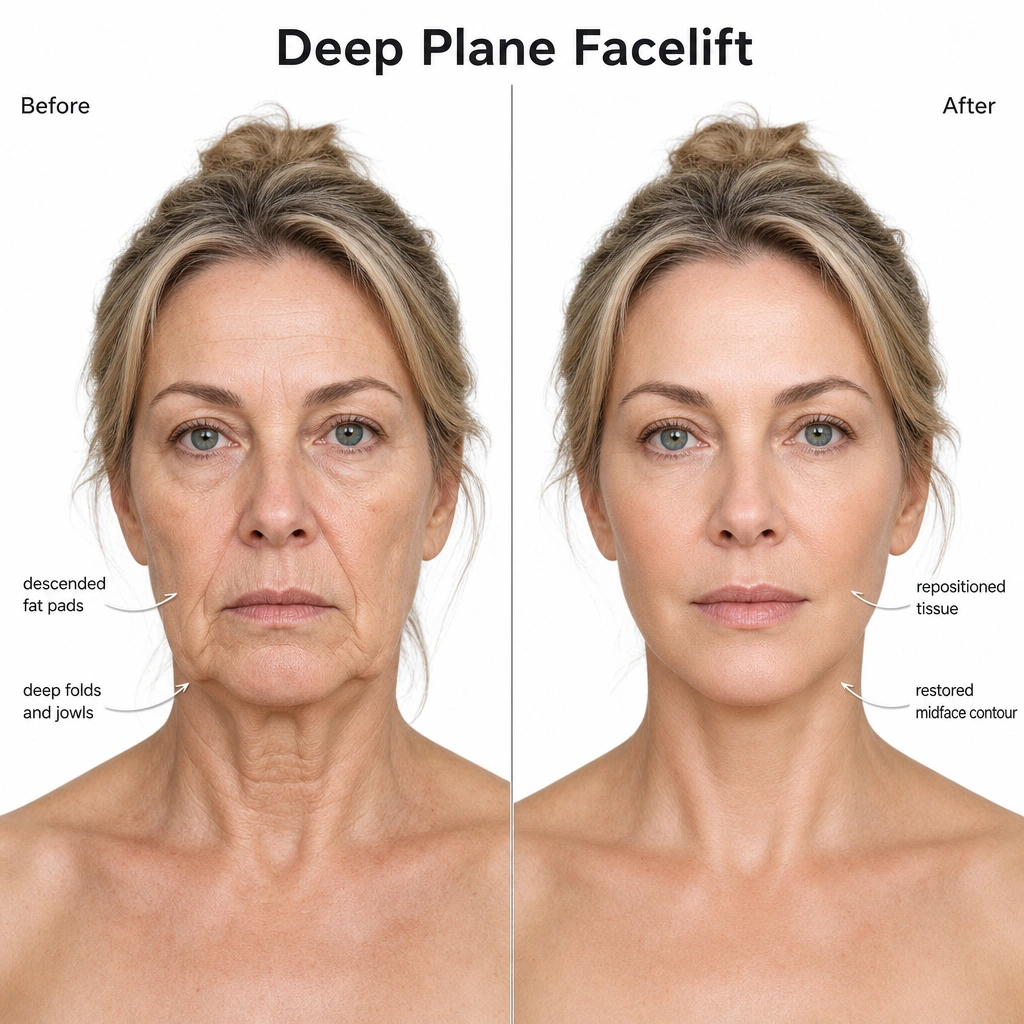
Is a Deep Plane Facelift Right for You? A Full Guide
Explore deep plane facelift anatomy, cost factors, recovery timeline, scarring, risks, candidacy, and comparisons with SMAS and mini facelifts in Dubai.
Jul 7, 2026
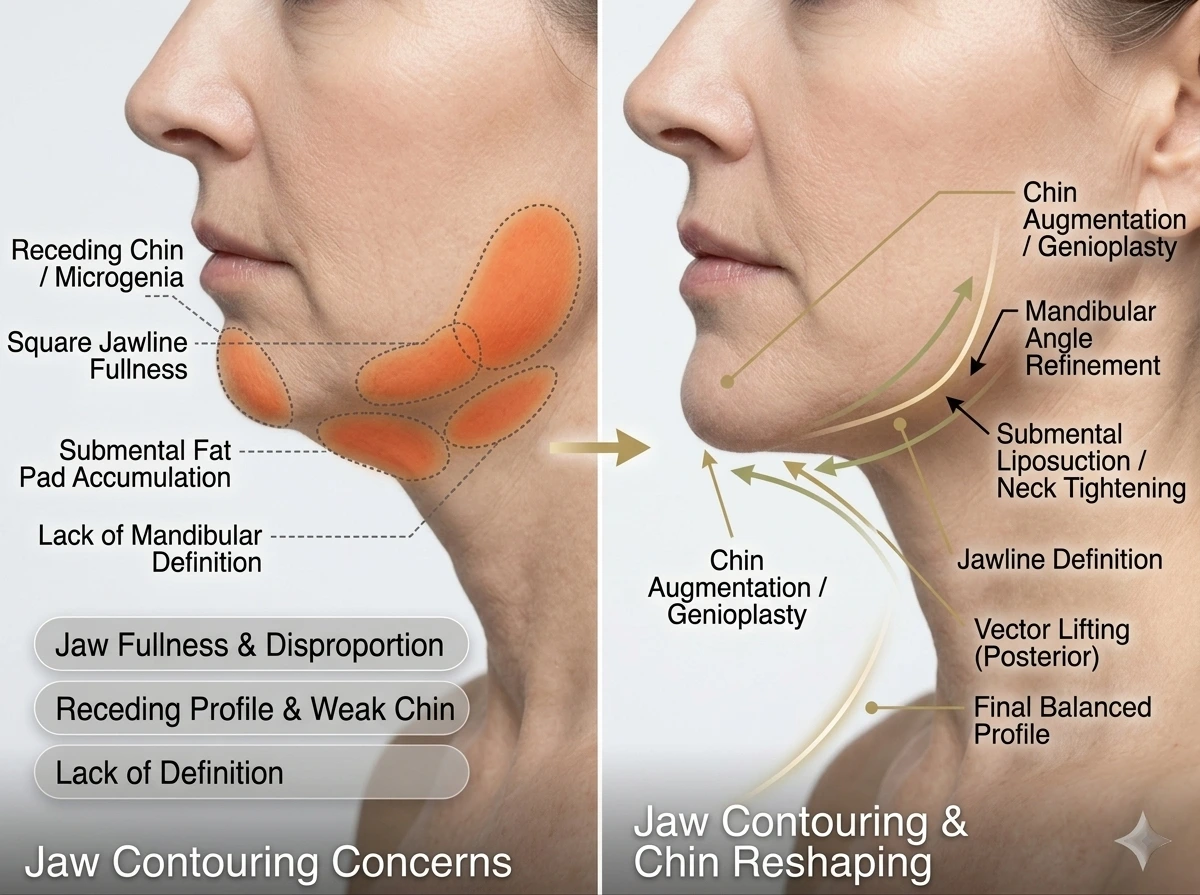
What's the Difference? Jaw Contouring and Jaw Reduction
Jaw contouring may reshape bone or soft tissue, while jaw reduction surgically narrows selected bone. Compare options, candidacy, recovery, risks and cost factors.
Aug 18, 2026

